IN Brief:
- Flavorman will conclude Moonshine University and its associated programmes on 31 December 2026.
- The school delivered 337 courses to more than 15,000 attendees and supported nearly 300 distillery launches.
- Course materials and bourbon certifications may transfer to other organisations as Flavorman concentrates on beverage development.
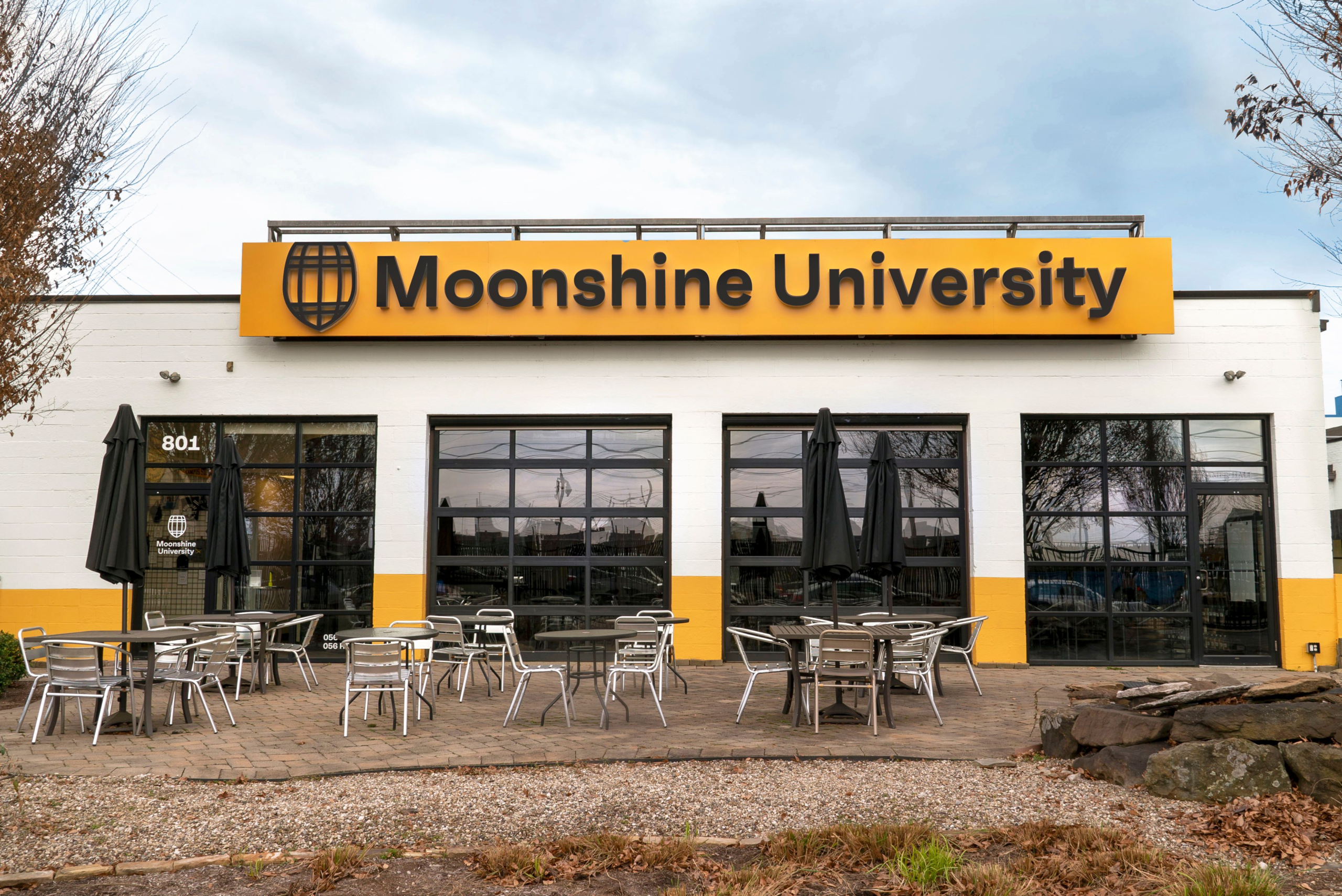
Flavorman will conclude operations at Moonshine University on 31 December 2026, ending a 14-year programme of technical and commercial education for the distilled-spirits industry.
The Louisville, Kentucky, company will continue providing beverage formulation, analytical testing, product development, and consulting services, with its distilling work concentrating on technical support for new and established drinks businesses.
Moonshine University will honour scheduled commitments and course dates through the remainder of 2026, while registration will remain open for sessions already planned.
Since opening in 2013, the school has delivered 337 courses and welcomed more than 15,000 attendees from every US state, four US territories, and 49 countries. Its programmes have supported the launch of nearly 300 distilleries, with almost half of attendees entering the market within two years of completing a course.
Training has covered distillation, fermentation, mashing, maturation, blending, sensory evaluation, plant operation, compliance, packaging, distribution, sales, and business planning. Courses combined classroom instruction with access to production equipment and beverage-development facilities.
Flavorman is discussing the transfer of course materials into programmes operated by established industry organisations. Some or all of the curriculum could therefore continue without Moonshine University remaining a standalone institution.
The Stave & Thief Society will operate through the end of the year while a possible transfer is considered. Its Associate and Executive Bourbon Steward programmes serve hospitality staff, distillery-tour teams, bar and restaurant operators, and spirits enthusiasts.
Scheduled in-person certification classes will continue during 2026, and online courses will remain available for purchase and completion until 10 December. The earlier deadline allows assessments and certification to be processed before the operation closes.
David Dafoe, founder and executive chairman of Flavorman, said: “To our attendees, clients, faculty, partners, and friends: thank you and cheers. It has been an honor to work with you. We are deeply grateful to be part of this incredible community and proud of the support and success we’ve shared.”
Distilling education enters a more mature market
Moonshine University opened during a period of rapid expansion among US craft distilleries. Many founders entered the market with product concepts and commercial ambition but limited experience of running a regulated fermentation and distillation plant.
Concentrated training offered a route through equipment selection, process design, licensing, production, maturation, packaging, and route to market. The model placed technical operation alongside commercial planning rather than treating the still as an isolated part of the business.
The surrounding industry has since developed a larger network of consultants, equipment suppliers, trade associations, specialist laboratories, contract manufacturers, and training providers. New entrants also face a more competitive market, with slower category growth and a substantial volume of maturing stock already held by producers.
Distillation remains operationally demanding despite the broader availability of technical information. Fermentation control, raw-material quality, heat input, still design, cut decisions, water chemistry, maturation, cleaning, and blending all influence the final spirit.
Plant safety adds another layer through flammable liquids, vapour, pressure, hot surfaces, confined spaces, combustible dusts, and electrical equipment. Ventilation, hazardous-area classification, maintenance, fire protection, and emergency procedures must be integrated into production design.
Short courses can establish principles and demonstrate equipment, but consistent operation depends on how those principles are applied across changing raw materials, ambient conditions, production volumes, equipment states, and staff experience.
Transferring the curriculum into trade organisations could broaden access and place individual modules alongside standards, technical guidance, and member support. Established distilleries may prefer targeted instruction on blending, sensory faults, maturation, or compliance rather than a complete start-up programme.
Preserving the practical component will be more difficult than transferring presentations and course notes. Operators need to observe fermentation, adjust process variables, identify sensory changes, and understand the physical consequences of decisions made during an active run.
Flavorman’s renewed concentration on beverage development reflects the increasing use of external technical partners. Brands can outsource formulation, analytical testing, pilot production, ingredient sourcing, process planning, and scale-up rather than building every capability internally.
External development reduces early capital requirements but places greater emphasis on technology transfer. Recipes, specifications, process parameters, quality limits, shelf-life evidence, packaging requirements, and regulatory records must be detailed enough for a contract manufacturer or owned plant to reproduce the product.
The company operates a 77,000 sq ft formulation and development facility and has created more than 85,000 beverage formulations across alcoholic and non-alcoholic categories. Closing the education operation will release management and technical capacity for those core services.
Moonshine University’s record shows the scale of its contribution to modern craft distilling. Nearly 300 supported launches represent substantial investment in equipment, production sites, employment, and brands developed from knowledge first assembled within the training programme.
The remaining months will determine whether its technical material transfers as a coherent curriculum or is divided among several institutions. The Stave & Thief Society may follow a separate route because its hospitality and consumer-certification focus differs from plant and process education.
Operations will cease at the end of December, but the knowledge accumulated across 337 courses retains practical value. A successful handover will depend on preserving access to equipment, experienced instructors, and process-based learning rather than reducing the programme to a static archive.