IN Brief:
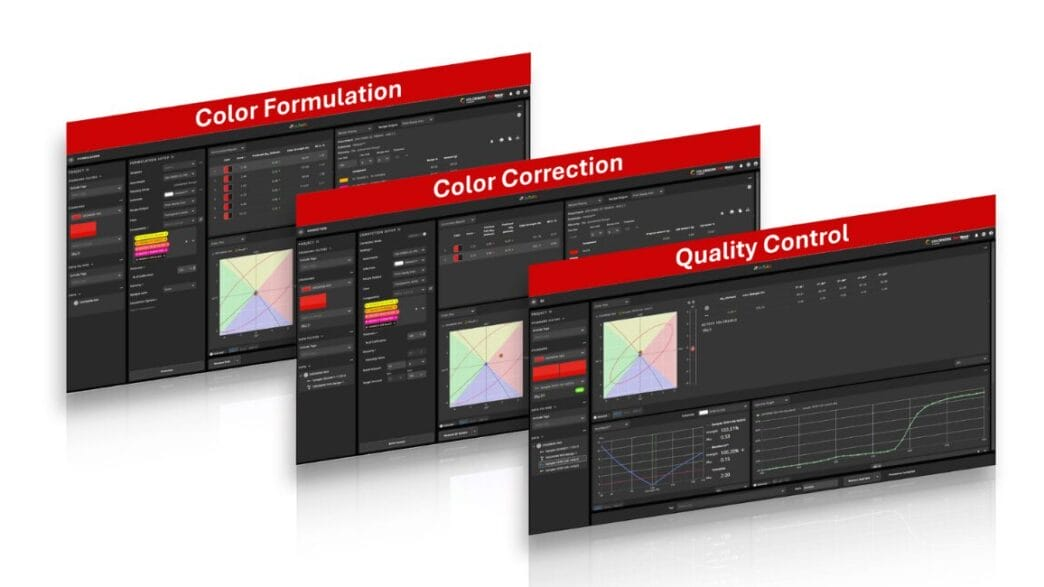
- COLORWERK FastMatch Cloud combines formulation, correction, recipe management, and quality control within one browser based system.
- Formula calculations can be completed in under 20 seconds, with PantoneLIVE integration and access across multiple plants.
- Returned press inks can be incorporated into new recipes, reducing waste and accumulated stock.
Siegwerk and X-Rite Pantone have launched a cloud based colour management platform that connects ink formulation, correction, recipe management, and quality control across packaging printing operations.
COLORWERK FastMatch Cloud gives printers and converters browser based access to approved colour standards, customer tolerances, press parameters, and formulation data. Because the information is stored centrally, technical teams at different presses or production sites can work from the same controlled records rather than maintaining separate local databases.
Formula calculations can be completed in under 20 seconds, while the platform is around 50% faster than the previous generation of FastMatch software. It can generate a new recipe, correct an existing formulation when production conditions change, and assess whether returned press ink can be incorporated into a later job without moving the resulting colour outside its permitted tolerance.
Returned ink remains a persistent source of cost and waste within packaging print rooms, particularly where brand owners specify numerous spot colours across relatively short campaigns. Once the required quantity has been printed, partially used inks may remain in storage without an obvious future application, creating an expanding inventory that occupies space, ties up material, and gradually becomes more difficult to reuse.
By recording the colour and quantity of available ink, then including that material in subsequent calculations, the software can bring suitable returns back into production. The formulation engine determines how much fresh ink and which additional colourants are required to achieve the new target, allowing material recovery to become part of routine recipe development rather than a separate manual exercise.
PantoneLIVE integration supplies digital colour standards, while shared access allows laboratories, press operators, and quality teams to consult the same approved information. Recipe histories and correction data can remain attached to the relevant job, reducing the risk of knowledge being lost when it is confined to an individual operator, workstation, or plant.
More variants place pressure on print control
Food and beverage packaging portfolios have grown increasingly complex as manufacturers introduce regional recipes, retailer specific formats, promotional designs, multiple languages, and more frequent artwork changes. Even where the central brand colour remains unchanged, variations in board, film, coating, print process, and surface finish can alter the appearance of the finished pack.
Shorter campaigns compound the difficulty because every additional minute spent correcting colour consumes a larger share of available production time. A long campaign can absorb a detailed press set up across hundreds of thousands of packs, whereas a small seasonal run may become uneconomic when make ready waste, laboratory work, and repeated adjustments account for much of the job.
Faster formulation can reduce the amount of substrate and ink consumed before saleable colour is achieved, although the software remains dependent on accurate production data. A cloud platform cannot compensate for poorly characterised substrates, inconsistent ink handling, weak measurement procedures, or unstable press conditions, so converters will still require calibrated instruments and disciplined quality controls.
Centralised recipes may nevertheless reduce avoidable variation between sites. When a formulation has already been approved for a particular substrate and print process, another plant can begin from the established recipe and its recorded tolerances rather than recreating the work independently. Local validation remains necessary where presses, anilox rolls, drying conditions, or material batches differ, but the starting point is better controlled.
The development continues a wider movement towards packaging systems in which machinery, materials, service, and production information operate as connected elements. The same pattern can be seen in integrated packaging platforms that combine films, equipment, controls, and technical support, reducing the separation between material specification and line performance.
Colour formulation is following a similar route as recipe data becomes connected more closely with inventory, quality records, and press activity. The change gives production managers a clearer view of which inks are available, which formulations are approved, and where repeated corrections may indicate a process problem rather than an isolated colour mismatch.
Greater reliance on a shared platform also places resilience and access control alongside colour accuracy. Plants operating continuously need formulation data whenever a job reaches the press, so network availability, backups, user permissions, software validation, and supplier support become part of the production risk assessment.
Converters will also need clear authority over changes to master data. An operator may require the ability to adjust a recipe during production, while only a smaller group should be able to alter approved standards or customer tolerances. Without controlled permissions, the convenience of shared access can create uncertainty over which version represents the authorised formulation.
COLORWERK FastMatch Cloud will be demonstrated at LOUPE Americas in Chicago during September. Its introduction moves colour formulation beyond the isolated laboratory workstation, placing ink recipes, press corrections, material recovery, and quality records within a common production environment.