IN Brief:
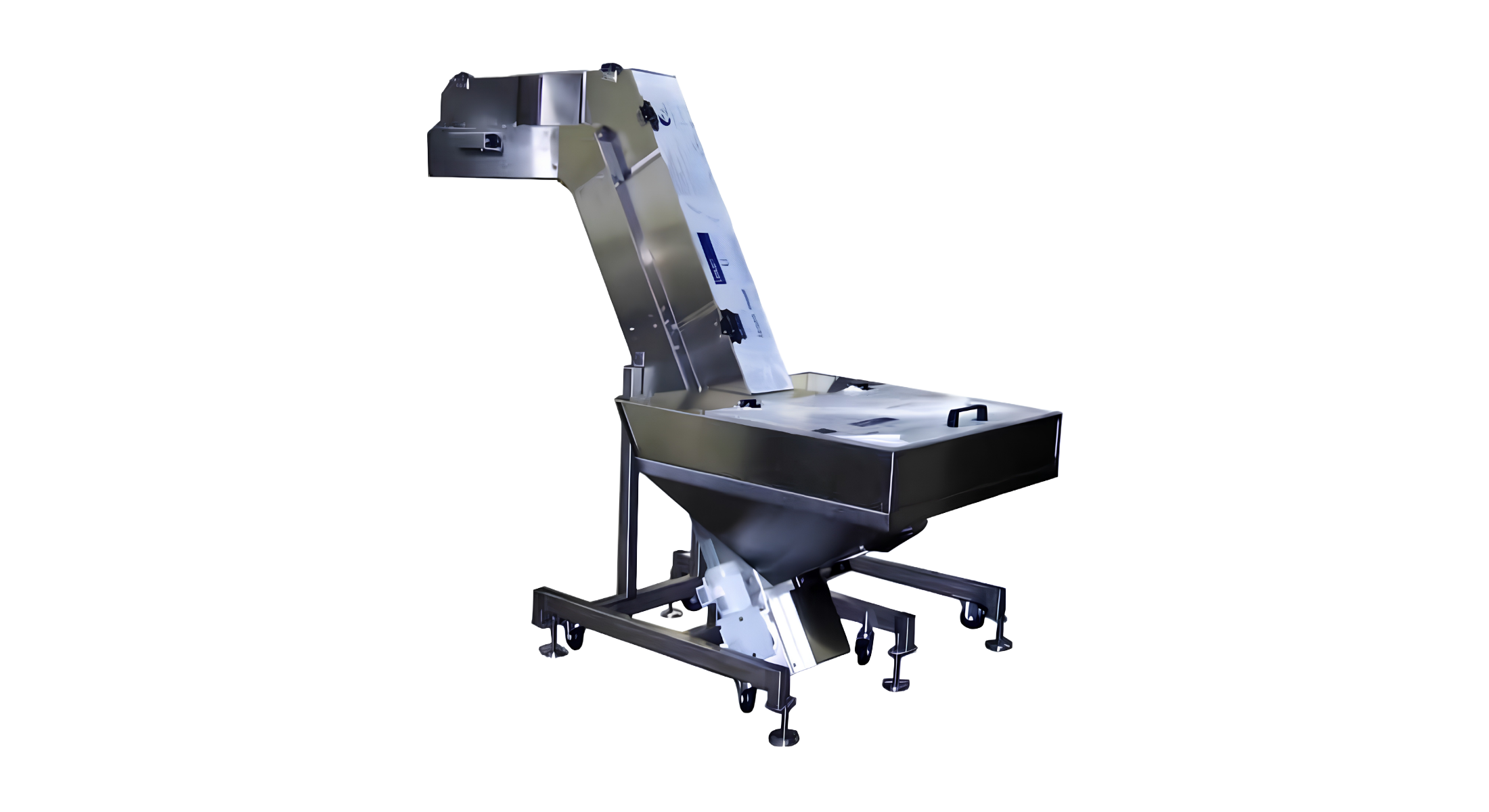
- The EH Series uses cleated conveyors to elevate products before transferring them horizontally.
- Five models provide hopper capacities from 8 to 50 cubic feet.
- Stainless steel construction and configurable discharge arrangements support integration into food and packaging lines.
Shibuya Hoppmann has highlighted its EH Series horizontal discharge elevating prefeeders, which move bulk products into feeding and packaging equipment while reducing scuffing, scratching, and impact.
The systems use a cleated modular conveyor to lift products from a floor level hopper before carrying them across an elevated horizontal section. Material is then deposited close to a feeder, bowl, unscrambler, or other receiving machine.
Because the final movement is horizontal, the discharge point can sit closer to the downstream equipment than on a conventional inclined elevator. Products experience a shorter fall, limiting the energy transferred when they enter the receiving system.
The range comprises EH-08, EH-15, EH-25, EH-35, and EH-50 models, with hopper capacities from 8 to 50 cubic feet. Smaller units are intended primarily for medium sized products, while the larger models provide greater capacity for medium and larger items.
Actual output depends on product shape, weight, surface, belt configuration, discharge height, and the demand from downstream machinery. A heavy duty variable speed drive allows the flow to be adjusted so that the feeder receives enough material without becoming overloaded.
Stainless steel frames support use in demanding production environments, while available options include washdown construction, welded seams, covers, cleanout access, casters, and hopper agitation. The final configuration can therefore be adapted to the sanitation method and layout of the plant.
The elevated horizontal section can pass over existing machinery, allowing the hopper to stand away from a congested packaging cell. This can avoid moving several established machines simply to create a direct path between bulk loading and the receiving feeder.
Upstream flow governs line performance
Prefeeders do not orient or pack products, but they determine whether the next machine receives a steady and controlled supply. Too little material starves the line, while excessive delivery can overload bowls, create jams, increase recirculation, or damage products before packing.
Gentle handling becomes particularly important with brittle foods, coated pieces, wrapped products, or items that mark easily. Belt speed, cleat dimensions, hopper pressure, and transfer height must be selected around the physical behaviour of the product rather than throughput alone.
A larger hopper reduces the frequency of manual loading, although added volume can increase pressure on delicate products near the bottom. Fragile pieces may break under accumulated weight, while flexible packs can interlock or become trapped between the belt and hopper surfaces.
The EH Series fits a broader movement towards packaging systems in which materials, machinery, controls, and line interfaces are developed together. The connection between two machines often determines more of the final output than the peak speed printed on either specification sheet.
Control logic is central to that connection. Sensors can monitor the level within a feeder or bowl, increasing supply as material falls and stopping the elevator when sufficient accumulation is present.
Recipe based settings can improve repeatability where the line handles several products. Operators can select an established belt speed and sensor response for each format rather than recreating the balance manually at every changeover.
Cleaning requirements will determine which applications are suitable for open food. Stainless steel supports sanitation, but belt design, hollow sections, ledges, fasteners, return paths, drainage, and access all need to match the plant’s hygiene standard.
Wet washdown environments require appropriate electrical protection, bearings, seals, and drainage, while dry cleaned lines need surfaces that can be opened and cleared without introducing unnecessary moisture. The chosen options must consequently reflect the actual product and sanitation method.
Restricted floor space remains a common problem in factories that have expanded over several investment cycles. An elevated horizontal conveyor can route material above an obstacle, although guarding, structural support, cleaning access, and safe maintenance space must still be incorporated into the layout.
Manual loading positions also require attention. Operators should be able to fill the hopper without lifting excessively, leaning into moving equipment, or working from temporary platforms, while bulk supply containers need enough access for safe movement.
Maintenance becomes increasingly important when the downstream line depends on a single prefeeder. Belt wear, damaged cleats, sensor faults, drive problems, and product build up can interrupt several machines, so inspection and spare parts planning should reflect the equipment’s position within the process.
The EH range provides a configurable route from bulk loading to controlled feeding, with the horizontal discharge reducing the final transfer distance. Its contribution will be visible through steadier downstream operation, less manual replenishment, fewer damaged products, and layouts that use restricted plant space more effectively.
As packaging speeds increase, brief interruptions in product supply account for a greater share of lost output. Reliable handling before orientation and packing therefore remains essential, even where the prefeeder itself is less prominent than the machine receiving its product.