IN Brief:
- The SIG DomeMini 12 Aseptic line fills up to 12,000 packs per hour across volumes from 180ml to 350ml.
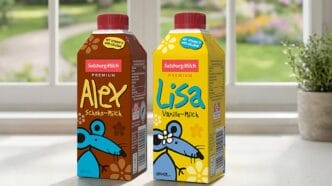
- SalzburgMilch has started production with Alex chocolate milk and Lisa vanilla milk.
- Fifteen minute volume changes support further branded, private label, and contract packing applications.
SalzburgMilch has started commercial production on Europe’s first SIG DomeMini 12 Aseptic filling line, introducing the carton bottle format through its Alex chocolate milk and Lisa vanilla milk products. Further products are already being developed with brand owners and retail partners.
The new line can fill up to 12,000 packs per hour and supports seven volumes between 180ml and 350ml on the same machine. A change between pack volumes takes about 15 minutes, allowing the dairy to move among portion sizes without the extended mechanical conversion associated with less flexible filling platforms.
SIG DomeMini combines the body of an aseptic carton with a centrally positioned closure and a contoured upper section intended to provide the handling characteristics of a small bottle. The format can be opened, resealed, stored, and consumed directly from the pack, while retaining the ambient distribution advantages available to suitable aseptically processed products.
Alex and Lisa provide the initial commercial application, although the system can also handle speciality milk, protein drinks, plant based alternatives, meal replacements, yoghurt drinks, smoothies, and other liquid foods. The breadth of compatible applications creates room for SalzburgMilch to expand its own portfolio while supplying private label and contract packing customers.
SalzburgMilch processed 344 million kilograms of milk in 2025, including more than 203 million kilograms supplied through organic, hay milk, and other designated programmes. Alongside its branded dairy portfolio, the company already produces private label products and undertakes contract filling for dairy and plant based customers.
That production model can make greater use of a line capable of handling several pack sizes and product categories. Contract packing customers seldom require identical recipes, volumes, artworks, or production quantities, so the commercial performance of the asset will depend on scheduling and changeover management as much as its nominal filling speed.
Aseptic capacity is also expanding elsewhere in European beverage manufacturing, including Wosana’s investment in additional Krones filling capability. Manufacturers are seeking longer production windows, reduced dependence on chilled distribution, and more flexibility to run functional drinks and smaller formats without building separate lines around each category.
Small dairy and nutritional drinks have become more technically diverse as manufacturers increase protein levels, add cereal or fruit components, introduce plant materials, and reduce sugar. Those changes influence mixing, sterilisation, homogenisation, fouling, filling behaviour, and cleaning. Packaging flexibility has limited value unless the upstream process can deliver each formulation consistently and release the line quickly for the next product.
Rapid volume conversion can nevertheless reduce one substantial source of downtime. Different portion sizes are used to distinguish children’s drinks, protein products, meal replacements, convenience formats, and higher value speciality lines. Running those formats on one machine can improve asset utilisation and reduce the inventory of dedicated format parts, provided packaging material and closure supply remain coordinated with the production plan.
The carton bottle’s ambient capability can also influence storage and distribution. Products that do not require refrigeration before opening can move through conventional warehouse space and avoid part of the energy and capacity burden associated with chilled logistics. Pack dimensions, pallet efficiency, weight, and resistance to distribution damage will determine how far those gains extend beyond the filling hall.
SalzburgMilch’s first commercial runs move DomeMini from a planned European introduction into an operating dairy environment. Future utilisation will be shaped by the number of products transferred to the platform, the balance between branded and contract work, and the line’s ability to sustain hygiene and output while moving through increasingly varied production schedules.