IN Brief:
- T&R Theakston and Equinox Kombucha have launched an alcohol free beer and kombucha hybrid.
- Hopbucha combines fermented tea with hop selection and brewery product development expertise.
- Initial online sales will be followed by expansion into grocery, convenience, farm shops, and hospitality.
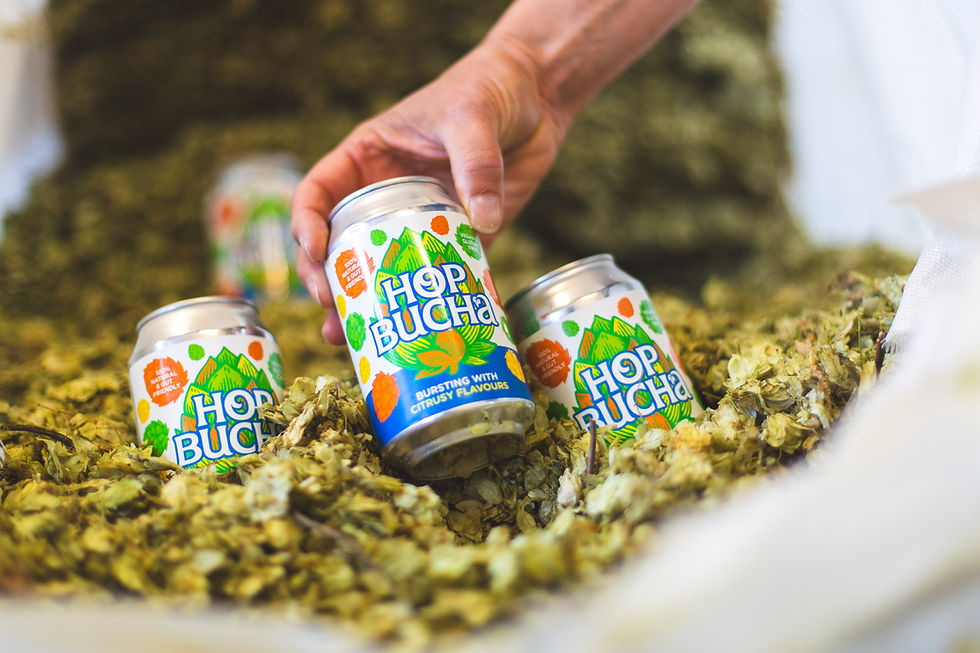
T&R Theakston and Equinox Kombucha have launched Hopbucha, an alcohol free fermented drink combining tea, live culture fermentation, and lager inspired hop character.
The collaboration brings together Theakston’s brewing operation in Masham and Equinox’s kombucha business near Halifax. The product occupies ground between alcohol free beer, adult soft drinks, and fermented functional beverages.
Equinox ferments sweetened tea using a symbiotic culture of bacteria and yeast, commonly described as a SCOBY. The process produces organic acids, aroma, and mouthfeel before Theakston’s hop selection is used to add citrus bitterness and a profile familiar to beer drinkers.
Hopbucha will initially be sold through Amazon and the two producers’ websites before moving into supermarkets, convenience stores, farm shops, and hospitality. The launch adds another format to the growing range of drinks intended for social occasions without alcohol.
Theakston already produces Nowt Peculier 0.0% beer, while Equinox has manufactured kombucha for almost 15 years. The new product does not attempt to reproduce conventional beer directly, instead using fermentation and hops to create complexity from a tea base.
Bringing those methods together allows each company to use capability already established within its own operation. Equinox contributes culture management and tea fermentation, while Theakston brings knowledge of hop aroma, bitterness, balance, and adult drinking occasions.
Fermentation categories converge
Alcohol free beverage development has moved beyond removing ethanol from beer, wine, or spirits. Producers are using tea, botanicals, fermentation, fruit, acids, and functional ingredients to construct drinks with enough flavour structure to compete in adult occasions.
Kombucha provides acidity and fermentation character without requiring a full beer process followed by dealcoholisation. Avoiding alcohol removal can reduce flavour loss and eliminate the need for membrane, vacuum, or distillation equipment.
The process remains technically demanding because fermentation time, temperature, sugar conversion, culture condition, oxygen, and contamination all influence the finished drink. Batch variation that appears acceptable at very small scale becomes more visible as retail volume and shelf life increase.
Scaling kombucha has already prompted investment in larger vessels and adapted brewery infrastructure, including Momo Kombucha’s expanded London fermentation site. Hopbucha approaches the same production crossover through a formal collaboration between a brewery and a specialist fermenter.
Hop character adds another source of variability. Variety, crop year, storage, dose, contact time, temperature, and extraction method determine aroma and bitterness, requiring sensory standards that can be repeated through commercial production.
Tea quality and sugar composition similarly affect fermentation performance. Supplier changes or seasonal variation may alter nutrient availability, colour, flavour, and the rate at which acidity develops.
Stability determines distribution
Fermented drinks require a clear manufacturing decision over whether microorganisms remain active throughout shelf life. Continued fermentation after packing can change sweetness, acidity, flavour, and package pressure.
Products distributed at ambient temperature need validated control of microbial activity and carbonation. Heat treatment, filtration, formulation, refrigeration, or combinations of these measures may be used, depending on the intended product characteristics.
Aluminium cans protect the drink from light and provide an established route through beverage filling and distribution. Seam integrity and pressure tolerance remain essential because dissolved gas and any residual biological activity are contained inside the package.
As production grows, raw material and packaging control will extend across tea, sugar, cultures, hops, flavours, cans, ends, trays, and cases. Fermented products can reveal small ingredient changes readily, placing additional weight on sensory and analytical release checks.
Cleaning and segregation must prevent unwanted organisms moving between batches or equipment. Culture health needs protection within the intended process while environmental yeasts, moulds, or bacteria are excluded.
The partnership gives Theakston access to a fermented soft drink category without developing every process internally, while Equinox gains brewing knowledge and broader route to market potential. Commercial performance will depend on whether buyers and customers understand the hybrid format clearly enough to support repeat purchases.
Behind the category language sits a conventional manufacturing requirement: the drink must remain consistent, stable, safe, and available while two fermentation traditions are combined at commercial scale. Those controls will determine whether Hopbucha progresses from an experimental collaboration into a durable production line.