IN Brief:
- AstaReal appointed Phoung Pihlträd as Head of Quality and Sustainability on 22 October, succeeding Kurt Haglund.
- Her experience includes process validation, product development and quality management across the pharmaceutical and food sectors.
- Existing astaxanthin production and batch testing provide the technical context; the announcement does not confirm new equipment or capacity.
Swedish astaxanthin producer AstaReal has appointed process engineer and nutritionist Phoung Pihlträd as Head of Quality and Sustainability, with responsibility for quality systems and improvement activity across its operations. Announced on 22 October, the appointment covers regulatory and customer requirements as well as the processes used to cultivate microalgae and prepare finished ingredients.
Pihlträd has worked in the pharmaceutical and food sectors, including process validation, product development and quality management. Her background also includes interdisciplinary research in occupational physiology and urban planning. She succeeds Kurt Haglund, whose involvement with AstaReal dates back to the company’s early years associated with Uppsala University.
Chief executive Daniel Flodqvist described her experience in industrial processes and quality as relevant to the appointment. AstaReal said she will work with operational teams to identify improvement opportunities and maintain consistency. It did not announce a plant expansion, new production equipment or altered capacity target.
The industrial setting is AstaReal’s production of natural astaxanthin from the microalga Haematococcus pluvialis. The organism can accumulate the red carotenoid pigment under controlled cultivation conditions. Manufacturing involves growing sufficient algae, encouraging pigment accumulation and converting the harvested material into ingredient formats suitable for customers.
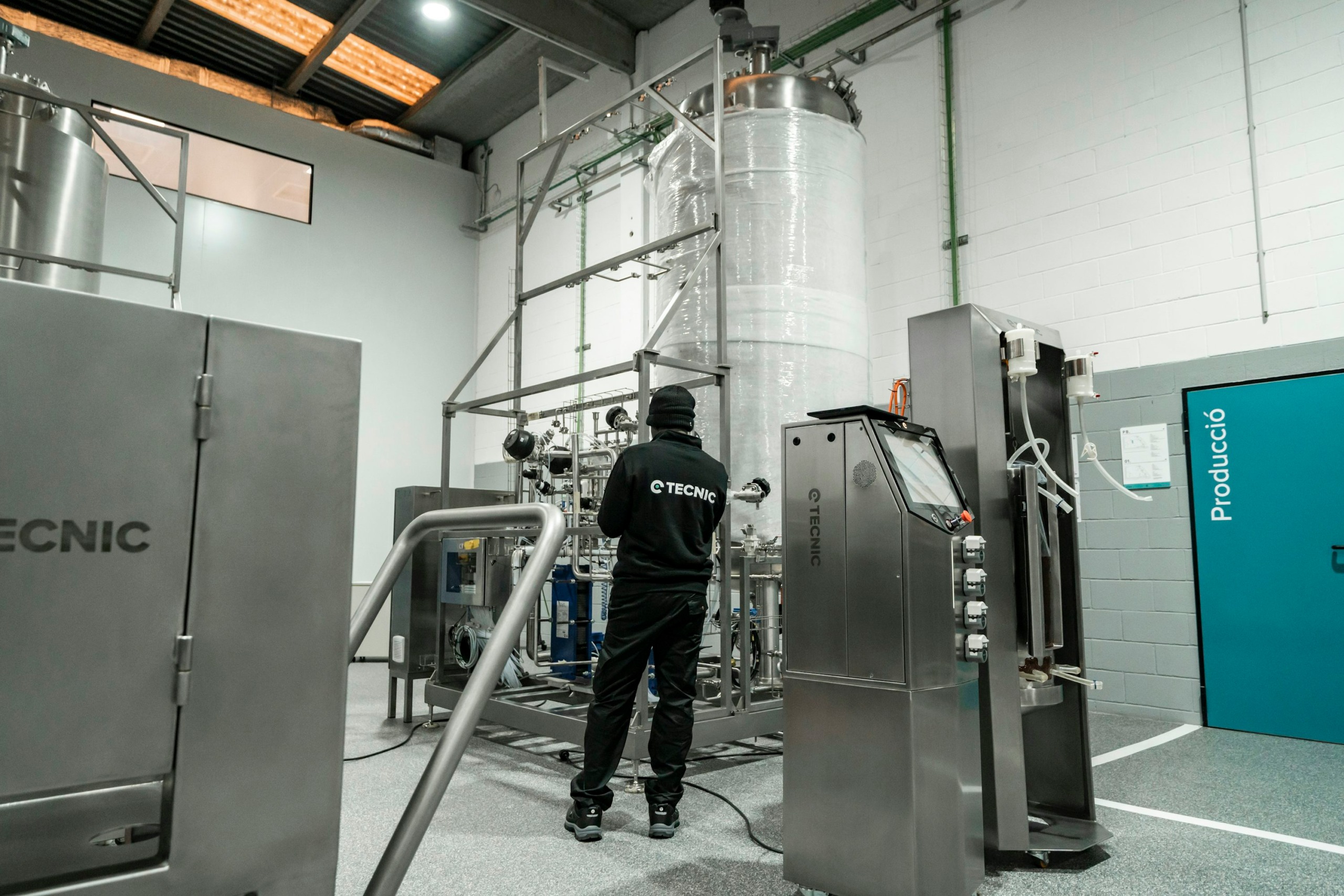
The process begins with a seed culture in a laboratory environment. AstaReal describes scaling the culture through successive stages until it reaches stainless steel photobioreactors, where light, nutrients and other variables can be managed. The company has previously described tanks holding 32 cubic metres, treating the contents of each as a separate production batch.
Each stage introduces potential sources of variation. Conditions that support growth during early cultivation differ from those intended to promote astaxanthin accumulation. Temperature, illumination, nutrient supply and the condition of the culture can influence the resulting material, making records and defined operating limits important to process control.
The manufacturer says its production uses indoor photobioreactors rather than relying on open outdoor ponds. That provides greater control over certain environmental conditions but does not eliminate the need for hygiene management or verification of finished batches. Equipment cleaning, culture monitoring and measures to detect contamination remain part of managing biological production.
Once the algae have reached the required stage, the biomass is harvested and processed. AstaReal describes downstream stages including cell disruption and drying, producing material for ingredient and finished product applications. Quality assessment must reflect the material at release, not merely the conditions measured earlier in cultivation.
The company’s previous quality account describes monitoring individual batches and retaining information about production conditions. A batch record provides a link between the material produced and the circumstances under which it was cultivated and processed. Such records help technical staff investigate deviations and assess whether the batch meets an agreed specification.
AstaReal also describes laboratory analysis of finished material, including testing relevant to astaxanthin concentration and purity. Work undertaken by external laboratories forms part of its established testing arrangements. The company has not claimed that Pihlträd is introducing a newly developed test or replacing an existing laboratory system.
Quality management in ingredient production also involves agreement between customer specifications and the supplier’s own release criteria. Customers using astaxanthin in supplements or other products may need evidence of composition, consistency and regulatory suitability. The exact requirements can vary by application and destination market.
The job’s sustainability remit creates a separate set of operating considerations. Cultivation and drying consume energy, while water, processing inputs and waste streams must be managed. AstaReal has previously discussed reusing surplus production heat and reducing the environmental footprint of its operations, but the October appointment announcement contains no new emissions target or independently measured resource saving.
Pihlträd’s experience in process validation is relevant because validation seeks evidence that a defined process consistently delivers results within predetermined requirements. In microalgae cultivation, that may involve reviewing operating conditions and analytical records across batches. The company has not specified a new validation programme or a revised processing method in connection with her arrival.
The appointment also has a continuity element. Haglund helped establish the company’s quality expertise, and the leadership change transfers responsibility for established systems as well as prospective development. The release does not identify a compliance failure, product recall or regulatory enforcement action as the reason for the transition.
AstaReal supplies natural astaxanthin internationally and belongs to the AstaReal Group, owned by Japan’s Fuji Chemical Industries. Different customer requirements and jurisdictions can add to the documentation and assessment needed for ingredient supply, particularly where the same production platform supports several product formats.
The company has given no timetable for specific changes to its manufacturing operation following the appointment. Pihlträd’s remit is to work with technical teams on compliance, process improvements and consistent quality; any measurable effect on batch performance, environmental outcomes or capacity will require separate operational evidence.