IN Brief:
- Jiangnan University vice-president Li Zhaofeng places alternative proteins within a wider future-food manufacturing framework.
- Synthetic biology, AI, precision nutrition, additive manufacturing, and intelligent production form part of the technology mix.
- Li argues that intelligent manufacturing remains at an early stage in China’s food industry and requires closer equipment-supplier collaboration.
Jiangnan University is placing alternative proteins within a wider model of future food production that combines biotechnology, artificial intelligence, precision nutrition, and intelligent manufacturing rather than treating new protein sources as an isolated category.
The framework was outlined by university vice-president Professor Li Zhaofeng during a conference held within Food Ingredients China 2026 and has returned to attention through current food-industry coverage. It represents an academic and industrial-development perspective, rather than a newly announced Chinese government policy.
Li identified alternative proteins alongside synthetic biology, artificial intelligence, additive manufacturing, nanotechnology, precision nutrition, and greater manufacturing automation as technologies capable of changing how food is sourced, formulated, produced, and consumed.
His framework puts those technologies against four broad requirements: food supply and quality, food safety and nutrition, dietary patterns, and the consumer’s need for enjoyment and wellbeing. Under that model, a future food has to solve more than one problem at a time.
Alternative proteins illustrate the point. Plant and microbial proteins can diversify the raw materials available to processors, but converting a biological source into a useful food ingredient requires separation, purification, fermentation, drying, formulation, texturisation, quality control, and reliable scale-up.
Those processes matter particularly where supply security is part of the objective. Li has highlighted China’s reliance on imported soybeans, including large volumes used within animal-feed systems, as one reason to consider a wider range of protein sources.
Diversification does not automatically mean replacement. Plant proteins, microbial fermentation, conventional animal protein, and biotechnology-derived ingredients have different costs, functional properties, nutritional profiles, resource requirements, and manufacturing constraints. The useful industrial question is where each can be processed economically into foods people will repeatedly buy.
Synthetic biology adds another production route by allowing microorganisms or biological systems to manufacture specific proteins, fats, flavours, or other compounds. At factory scale, that turns the discussion towards fermentation vessels, feedstocks, oxygen transfer, downstream separation, cleaning, contamination control, and the economics of recovering the desired ingredient.
Artificial intelligence enters at a different point. It can be used in formulation, process optimisation, quality inspection, predictive maintenance, demand forecasting, and other data-heavy tasks, but useful factory adoption depends on sensors, reliable data, interoperable control systems, and production equipment capable of acting on the information generated.
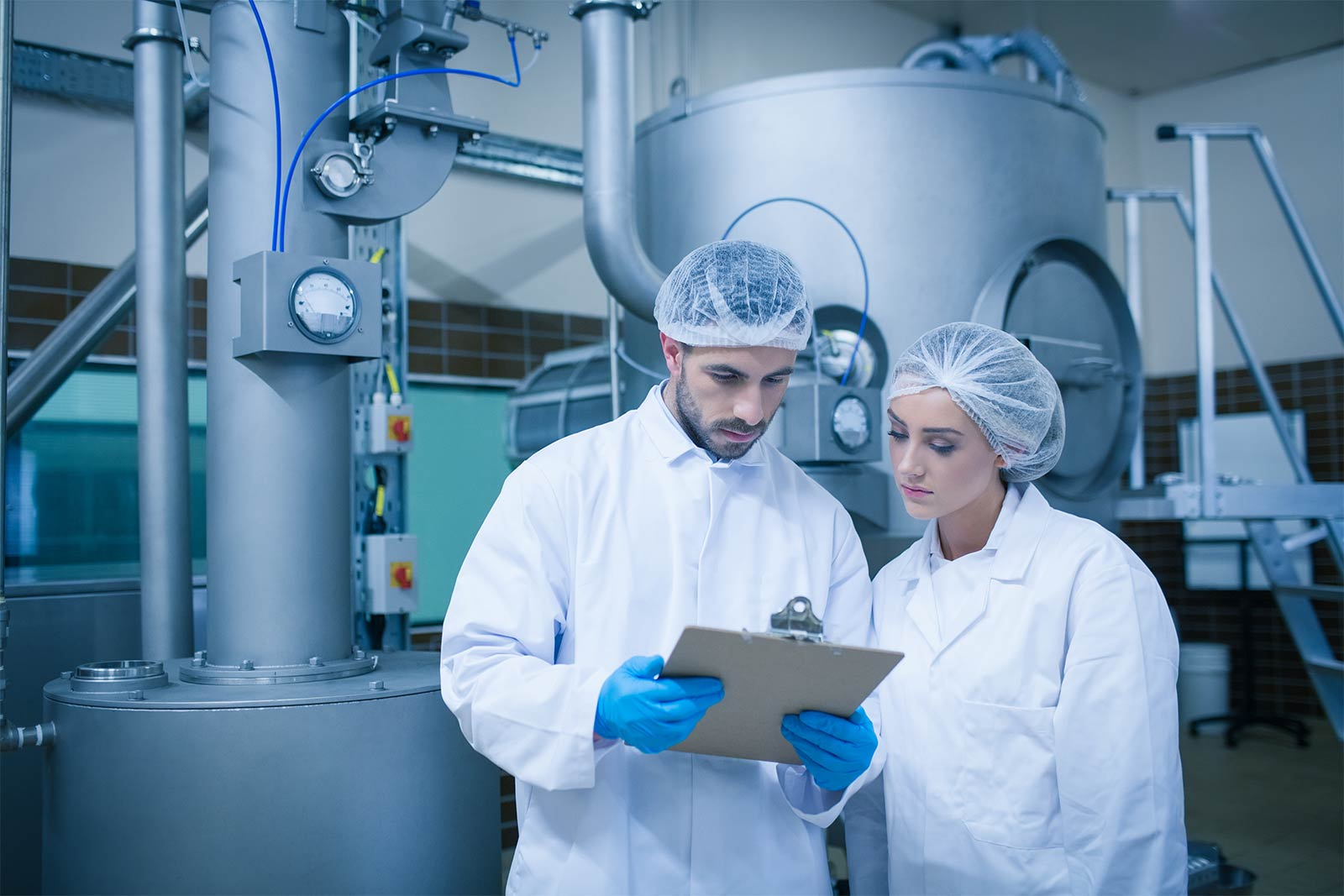
Li said intelligent manufacturing in China’s food sector remains at a comparatively early stage and highlighted closer cooperation between food companies and equipment manufacturers as a requirement for further digitalisation and automation.
That qualification gives the technology discussion a useful industrial boundary. Artificial intelligence cannot compensate for poor instrumentation or machinery that produces inconsistent data, while an automated line cannot respond intelligently if measurements are fragmented between incompatible systems.
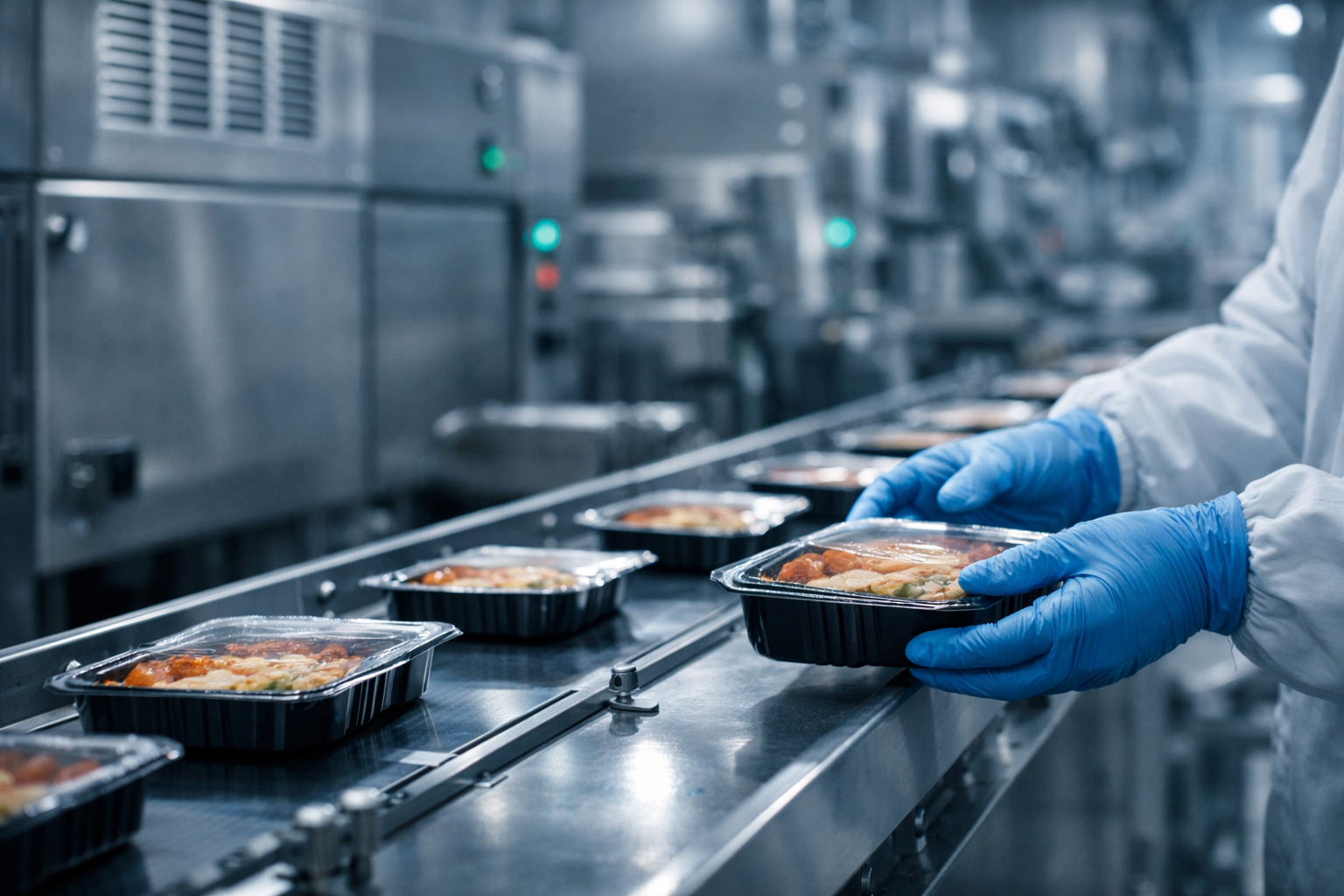
Food factories also present particular integration challenges. Equipment has to operate in hygienic environments, withstand cleaning, manage rapidly changing biological raw materials, and maintain traceability while running at commercially acceptable throughput. Digitalisation therefore has to work around physical production rather than treating manufacturing as a purely software problem.
Precision nutrition would add further complexity if it moves beyond research and niche products. Manufacturing foods aimed at increasingly specific nutritional requirements can lead to more formulations, shorter production campaigns, additional ingredients, and tighter control over composition, increasing the need for flexible lines and reliable product-change procedures.
Additive manufacturing and three-dimensional food printing sit further from conventional high-volume production in many applications, but they illustrate the same direction: greater control over food structure rather than relying exclusively on traditional mixing, forming, extrusion, or cutting.
Li’s model combines those manufacturing technologies with consumer acceptance. Future foods still have to meet expectations around flavour, texture, convenience, affordability, and enjoyment, even where they offer measurable nutritional or environmental advantages.
That point is particularly relevant to alternative proteins. Technical progress has made it possible to produce increasingly sophisticated meat and dairy alternatives, fermentation-derived ingredients, and structured plant proteins, but adoption remains dependent on sensory quality and price as well as production efficiency.
The framework therefore avoids presenting one technology as the answer to China’s food-system challenges. Alternative proteins can diversify supply; synthetic biology can create new ingredient routes; AI can improve decisions; and automation can make production more consistent, but each becomes useful only when it connects with processing equipment and viable products.
For manufacturers, that convergence is the more significant theme. Future food production is likely to involve biological science, formulation, digital control, and machinery increasingly working inside the same development process rather than being managed as separate technical disciplines.
The transition remains incomplete. Li’s own assessment that intelligent food manufacturing is still at an early stage leaves the difficult work with processors, equipment suppliers, ingredient manufacturers, and engineers — turning broad technology ambitions into plants that can produce safe, consistent food at a price the market will tolerate.