IN Brief:
- The CMA cleared Danone Holdings UK's anticipated acquisition of Huel at phase one on 20 August.
- Huel adds complete-nutrition powders and ready-to-drink products to Danone's expanding functional-nutrition portfolio.
- Integration will centre on ingredient supply, product specifications, manufacturing capacity, quality systems, and international expansion.
Danone has secured UK competition clearance for its planned acquisition of Huel, removing a significant regulatory hurdle as the group expands further into complete and functional nutrition.
The Competition and Markets Authority announced its phase-one decision on 20 August, confirming that it had cleared Danone Holdings (UK)’s anticipated acquisition of Huel Limited. The full text of the decision has not yet been published, so the regulator has not yet set out its detailed reasoning in public.
Danone announced the transaction in March, describing Huel as a complete-nutrition business with products spanning ready-to-drink formats and powders, supported by direct-to-consumer sales and a growing international presence. The acquisition remains subject to customary closing conditions, with regulatory approvals forming part of that process.
For Danone, the deal extends a portfolio that already covers dairy and plant-based products, waters, and specialised nutrition. Huel adds a business built around nutritionally complete meals and drinks, with formulation, digital sales, and product development playing a larger role than conventional grocery category boundaries.
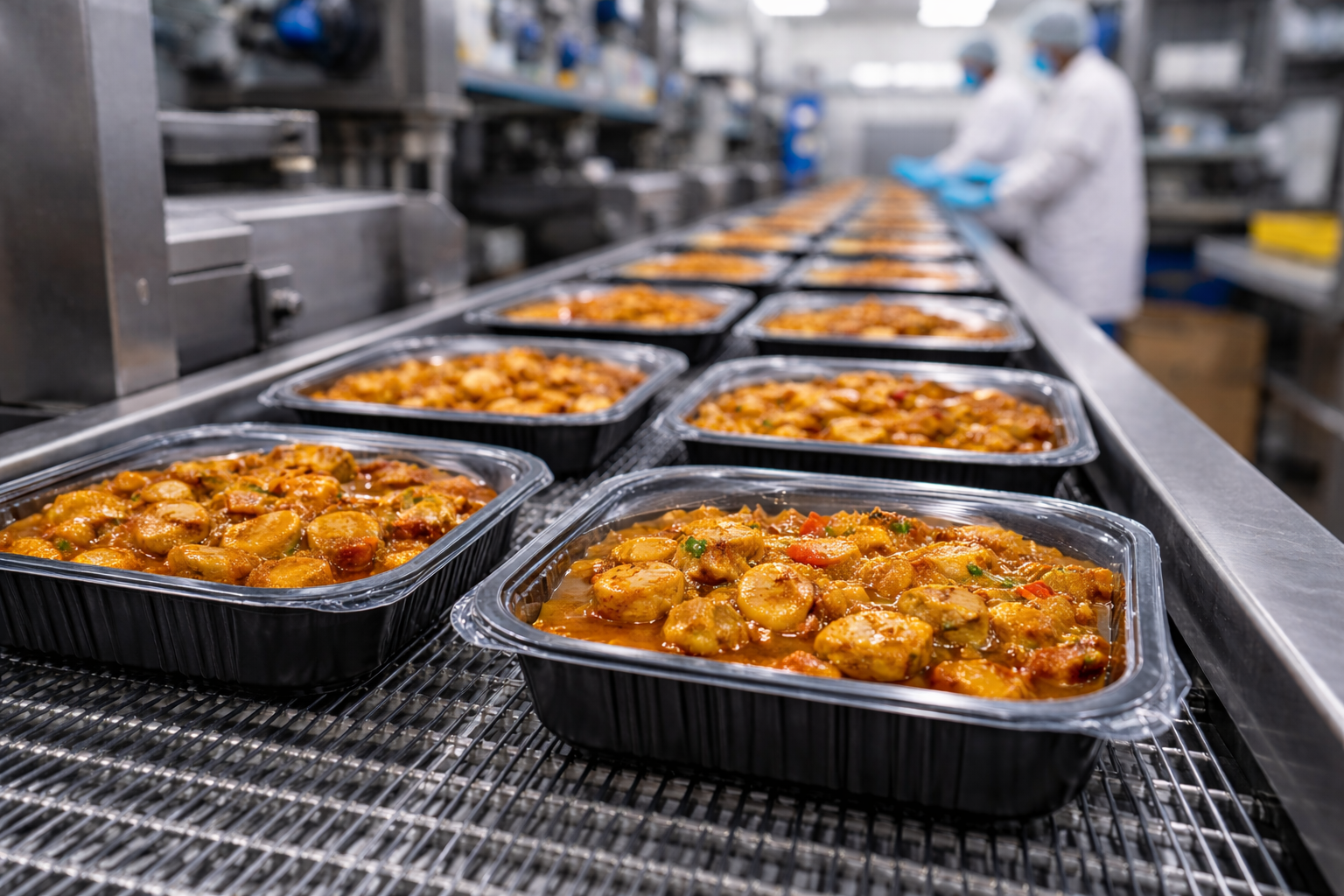
That distinction is important for manufacturing. Complete-nutrition products rely on controlled dosing of proteins, fibres, fats, vitamins, minerals, flavours, and other ingredients, while ready-to-drink formats add processing, filling, packaging, and shelf-life requirements. Scaling such products is therefore as much an operational challenge as a commercial one.
Integration now becomes the harder task
The CMA clearance removes uncertainty around one part of the transaction, but it does not resolve the practical work that follows ownership change. Danone has said its scale, infrastructure, distribution reach, and research and development capabilities can support Huel’s international expansion. Turning those assets into manufacturing advantage will require decisions on sourcing, production allocation, quality systems, and capacity.
Huel’s product range is built around a defined nutritional profile, which means formulation changes cannot be treated casually. Ingredient substitutions, supplier changes, or process adjustments may affect declared nutrition, texture, flavour, stability, and allergen controls. Larger purchasing scale can improve resilience, but every change still has to be qualified against the finished product specification.
Production strategy is another question. Huel has grown with a model that combines product development, digital demand, retail expansion, and third-party manufacturing. Danone has a much larger industrial base, but there is no published indication that Huel production will simply be moved into Danone factories. The more likely near-term task is to assess where Danone’s manufacturing, quality, procurement, and logistics capabilities can support growth without disrupting a model that has already scaled internationally.
Ready-to-drink products add particular demands because filling capacity, packaging formats, thermal processing, and distribution all have to remain aligned. Powders introduce different issues around dry blending, dust control, dosing accuracy, flavour consistency, and packaging. Managing both under one growth strategy requires more than adding headline volume.
The deal also gives Danone a stronger position in a category that sits between conventional food, sports nutrition, convenience, and specialised nutrition. That can create commercial opportunities, but it also places the business under a wide range of regulatory, nutritional, and consumer expectations across different markets.
Clearance leaves the industrial questions open
The CMA’s published notice is deliberately brief. It confirms clearance but does not yet explain how the authority assessed the relevant UK markets or why it concluded that the transaction did not require a deeper phase-two investigation. Those details will become clearer when the full decision is released.
For the manufacturing sector, the more immediate significance is that the acquisition can continue towards completion without a UK competition remedy. That allows attention to shift from regulatory risk to integration planning, where the value of the deal will depend on whether Danone can help Huel expand while preserving product consistency and the speed of development that helped build the business.
Ingredient supply will be one test. Complete-nutrition products depend on specialist proteins, vitamin and mineral premixes, sweeteners, flavour systems, and packaging materials that may not be interchangeable at short notice. Greater scale can strengthen purchasing power, but a larger group also has to prevent procurement standardisation from undermining formulations built around specific performance requirements.
Another test will be capacity. Growth into additional markets requires enough blending, liquid-processing, filling, packing, warehousing, and distribution capability to keep pace with demand. If production remains largely outsourced, supplier management and co-manufacturer capacity become central. If more manufacturing is brought inside Danone’s network, qualification and technology transfer become the issue instead.
The UK regulator has now removed one major obstacle to the acquisition, but the commercial logic will ultimately be judged in factories, supply chains, laboratories, and distribution networks rather than in the merger file. Clearance permits the deal to proceed; it does not make the integration work any less exacting.