IN Brief:
- KAIST identifies manufacturing readiness, rather than laboratory productivity alone, as a central commercialisation constraint.
- Raw-material consistency, fermentation scale-up, downstream processing, quality control, and by-product regulation all affect industrial viability.
- Predictable regulatory approval and usable product functionality remain as important as technical yield in determining market entry.
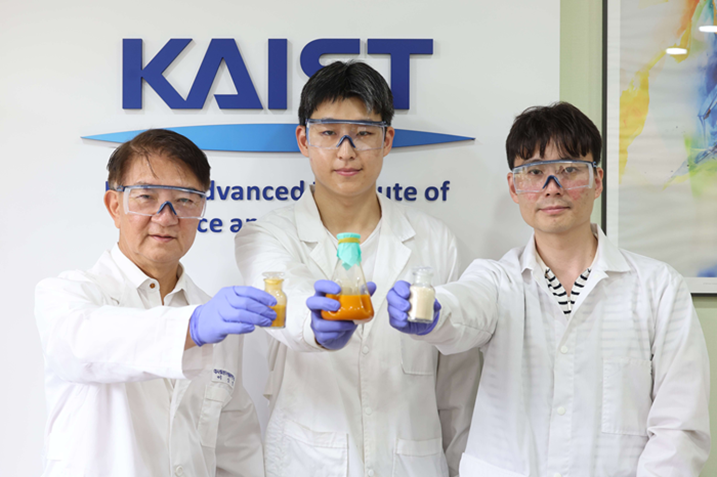
KAIST researchers have mapped the manufacturing, market, and regulatory barriers that can prevent microbial-food technologies moving from laboratory development into industrial production. The analysis argues that commercial competition is increasingly shifting away from laboratory productivity alone and towards the ability to operate dependable manufacturing systems at scale.
The research, carried out with KAIST faculty start-up SilicoBio, examines the steps between technical proof-of-concept and routine production. Rather than introducing a new microorganism or manufacturing process, the work analyses the conditions required to establish what the researchers describe as manufacturing readiness.
In practical terms, that means proving that a process can produce material reliably at industrial scale. The study identifies stable raw-material supply, quality control, management of non-model microorganisms, downstream processing costs, and compliance requirements around by-product recycling among the factors that can slow commercialisation.
The distinction matters because fermentation performance represents only part of the production chain. Once microorganisms have produced a target protein or functional compound, processors may still need to separate, purify, concentrate, and dry it before the material can become a usable food ingredient.
Those downstream stages can determine equipment requirements, energy consumption, yield losses, and operating cost. A fermentation process that performs strongly in a development vessel can become uneconomic when separation and purification are considered at larger scale, particularly where the target material is present at comparatively low concentration or requires tight purity specifications.
KAIST’s analysis therefore places emphasis on integrated manufacturing platforms. The proposed model connects strain development, large-scale fermentation, purification, quality control, and product formulation rather than treating each stage as an isolated technical problem.
Raw-material selection is part of that integration. Different feedstocks can change pretreatment requirements, introduce variability, and affect operating costs, while the choice of microorganism and fermentation route can influence productivity, energy use, and finished-product characteristics. Optimising a strain without considering the implications elsewhere in the process can consequently move cost or complexity downstream.
Food manufacturers face a further hurdle once the ingredient leaves the production plant. Commercial adoption depends on functionality in actual products, not simply on whether the material can be produced. Taste, texture, safety, familiarity, and performance in formulation all influence whether a microbial ingredient becomes useful to a customer.
The research also highlights regulatory predictability as an industrial factor. KAIST compares the European Union’s Novel Food authorisation process with the US GRAS notification framework and argues that approval procedures and time to market influence companies and investors alongside technical performance.
That creates a familiar problem for scale-up projects. A manufacturer can have a workable process and still struggle to justify larger capacity if regulatory timing is uncertain or customers cannot predict when an ingredient will become commercially usable. Conversely, regulatory approval alone does little if production economics remain dependent on expensive purification, unreliable feedstocks, or small development batches.
The paper positions microbial foods more broadly than alternative proteins alone. The researchers see potential links with precision-fermentation ingredients, functional compounds, biomaterials, and circular biomanufacturing systems that use renewable feedstocks or by-products as inputs.
SilicoBio’s involvement gives the analysis a direct commercialisation context. The company, founded in June 2025 by KAIST Distinguished Professor Sang Yup Lee, is working on systems that connect strain design with fermentation scale-up, purification, pilot production, product development, and process validation.
That overlap does not make the research a validation of SilicoBio’s own products. Its useful contribution is the attempt to define the less glamorous parts of microbial-food scale-up that sit between a promising laboratory result and a dependable factory: raw-material consistency, separation cost, process validation, quality assurance, regulatory approval, and repeatable customer supply.
The underlying paper, Microbial foods as scalable platforms toward a circular protein economy for sustainable nutrition, was published in One Earth on 17 July 2026. KAIST subsequently detailed the analysis in its research news service on 31 August.
That timing also underlines the distinction between scientific publication and industrial consequence. The technology base for microbial foods continues to develop rapidly, but the next meaningful evidence will come from plants that can sustain fermentation campaigns, downstream yields, product specifications, and customer deliveries at commercial scale. Manufacturing readiness is where many of those claims will either survive contact with the factory or quietly disappear.