IN Brief:
- The Fresh Factory produced 14.6 million packaged units in Q2 2026, 40.3% more than a year earlier, while billed revenue rose 23% to $13.6 million.
- Carol Stream closed on 30 April, leaving Bolingbrook and Downers Grove as the company's two Illinois manufacturing sites, totalling about 210,000 sq ft.
- Bolingbrook ramp-up and residual dual-site costs compressed margins, with management expecting those effects to recede during the second half.
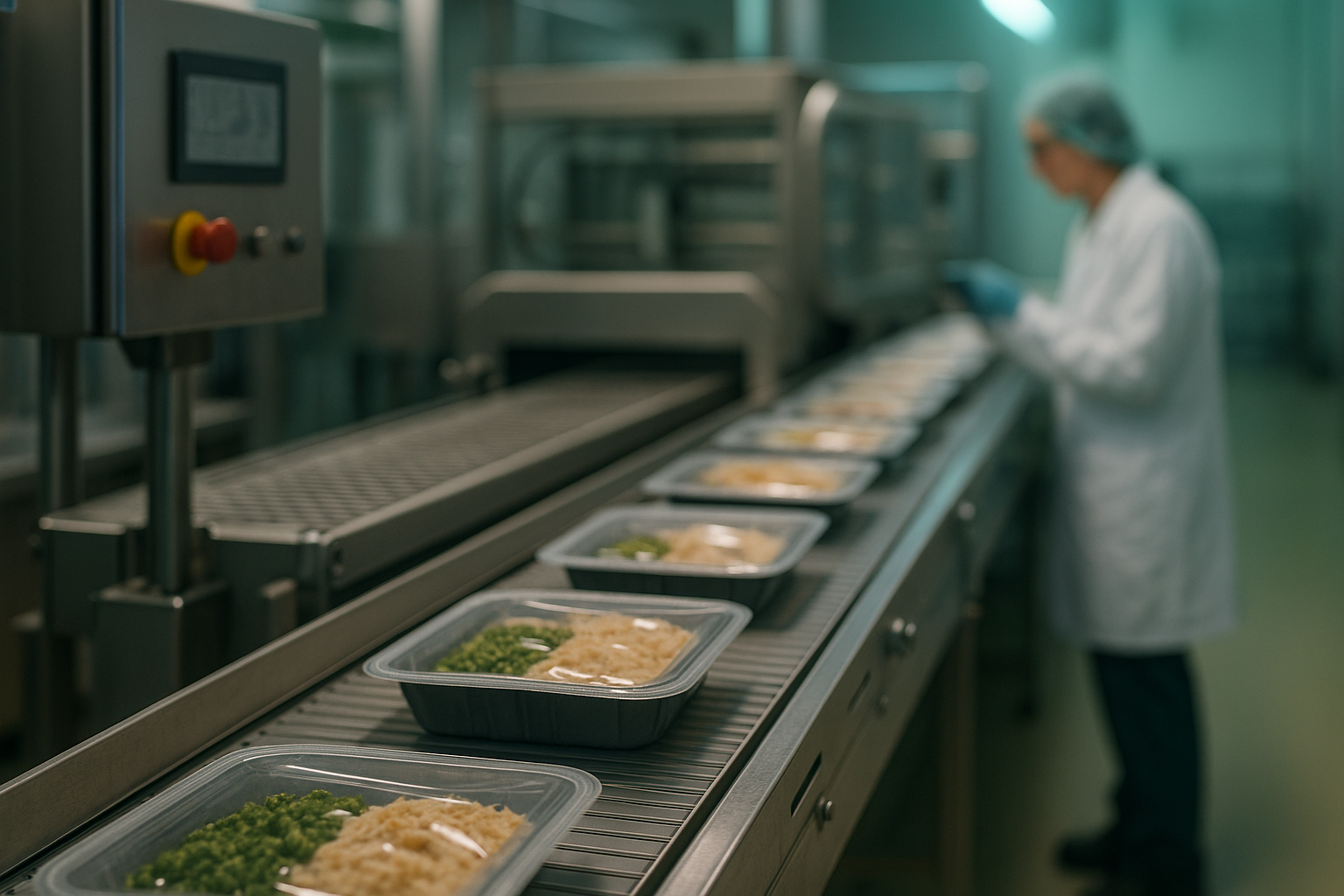
The Fresh Factory has completed the consolidation of its Illinois manufacturing footprint, closing its legacy Carol Stream operation while reporting a 40.3% increase in packaged-unit production during the second quarter of 2026.
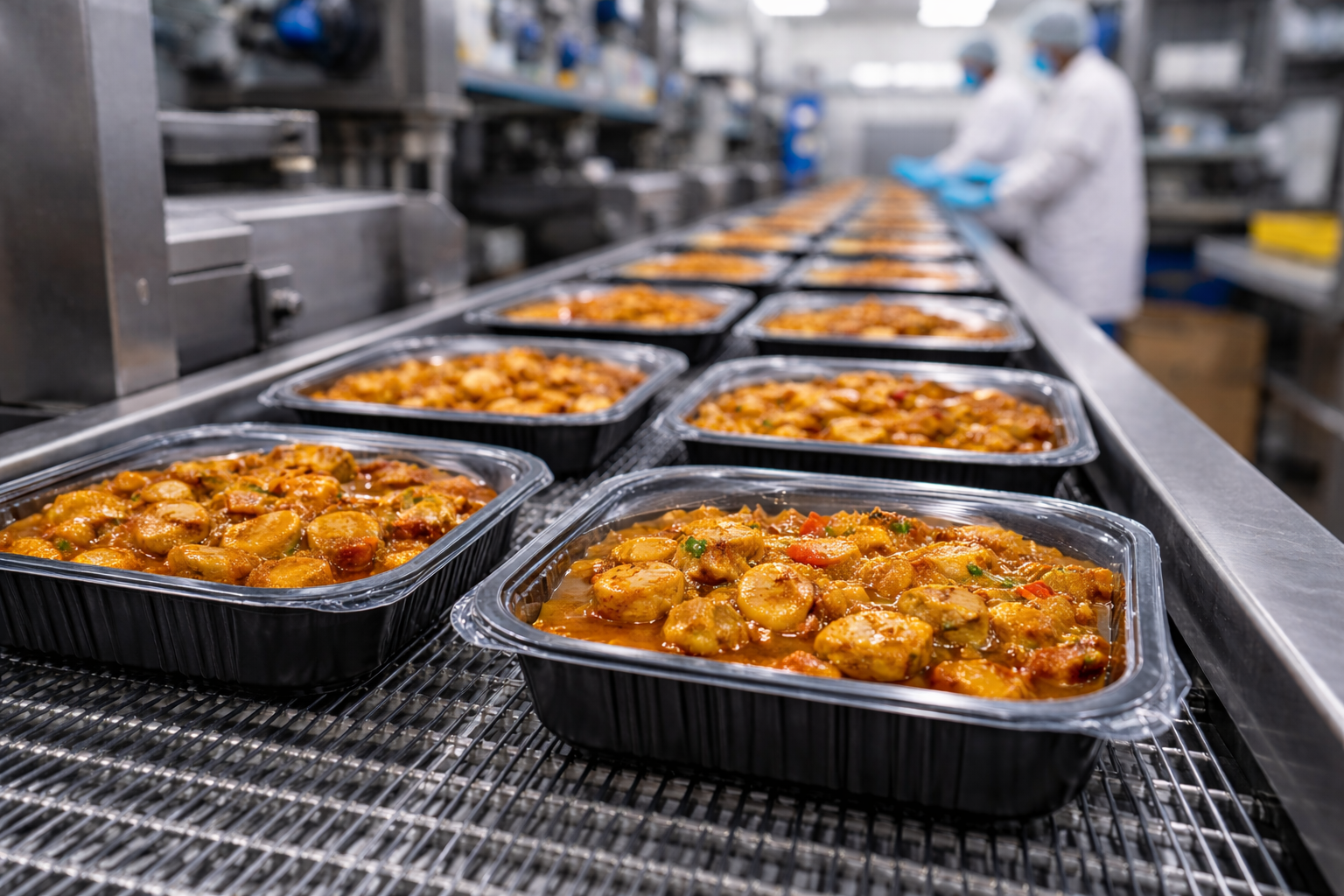
The food and beverage co-manufacturer produced 14.6 million packaged units during the period to 4 July, compared with roughly 10.4 million a year earlier. Company-defined billed revenue increased 23% to $13.6 million as sales grew across existing strategic customers and new accounts.
The operational change behind those figures is the transfer of production into a two-site system based around Bolingbrook and Downers Grove. Carol Stream closed on 30 April, completing a relocation programme that had temporarily required the business to carry costs for both its legacy and replacement manufacturing footprint.
The two remaining plants provide approximately 210,000 sq ft of manufacturing space. Bolingbrook is the newer operation and has been ramping production following a retrofit intended to expand capacity across categories including condiments, dips, beverages, and hot-fill products.
Bill Besenhofer, chief executive officer and co-founder, said: “With production now consolidated across two modern facilities, we have the capacity and flexibility to support our customers as they grow.”
Higher production has not yet translated into equivalent margin growth. Adjusted gross margin was $4.1 million during Q2, only slightly above $4 million in the comparable period, while the adjusted gross-margin percentage fell from 36% to 30%.
The company attributed that compression to changes in product mix and the cost of bringing Bolingbrook towards full utilisation. Operating profit fell from $1.8 million to $1.1 million, with operating margin declining from 15.9% to 8.4%.
Adjusted EBITDA was $0.6 million against $0.8 million in Q2 2025, while the company moved from net income of $0.2 million to a net loss of $0.7 million. The Fresh Factory notes that billed revenue, adjusted gross margin, operating profit, EBITDA, and adjusted EBITDA are non-IFRS measures, so they should be read alongside its statutory reporting rather than as interchangeable accounting measures.
The figures expose a familiar issue with food-manufacturing expansion. Physical capacity can be added before enough production has moved into the facility to absorb its utilities, maintenance, labour, and other fixed costs. Carrying an outgoing factory at the same time increases that burden further.
Closing Carol Stream removes one of those transitional costs, leaving management to show whether the larger Bolingbrook site can convert its installed capacity into stronger manufacturing economics. The increase in packaged units suggests the production transfer has not prevented substantial volume growth.
Output grew considerably faster than billed revenue, however, which indicates that unit count alone does not describe the commercial mix. Different pack formats and products carry different manufacturing values, material costs, labour requirements, and margins, so a 40% increase in units cannot be read as a 40% improvement in economic output.
The Fresh Factory serves clean-label and better-for-you food and beverage brands and combines product development, sourcing, manufacturing, packaging, logistics, and warehousing. That co-manufacturing model places particular weight on flexibility because several customers can bring different formulations and pack requirements onto the same factory estate.
Additional square footage is useful only where lines can move between those programmes efficiently. Product changes can require different raw materials, allergen controls, cleaning regimes, packaging components, process temperatures, and production campaign lengths, all of which consume available capacity even when equipment itself is not running.
A larger site gives the business more room to separate operations and add customer programmes, but it also creates a utilisation target. Under-used floor space still carries heating, cooling, sanitation, maintenance, insurance, and other costs that have to be recovered through saleable production.
The Illinois Department of Commerce and Economic Opportunity has provided some capital support through a $765,000 Business Attraction Prime Sites grant. The funding is associated with the Bolingbrook relocation, improvements at Downers Grove, capital expenditure, and job creation.
The company’s factory investment also included replacing ageing HVAC equipment with higher-efficiency units. That may appear secondary beside production equipment, but environmental control is a persistent utility load in food operations where temperature and air conditions have to be maintained across processing and packing areas.
Management expects the margin effects associated with the relocation to recede progressively through the second half as production consolidates and the new footprint becomes more efficient. That remains an expectation rather than a completed result.
The next quarters should make the economics easier to judge because Carol Stream is no longer running alongside Bolingbrook. Utilisation, labour productivity, changeover performance, utilities, maintenance, and the value of the product mix will have fewer transitional costs behind which to hide.
The Q2 figures already demonstrate that the new footprint can carry materially more packaged volume. The more important question is whether the company can now increase the amount of margin generated by those 14.6 million units rather than simply prove that it has enough factory space to make them.