IN Brief:
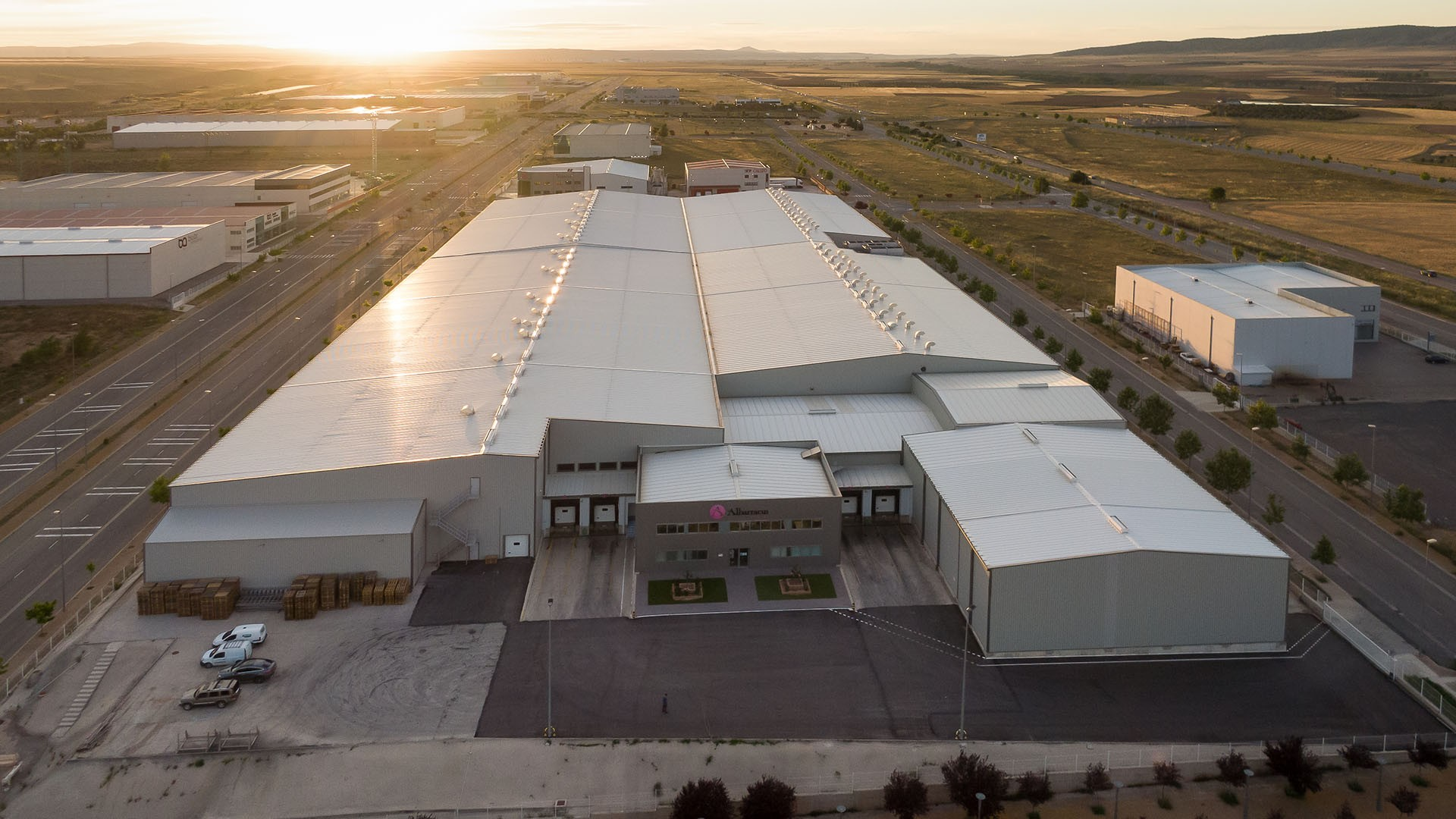
- Jamones Albarracín operates three production centres with capacity to cure up to four million hams.
- Grupo Fuertes plans investment in facility modernisation, expansion, and additional drying capacity.
- The acquired company will continue contract curing for existing and future third-party customers.
Grupo Fuertes has acquired Spanish ham-curing specialist Jamones Albarracín, giving the food group three additional production centres and entry into the contract-processing market for dry-cured ham.
The Teruel-based business has operated for 25 years and provides salting, drying, and curing services for third-party customers. Grupo Fuertes says the operation has capacity to cure up to four million hams and will continue serving existing and future contract customers following the acquisition.
The buyer also plans additional investment in the sites, including facility expansion, modernisation, and increased productive capacity in the drying operations. The existing workforce and management expertise will remain part of the business as the investment programme develops.
Jamones Albarracín occupies a specialised position in meat processing because contract curing is heavily dependent on physical capacity and time. Unlike fresh meat packing or cooked-product lines, dry-cured ham occupies controlled production and storage space for extended periods, so output cannot be increased simply by running a packaging machine faster.
Salting is followed by post-salting, drying, and maturation stages in which temperature, humidity, air movement, product weight, and time all influence the finished ham. Greater throughput therefore requires sufficient controlled space at each stage as well as systems capable of keeping individual lots traceable during a process measured in months rather than minutes.
Grupo Fuertes’ plan to increase drying capacity addresses that constraint directly. Additional or upgraded drying rooms can expand the number of pieces moving through production, although higher volumes also increase demands on refrigeration, ventilation, humidity control, energy management, product handling, and stock visibility.
Food safety and quality assurance are equally important because customers are handing over high-value raw material for one of the longest processing stages in meat manufacturing. Jamones Albarracín holds IFS and BRC certification, while its experience covers salting, drying, curing, and the associated handling needed to maintain product identity through the process.
The acquisition gives Grupo Fuertes a service operation that differs from a conventional branded-food purchase. Jamones Albarracín will continue processing product for external customers rather than becoming solely an internal production unit, creating a need to maintain commercial neutrality between third-party volumes and the requirements of companies elsewhere within Grupo Fuertes.
That balance will be watched particularly closely because ElPozo Alimentación, part of Grupo Fuertes, is expected to use the acquisition to develop its strategic Ham Project. Access to dedicated curing expertise and capacity can strengthen ElPozo’s own programme, but Jamones Albarracín’s contract customers will still expect dependable access to plant capacity and the same service model after the change of ownership.
The structure can work in the acquired company’s favour if investment expands the available capacity rather than reallocating it. Grupo Fuertes has the financial scale to fund modernisation, with more than 8,700 employees and group revenue exceeding €2.3 billion across its food businesses and diversified investments.
Modernising a curing operation also creates opportunities beyond simply adding rooms. Energy consumption can be significant where environmental conditions must be held within defined ranges over long periods, while improved monitoring can help processors track temperature, humidity, weight loss, room utilisation, and production progress with greater precision.
Those systems are increasingly important as plant scale grows. A curing facility handling millions of pieces cannot rely on operators remembering where a particular customer’s product sits within a complex maturation schedule. Batch records, room allocation, movement controls, and process data have to stay aligned from receipt to dispatch.
Automation has limits, however. Dry curing depends on biological and physical changes in the product that still require time, and increasing equipment sophistication does not remove variation between individual pieces. Raw-material weight, fat composition, salt uptake, and moisture loss continue to influence processing even where environmental controls are highly automated.
That makes accumulated operating knowledge a valuable part of the acquisition. Grupo Fuertes has said it intends to retain the experience of the existing team, which should help preserve the process judgement required to manage products through different curing stages while new investment is introduced.
The transaction also broadens Grupo Fuertes’ position within Spanish meat manufacturing. Its core food activities already give it substantial exposure to meat production and branded products, but Jamones Albarracín adds a business whose value lies in specialist process capacity sold to other manufacturers.
No purchase price has been disclosed. The operational commitments are more concrete: three existing production centres, capacity for up to four million hams, continued contract curing, and an investment programme intended to enlarge and modernise the operation.
The next measure will therefore be physical rather than financial. More drying capacity has to be commissioned, integrated with the existing production system, and made available without compromising the long curing cycles already under way. In a process where inventory can remain inside the factory for months, expansion has to be planned rather more carefully than adding another shift.