IN Brief:
- MM Packaging has replaced GreenPeel's previous single rim with a continuous double-rim structure for greater robustness.
- The first application is a new 20mm fresh-protein tray developed with a major French poultry producer.
- Machinery and tooling were modified to manufacture the design, with wider introduction across the GreenPeel range planned.
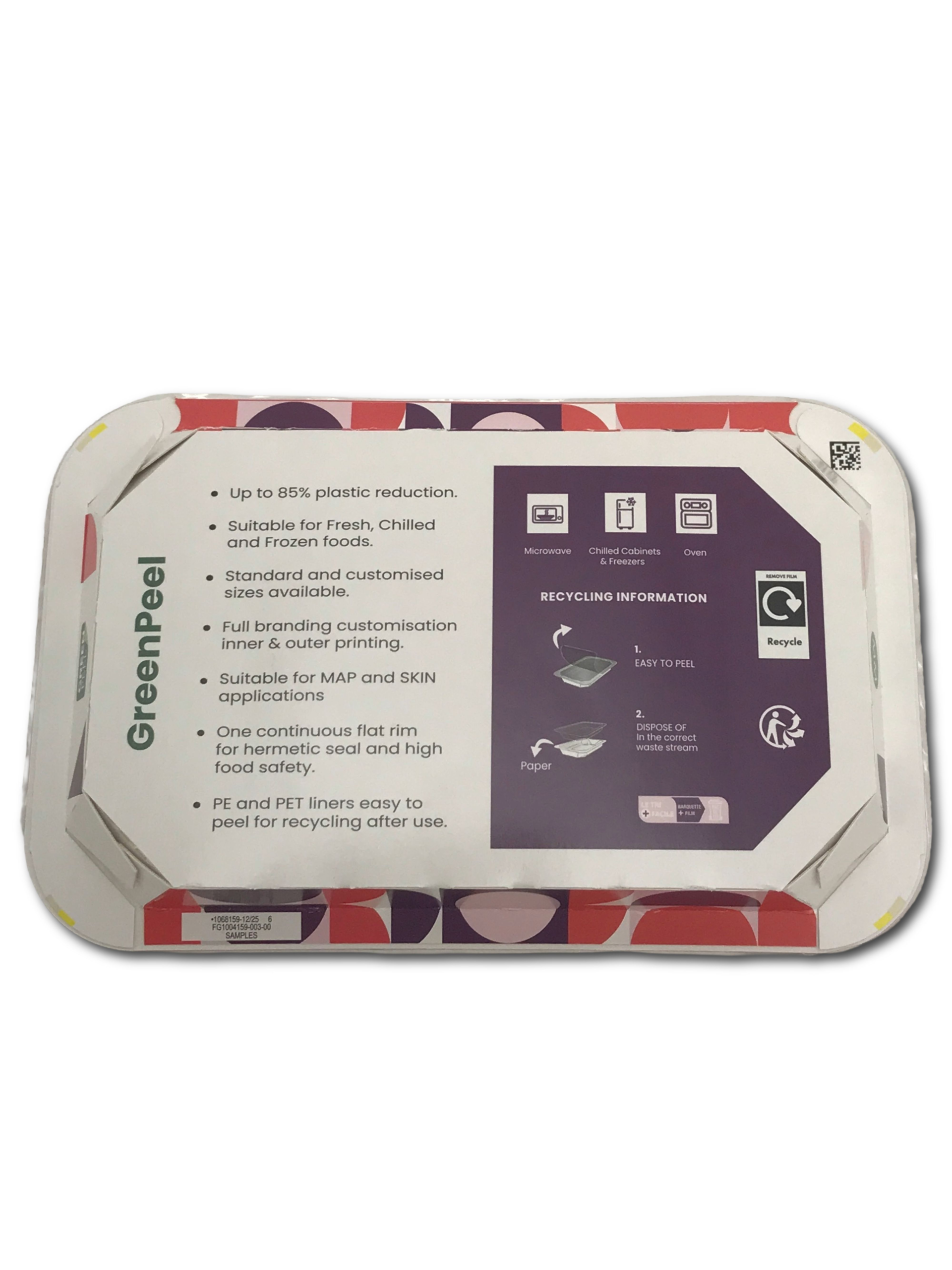
MM Packaging Deeside has redesigned its GreenPeel fibre-based food tray with a continuous double-rim structure intended to improve rigidity and skin-seal performance in fresh meat, poultry and other protein applications.
The revised construction replaces GreenPeel’s previous single rim and required modifications to both production machinery and tooling. Its first application is a new 20mm tray developed with a major poultry producer in France, with wider introduction across the GreenPeel range planned.
GreenPeel combines cartonboard with a removable liner and is designed for skin and modified-atmosphere packaging. MM Packaging says the structure uses up to 90% less plastic than a conventional plastic tray while remaining compatible with established food-production and sealing processes.
The new rim addresses a mechanical requirement that becomes more pronounced when fibre-based packs move into fresh-protein applications. Skin film is drawn tightly around the product and sealed across the tray, placing stress on the flange before packs encounter stacking, chilled storage, transport and retail handling.
A loss of rigidity at the edge can affect sealing pressure or create distortion that compromises the finished pack. Additional fibre content is therefore useful only if the tray maintains the geometry required by existing sealing equipment throughout production and distribution.
Jonathan Craddock, UK Business Development Manager for GreenPeel at MM Packaging Deeside, said: “The move to a double-rim structure is a significant step forward for GreenPeel. Customers want a stronger, more robust solution capable of maintaining a reliable skin seal throughout storage, distribution and retail display.
“By introducing the double rim, we’ve strengthened the tray without compromising any of the sustainability or branding benefits that GreenPeel already provides. It offers greater durability, particularly in demanding retail environments, while continuing to help food manufacturers reduce their reliance on plastic.”
The machinery changes behind the tray illustrate the production work required when a packaging structure is altered. Forming tools determine edge geometry and dimensional consistency, while machine pressure, speed and material handling affect whether that geometry can be reproduced over sustained commercial runs.
A stronger tray that requires frequent line stops or produces higher scrap rates would simply move cost elsewhere in the process. The redesign therefore has to deliver its additional stiffness without undermining forming speed, sealing performance or material yield.
The first 20mm version also places the structure into one of the more demanding chilled-food categories. Fresh poultry and other proteins require effective barriers, hygienic handling and secure seals, while skin packs depend on close contact between film, food and tray over the entire display life.
Development with a French poultry producer gives the first format a defined production application. Dimensions, sealing behaviour and mechanical strength can be evaluated against actual protein-packing conditions rather than against a generic laboratory specification.
GreenPeel’s fibre section provides much of the structural mass while the liner performs the barrier and sealing functions that remain difficult to reproduce using uncoated board. The consumer can separate the liner from the cartonboard component before disposal, allowing each material to enter the appropriate waste stream where local collection systems accept it.
The design therefore follows a material-reduction route rather than attempting to remove polymer entirely. Fresh-protein packaging has to control moisture, oxygen and leakage while preserving shelf life, and those functions continue to favour thin specialist liners even when the rigid tray body is converted to fibre.
Using cartonboard also creates additional printable surface around the pack. Graphics, product information and disposal instructions can be carried directly on the fibre structure, potentially reducing reliance on separate sleeves or labels in some applications.
The practical value depends on how the whole pack performs on existing lines. Tray denesting, product loading, sealing, checkweighing, labelling and case packing all impose mechanical demands before the pack leaves the factory. Retail stacking and consumer handling add further stresses later in the chain.
Dave Whitworth, Managing Director at MM Packaging Deeside, said: “Innovation has always been central to our approach, and this latest enhancement demonstrates our commitment to continually improving GreenPeel in response to market requirements. We’re helping food manufacturers make meaningful progress towards their sustainability objectives without sacrificing quality or functionality.”
Extending the double rim across the wider GreenPeel range will require the same behaviour to be reproduced across different footprints and depths. Each version may also be paired with different films, products and sealing conditions, making customer qualification a continuing part of the rollout.
MM’s own GreenPeel specification describes the tray as having a flat rim and bottom for integration with industry-standard packaging, production and sealing equipment. The double-rim development builds on that requirement by reinforcing the area responsible for maintaining a stable sealing surface.
The result is an incremental packaging change with a direct production purpose. Plastic reduction remains the headline environmental metric, but adoption in fresh protein will ultimately depend on whether the reinforced tray can hold its shape, maintain the skin seal and pass through commercial packing operations without adding downtime or waste.