IN Brief:
- Olymel has completed a $142m expansion that increased the Trois-Rivières plant from 51,700 to 137,200 sq ft.
- Annual capacity has risen from 12m to 50m kilograms, with pork and poultry processing, slicing and packaging consolidated under one roof.
- Energy measures are expected to reduce greenhouse gas emissions by around 3,000 tonnes of CO2 equivalent annually.
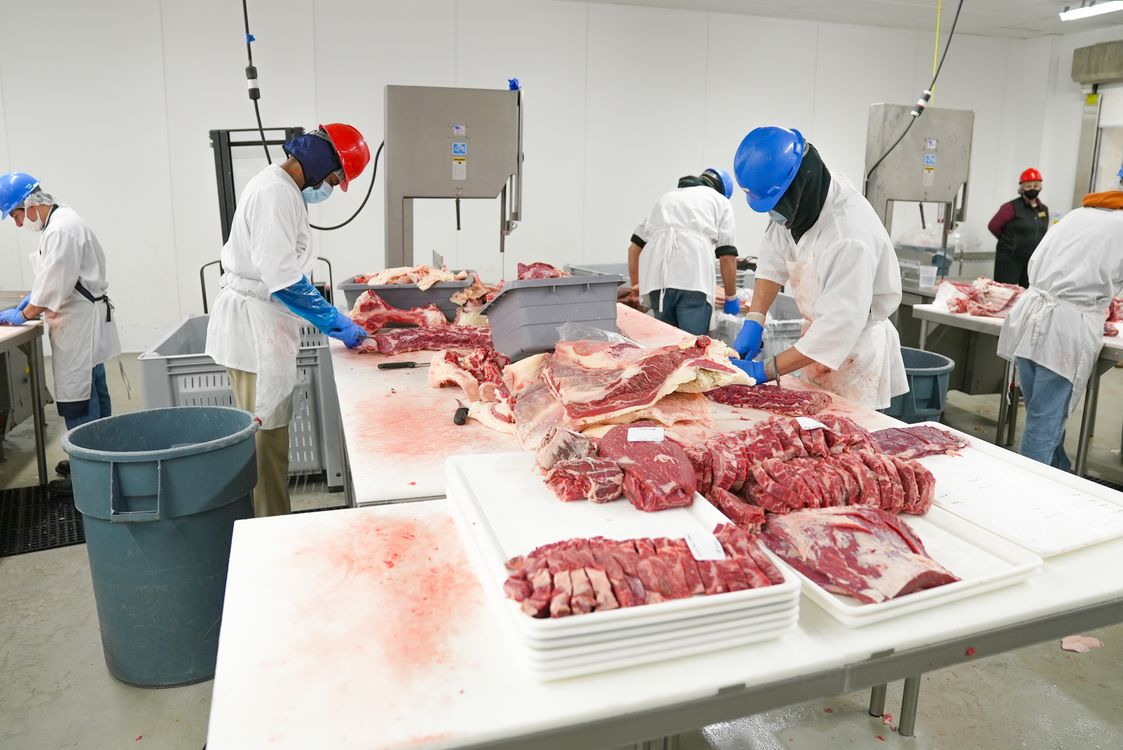
Olymel has completed its $142 million modernisation of the Trois-Rivières plant in Quebec, consolidating pork and poultry processing, slicing and packaging at a facility whose annual capacity has increased from 12 million to 50 million kilograms.
The official inauguration on 23 September closes a project announced in June 2025 and commissioned in stages during 2026. Initial production lines began operating in May, while the latest milestone marks completion of the wider building, equipment and integration programme.
The plant has expanded from 51,700 to 137,200 square feet, making the site around two and a half times its previous size. Olymel says the integrated operation will now produce the majority of its deli meat range alongside La Fernandière sausages and whole and sliced hams.
Combining those activities changes the material flow through the business. Processing, slicing and final packaging can now take place within one factory rather than relying on intermediate transfers between separate operations, reducing movement while placing more responsibility on internal logistics and production coordination.
The larger site has to manage raw materials, work in progress, finished products, packaging, staff movement, hygiene zoning, refrigeration and dispatch without allowing one production area to constrain another. The increase in nameplate capacity is therefore only one part of the modernisation.
Olymel began bringing the first new lines into service in May and added further equipment as the plant ramped up. Phased commissioning allowed production activities and employees to be transferred while the enlarged operation was still being completed, avoiding the disruption associated with a single factory-wide changeover.
The scale of the capacity increase is substantial. Moving from 12 million to 50 million kilograms a year represents more than a fourfold rise, placing corresponding demands on utilities, sanitation, refrigeration, maintenance, warehousing and labour.
Those supporting systems can become the limiting factor in a large processing project if investment is concentrated too heavily on the main production machinery. Refrigeration capacity, hot water, cleaning systems, compressed air and waste handling all need to accommodate the higher throughput if installed line capacity is to be used consistently.
Energy performance formed part of the wider programme. Olymel expects the combined measures installed at Trois-Rivières to cut greenhouse gas emissions by around 3,000 tonnes of CO2 equivalent each year, contributing to its target of reducing emissions linked to operations by 25% by 2030.
The company has highlighted measures including heat recovery, closed-loop water management and changes to cooking technology. Meat plants are substantial users of refrigeration, water and thermal energy, so improvements in those systems can affect operating costs as well as environmental performance.
Integrating production at one site may also reduce transport between factories, although the larger operation then concentrates more utility demand in one location. The effectiveness of the project will depend on whether the new configuration lowers total handling and energy requirements while maintaining food safety and production resilience.
Packaging is another important part of the integrated model. Bringing slicing and packing into the same operation allows finished formats to move more directly from processing to final preparation, reducing intermediate handling and the need to transport partially finished product elsewhere.
That shorter production route can improve control, but it also raises the consequences of disruption at the enlarged site. A fault affecting refrigeration, utilities, packaging or sanitation can influence a larger share of the company’s finished-product output when several stages have been consolidated into one facility.
The workforce has increased alongside the physical expansion. Olymel says almost 100 jobs have been created, taking employment at the plant to roughly 400 people. The project also generated substantial construction and equipment expenditure, with $110 million of orders placed with Canadian companies and more than $94 million with local suppliers.
Large food factory projects distribute spending across much more than processing machinery. Building work, electrical infrastructure, refrigeration, automation, utilities, fabrication, installation and engineering all contribute to the final operating system, making local supplier involvement a significant part of the investment footprint.
The completed factory now moves from construction into the more demanding utilisation phase. Commissioning confirms that equipment can operate, but planned output depends on production schedules, labour, sanitation, maintenance, changeovers and supply remaining stable over extended periods.
The site’s fourfold increase in annual capacity will only deliver its intended commercial value if demand is available to fill it. Higher throughput also increases exposure to raw material availability, packaging supply and outbound logistics, meaning plant performance cannot be assessed independently from the wider supply network.
Trois-Rivières has nevertheless changed materially through the project. What was a smaller processing operation has become an integrated pork and poultry facility handling processing, slicing and packaging at a much larger scale.
With construction complete and the new lines in service, the next evidence will come from operational performance rather than project milestones. Utilisation, energy consumption, product movement and line reliability will determine whether consolidation delivers the efficiency gains on which the $142 million investment was based.