IN Brief:
- OLFC can process up to 500 tonnes of oilseed per day and uses 820mm rolls with a claimed 150% increase in service life.
- Bühler says structural changes reduce vibration by up to 25%, while the revised drive system cuts energy consumption by up to 4%.
- Integrated sensors, a new operator interface and Bühler Insights provide machine condition and maintenance data across multiple flakers.
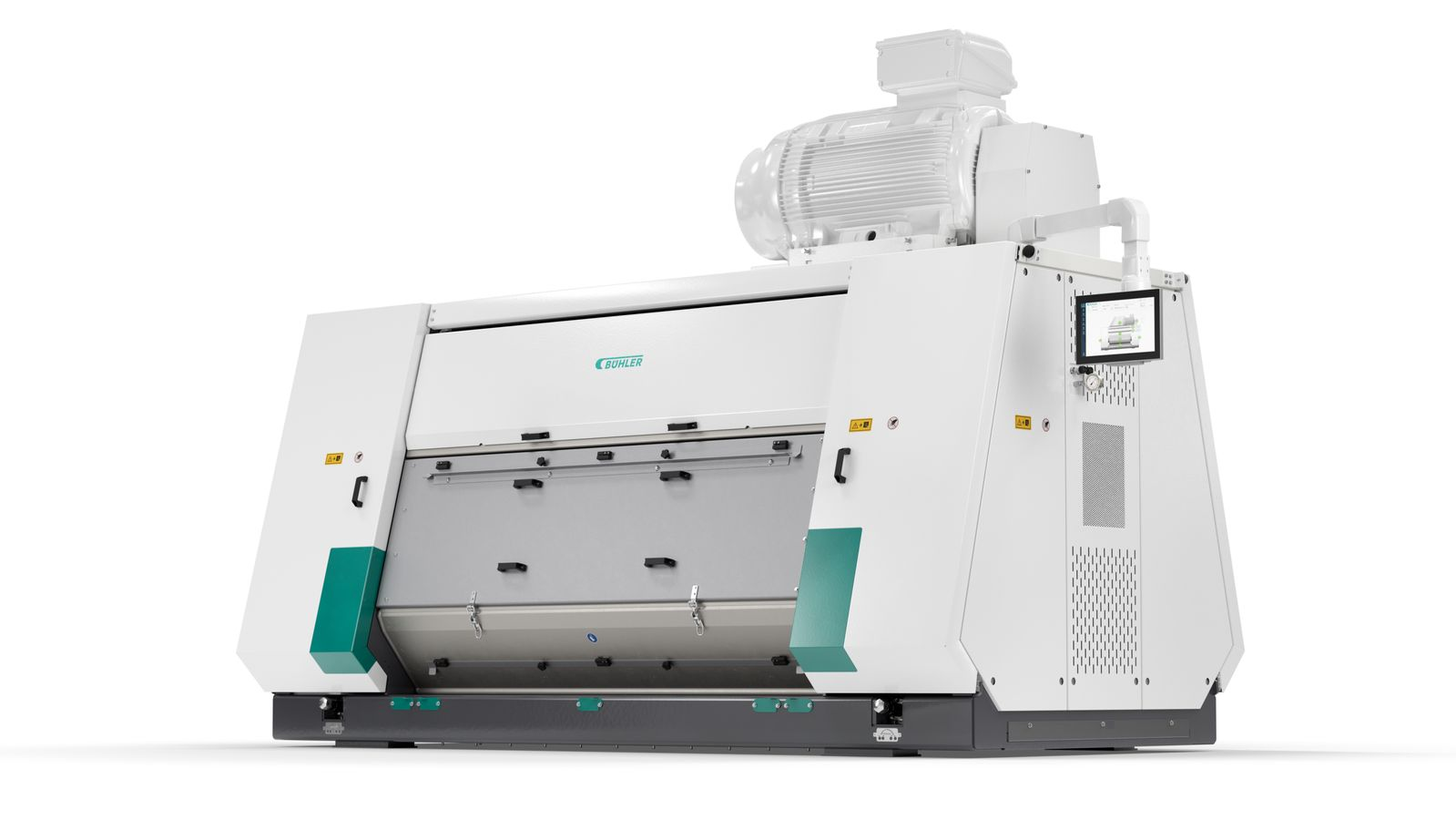
Bühler has launched the OLFC oilseed flaker, introducing a redesigned machine platform intended to reduce vibration, extend roll life, improve maintenance access and add more condition data to a process that often operates continuously in large crushing plants.
The system is rated to process up to 500 tonnes of material per day and is intended for crops including soybeans, canola and sunflower seeds. Flaking follows cracking and preparation of the seed, compressing material into thin flakes before oil extraction and making consistency of flake thickness an important part of downstream process performance.
Much of the redesign centres on mechanical durability. The machine uses a strengthened base frame, cast components in the bearing unit, larger diameter pulleys to reduce belt load, reinforced roll shafts and revised motor fixation. Bühler reports that the combined changes reduce vibration by up to 25% compared with predecessor equipment.
Lower vibration affects more than machine stability. Flakers operate with large rotating masses and high mechanical loads, so vibration influences bearing life, roll condition, drive components, structural stress and maintenance intervals. In plants using several parallel machines, an individual failure can also disrupt the balance between preparation, flaking and downstream extraction.
OLFC uses 820mm diameter rolls compared with what Bühler describes as an industry standard 800mm size. Together with an extended usable diameter, the company says the change increases roll service life by 150%, reducing the frequency with which rolls need to be replaced or reconditioned.
Roll condition directly affects process consistency because the flaking stage is expected to produce a controlled thickness across continuous throughput. Wear changes the contact surfaces over time, making maintenance part of process control as well as a mechanical engineering task.
Bühler has also revised the hydraulic system to protect the machine against sudden pressure spikes, including those created when foreign material enters the flaking zone. A timing belt drive transfers power, with the company claiming energy consumption up to 4% lower than on its previous machines.
Maintenance work has been addressed through an auxiliary drive that rotates the rolls slowly during grinding. Bühler calculates that saving two hours of maintenance time can preserve about 41 tonnes of processing capacity on an individual flaker, a figure that becomes more substantial where several machines operate across parallel lines.
Instrumentation forms the other major part of the redesign. OLFC incorporates sensors for real-time machine monitoring and a redesigned touchscreen intended to give operators a clearer view of equipment condition and operating status. Data from several flakers can be consolidated and compared rather than reviewed machine by machine.
The equipment can also connect to Bühler Insights, the company’s monitoring and analytics platform, allowing longer-term trends to support maintenance planning. That moves part of the maintenance strategy away from fixed intervals towards the condition of individual assets, provided plants have reliable data and established processes for acting on it.
Oilseed crushing is particularly sensitive to equipment availability because the process relies on continuous material flow. Seed preparation, extraction, meal handling, oil treatment, utilities and storage are arranged around linked production stages, so unscheduled downtime in the flaking section can reduce utilisation elsewhere.
Digital monitoring cannot remove the mechanical wear inherent in heavy process equipment, but it can make deterioration easier to identify before performance drops far enough to interrupt production. Comparing several machines within the same plant can also help separate an equipment trend from changes caused by raw material or operating conditions.
Bühler developed OLFC with customer input from major oilseed processing regions including Europe, North America and China. Two prototypes were installed in commercial soybean plants in the US, with one unit operating under production conditions since October 2023 before the machine moved into commercial availability.
That validation period is relevant for equipment whose value depends mainly on uptime and lifecycle performance rather than a single specification. Longer roll life, lower vibration and easier servicing become commercially meaningful only if they remain consistent through extended operating campaigns and routine maintenance.
The design also illustrates the way process machinery is increasingly combining mechanical redesign with instrumentation rather than treating the two as separate upgrades. Structural reliability remains the foundation, while integrated sensing provides more information on how the asset is behaving between scheduled inspections.
The 4% energy claim is relatively modest compared with the larger roll-life and vibration figures, but energy savings on continuously operating equipment accumulate across long production periods. The effect will vary according to load, plant configuration and utilisation, making operating data more useful than headline efficiency figures once machines enter service.
OLFC remains fundamentally a heavy mechanical processing machine built around rolls, bearings, belts, hydraulics, shafts and a rigid frame. Sensors and connected analytics do not change that duty, but they give oilseed processors more information with which to protect an asset expected to handle hundreds of tonnes of material every day.