IN Brief:
- The West Allis expansion increases fermentation capacity by approximately 66% and packaging capacity by 17%.
- The plant supplies dairy cultures to manufacturers across North America and employs around 360 people.
- The project adds automation, robotics, energy-efficient equipment, water reuse, and waste-heat recovery capability.
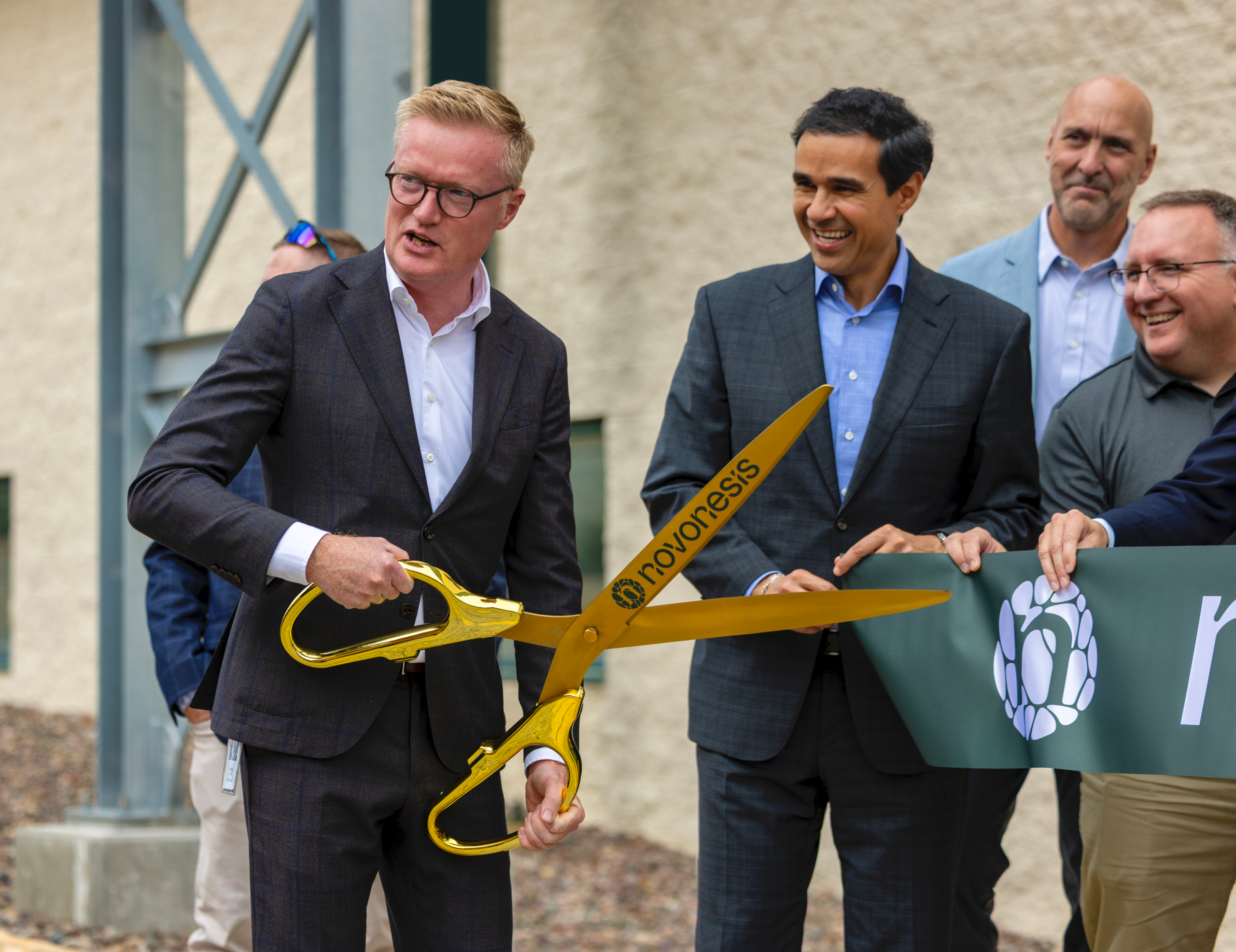
Novonesis has completed an expansion of its West Allis production facility in Wisconsin, increasing North American dairy-culture fermentation capacity by approximately 66% and packaging capacity by 17%.
The site employs around 360 people and produces cultures used by dairy manufacturers across North America. Novonesis said the investment makes West Allis one of its largest lactobacillus production facilities and strengthens its role as the company’s regional centre of excellence for food cultures.
Dairy cultures account for a relatively small proportion of a finished product by volume but play a central role in cheese, yoghurt, and fermented dairy processing. Their performance influences acidification, flavour development, texture, shelf life, and production consistency, making reliable culture supply important to large-volume dairy operations.
The West Allis project increases capacity at two stages. Additional fermentation expands the volume of cultures that can be produced, while a 17% increase in packaging capacity provides more capability to convert fermentation output into finished formats ready for shipment to manufacturing customers.
Novonesis has not disclosed the value of the project, although the fermentation increase is substantial relative to the previous operation. The site also retains room for further development while making greater use of automation and robotics within the existing manufacturing footprint.
Theis Bacher, senior vice president, Food & Beverage, Novonesis North America, said West Allis has supported dairy innovation for almost a century and now operates as the company’s regional food-cultures centre. He said the expansion strengthens manufacturing capacity while adding technology to support customer requirements.
The site dates from 1929, giving the project a different operating profile from a new fermentation plant. Expansion of an established facility allows Novonesis to retain existing utilities, workforce expertise, quality systems, laboratory capability, and logistics while adding production to processes already operated at the location.
Biological production still requires tight process control as capacity rises. Culture manufacturing depends on contamination prevention, controlled fermentation conditions, cleaning and sterilisation, downstream handling, and repeatable packaging because small variations in an ingredient can affect performance across much larger dairy batches.
The project includes energy-efficient equipment, water reuse, and waste-heat recovery. Those systems address resource demands associated with fermentation, where heating, cooling, cleaning, sterilisation, and downstream processing can account for significant water and energy consumption.
Automation and robotics have also been introduced within the expanded operation. Automated handling can reduce manual intervention in controlled production areas and support consistency around processing and packaging, although Novonesis has not released detailed specifications for the individual systems installed at West Allis.
The Wisconsin project forms part of a wider programme of manufacturing investment. Earlier in September, Novonesis committed €600 million to expand enzyme production in India, while other recent investments have expanded or added biosolutions capacity in several international markets.
Geographically distributed fermentation capacity can provide more than additional output. Biological manufacturing sites can require lengthy construction, validation, and qualification programmes, while products used in food processing need consistent supply once they have been incorporated into customers’ formulations.
Dairy manufacturers also cannot always switch cultures without production work of their own. A change in culture can affect fermentation time, sensory characteristics, texture, yield, and downstream process behaviour, potentially requiring trials and recipe adjustments before an alternative can be introduced widely.
Additional West Allis capacity therefore gives Novonesis more room to serve established demand while supporting customer development work and new formulations. The company also operates application facilities where processing performance can be assessed before customers move products into commercial production.
Anders Lund, chief operating officer and executive vice president at Novonesis, said the investment reinforces the company’s commitment to supplying dairy and food manufacturers in Wisconsin and other North American markets.
The completed project now moves from capital delivery into utilisation. A 66% increase in fermentation capability creates substantial additional headroom, but demand, product mix, changeover requirements, and customer qualification will determine how quickly the expanded plant moves towards higher operating rates.
West Allis also retains room for further growth. That gives Novonesis the option of adding capacity to an established production base again if North American dairy-culture demand develops faster than the enlarged site can accommodate.