IN Brief:
- Novonesis is investing €600 million to expand enzyme manufacturing at Patalganga in India.
- The facility will serve food and beverage customers alongside biofuel and household-care markets.
- Freshwater recycling and integrated heat pumps are intended to lower water, energy, and operational emissions.
Novonesis will invest €600 million to expand its enzyme-production operation at Patalganga in India, adding capacity for food and beverage customers alongside biofuel, household-care, and other industrial markets.
The new facility is expected to be fully operational in 2030 and will form part of the company’s wider global production network. Novonesis says the investment is intended to increase manufacturing capacity, strengthen supply resilience, and place more production closer to customers across India, the Middle East, and Africa.
The scale is notable for an upstream ingredient and process-technology supplier. Enzymes are used in relatively small quantities compared with bulk commodities, but they can influence extraction, fermentation, texture, filtration, dough behaviour, starch conversion, yield, and other processing characteristics across large food-production volumes.
For a manufacturer relying on those reactions, continuity of enzyme supply can matter more than the physical tonnage delivered. A missing processing aid can limit output, alter a product specification, or force a plant to use a less efficient process even when all of its major raw materials remain available.
Patalganga is therefore being developed as part of a broader capacity programme rather than as an isolated Indian project. Novonesis has also expanded facilities in Rayong in Thailand, Franklinton in North Carolina, Taicang in China, Araucaria in Brazil, and West Allis in Wisconsin.
The investment reflects the geographical spread of demand for biosolutions and the practical value of locating production nearer large growth markets. Regional manufacturing does not remove international supply dependencies, but it can reduce shipping distance and provide another source of capacity when demand or disruption shifts between markets.
Novonesis has not disclosed the volume of enzyme production that Patalganga will add, so the €600 million investment should not be converted into an assumed tonnage or market-share gain. The company’s stated measures are capacity, scale, operational resilience, efficiency, and supply flexibility.
The project also incorporates a substantial utilities element. Freshwater recycling is intended to reduce water drawn by the site, while integrated heat pumps will lower the energy required for operation and contribute to lower Scope 1 and Scope 2 emissions.
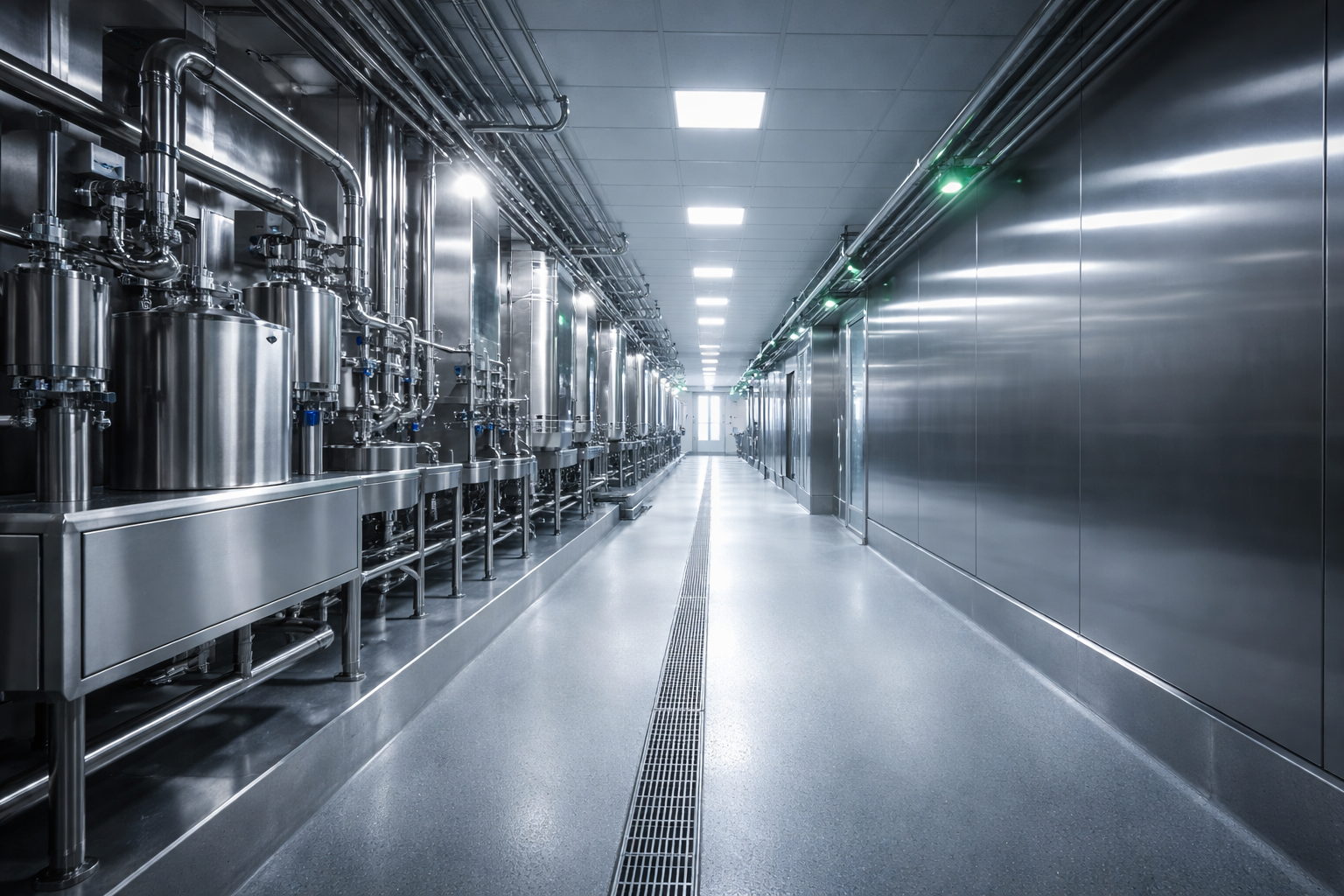
Those systems are especially relevant to biological manufacturing. Commercial enzyme production typically involves tightly controlled fermentation followed by downstream separation, concentration, formulation, and finishing operations, creating requirements for heat, cooling, water, cleaning, process control, and wastewater treatment.
A larger fermentation installation therefore needs proportionately capable utilities and downstream equipment. Vessel volume alone does not create additional saleable enzyme if recovery, cleaning, quality control, storage, and formulation become bottlenecks around it.
Heat recovery and water reuse can reduce that infrastructure burden, although savings depend on how well the systems perform across changing production campaigns. Biological plants may manufacture multiple products with different fermentation profiles and cleaning requirements, making actual operating data more useful than design-stage efficiency claims.
The food-manufacturing applications served by Novonesis are similarly varied. Enzymes and other biosolutions are used across baking, brewing, dairy, starch processing, juice, vegetable processing, and other sectors where manufacturers are attempting to improve raw-material utilisation or control difficult process variables.
Recent Novonesis work in pasta processing, for example, has focused on using biosolutions to give manufacturers greater tolerance when working with different wheat specifications. That type of application illustrates why enzyme production sits upstream of both ingredient sourcing and factory process engineering.
Agricultural raw materials vary by harvest, region, protein content, moisture, and other physical characteristics. Food plants are nevertheless expected to produce consistent output, leaving process aids as one of several tools manufacturers can use to compensate for variation without continually redesigning the finished product.
That increases the value of dependable supply as enzyme use spreads across more processes. It also raises qualification requirements: a food producer needs predictable activity, dosing, storage stability, and batch consistency before an enzyme can become part of a routine industrial specification.
Novonesis was created in 2024 through the combination of Novozymes and Chr. Hansen, bringing a large portfolio of enzymes and microbial technologies under one group. The company now operates across food, health, agriculture, household care, and industrial applications, giving large production investments such as Patalganga a customer base broader than any one sector.
Food and beverage will nevertheless be one of the industries supplied from the Indian facility. India itself offers a large processing market, while the site’s position also supports customers in neighbouring growth regions where imported biosolutions have traditionally travelled longer supply routes.
The four-year path to full operation leaves substantial work before that capacity reaches customers. Construction must be followed by equipment installation, commissioning, process transfer, qualification, and the ramp-up needed to bring biological production to consistent commercial output.
By 2030, Novonesis expects Patalganga to be a significant part of its global enzyme network. The project will then provide two sets of operating evidence: how successfully €600 million of new capacity improves regional supply, and whether its water-recycling and heat-pump design can support higher biosolutions output without a matching rise in utility demand.