IN Brief:
- Preliminary FSANZ Board discussions supported in principle the proposed approach for Gourmey's cell-cultured duck biomass.
- FSANZ's risk assessment identified no public health or safety concerns with the production cell line or resulting biomass.
- An extraordinary Board meeting on 6 October will make the formal decision before any subsequent ministerial consideration.
Food Standards Australia New Zealand has given in-principle support to the proposed regulatory approach for cell-cultured duck biomass ahead of an extraordinary Board meeting on 6 October that will make the formal decision on the application.
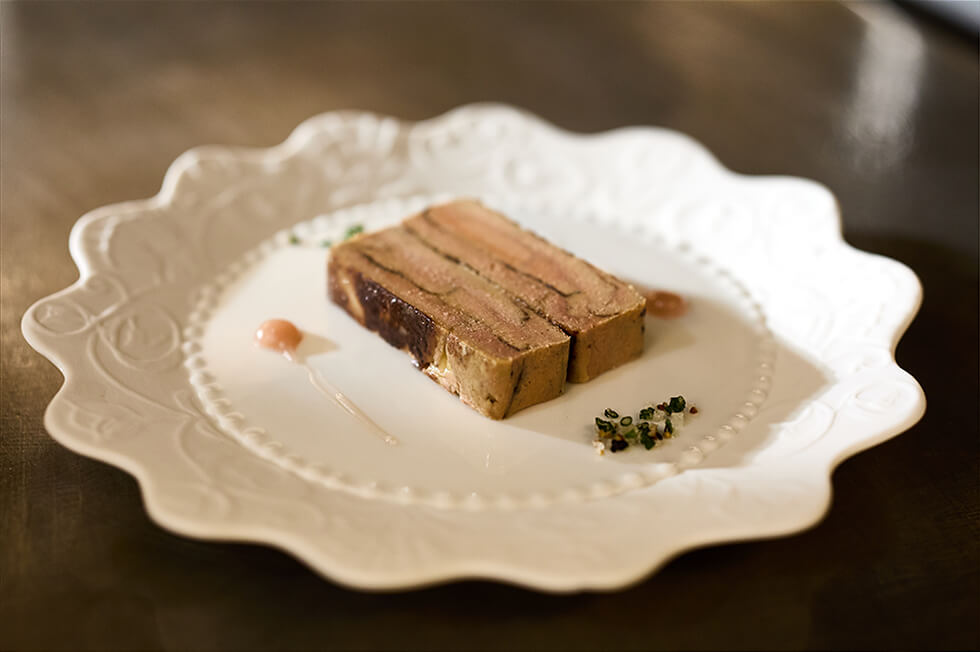
Application A1341 was submitted by Suprême SAS, the company behind Gourmey, and seeks permission to use biomass produced from Pekin duck embryonic stem cells in combination with other ingredients to make foods including foie gras and pâté.
The FSANZ Board discussed the application at its 14 and 15 September meeting after the Food Ministers’ Meeting requested that it receive in-session consideration where possible. The Board held an in-depth preliminary discussion to support the decision scheduled for 6 October, with the resulting communique stating that the proposed approaches received support in principle.
That wording matters because the application has not yet completed the regulatory process. The September discussion was preparatory rather than a final approval, and the extraordinary October meeting remains the point at which the Board will formally decide on the application.
FSANZ has already completed its scientific assessment and reported no public health or safety concerns associated with either the production cell line or the resulting biomass. The assessment formed the basis for public consultation earlier this year and examined the cell source, production process, and proposed use of the material as a food ingredient.
Cell-cultured food is produced by growing isolated cells in a controlled culture environment before harvesting the biomass for processing into an ingredient or finished food. In this case, the source is Anas platyrhynchos domesticus, or Pekin duck, and the proposed use is as one component within formulated products rather than as a whole conventional cut of meat.
Australia and New Zealand have had dedicated standards for cell-cultured foods since June 2025. The framework was established alongside approval of Vow Group’s cell-cultured quail and introduced requirements covering production, sale, and labelling.
Standard 1.5.4 requires cell-cultured foods to receive explicit permission in the Food Standards Code before sale. Mandatory identification provisions also require the terms “cell-cultured” or “cell-cultivated” to be used so that the method of production is visible in the food’s description.
Australia additionally applies Standard 3.4.1 to the processing of cell-cultured food. The standard covers food safety requirements across the production system, including inputs, premises and equipment, processing protocols, monitoring, and verification. The framework recognises that hazards have to be controlled while cells are being grown as well as during the later stages of food manufacture.
The duck application is the second cell-cultured food to be assessed by FSANZ following the quail approval in 2025. That makes A1341 a useful test of how the dedicated framework operates when applied to another species, production process, applicant, and proposed food use.
The existence of the framework does not make later applications automatic. Each still requires assessment and approval, with the production cell line and resulting food considered against the relevant safety and regulatory requirements. An earlier approval therefore establishes the process rather than a presumption that another cultured food will pass it.
For manufacturers, the regulatory system places process control at the centre of commercial scale-up. Controlled cell growth requires management of inputs, contamination risk, equipment, culture conditions, harvesting, and downstream handling. Once the biomass enters a formulated food such as pâté, the manufacturer also has to manage the conventional controls applying to ingredients, processing, storage, and finished products.
Scaling those operations creates a different challenge from demonstrating that a laboratory or pilot process works. Larger vessels, more frequent batches, increased cleaning requirements, operator interventions, and a more complicated flow of raw materials all create opportunities for variation. The food safety framework therefore has to operate as part of routine manufacturing rather than as a one-off approval exercise.
Labelling also prevents the production method from disappearing inside a generic description once the food reaches the market. Whatever the eventual branding or recipe, approved cell-cultured material has to remain identifiable under the terminology set by the Code.
If FSANZ approves A1341 on 6 October, the decision will move through the statutory process involving the Food Ministers’ Meeting. FSANZ notes that ministers consider Board decisions within the prescribed timetable and may request a review rather than the Board decision immediately becoming the final step.
The current milestone is therefore significant but narrow. FSANZ has completed its safety assessment and the Board’s preliminary discussions support the proposed approach in principle. The formal decision is still to come, and only after that can Gourmey’s duck biomass move into the next stage of the regulatory process.