IN Brief:
- Traditional Medicinals has begun production at its new $47 million manufacturing facility in Franklin County, Virginia.
- The Virginia operation joins Sebastopol, California, as the company’s second manufacturing site.
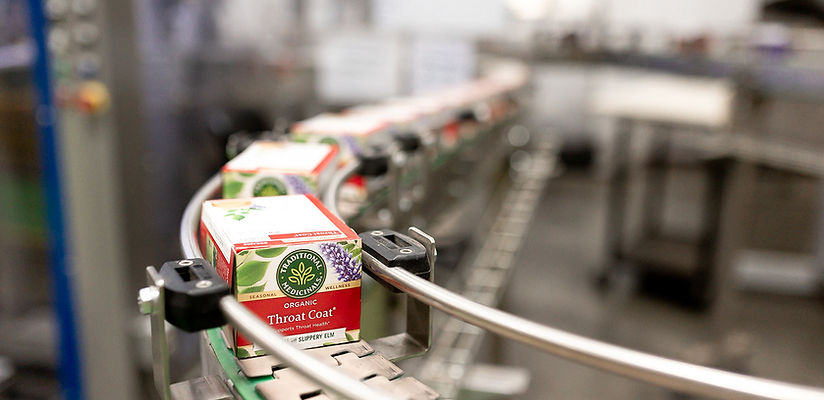
- Throat Coat tea is the first product being made as the plant ramps towards the company’s full range of more than 60 teas.
Traditional Medicinals has started commercial tea production at a new $47 million manufacturing facility in Franklin County, Virginia, creating a second production base alongside its long established California operation.
The factory at Summit View Business Park has begun with Throat Coat tea and will gradually ramp towards production of the company’s full range of more than 60 herbal teas. Traditional Medicinals says its Sebastopol, California, site will continue operating at full capacity rather than losing production to Virginia.
Adding the eastern plant changes the company from a single site manufacturer into a bicoastal production network. The two facilities can serve different geographic markets, shortening the distribution route between production and customers across much of the eastern United States.
The company announced the start of production on 5 October after breaking ground in July 2025. Earlier project material described a facility of around 125,000 square feet, while the opening announcement gives the manufacturing footprint as 110,000 square feet. The $47 million investment is intended to provide additional capacity as demand for the company’s botanical products grows.
Throat Coat was selected for the first production run partly because of its regional ingredient connection. One of the tea’s principal botanicals is slippery elm, which is sourced domestically across Appalachia, while Traditional Medicinals also works with Virginia Tech on research involving the tree.
Producing herbal tea at scale involves more than filling finished blends into individual bags. A manufacturer has to receive plant materials from multiple origins, maintain ingredient identification and specifications, control blending and portioning, manage packaging materials and preserve traceability through a portfolio containing numerous formulations.
Traditional Medicinals sources herbs through relationships spanning more than 35 countries. The Virginia operation therefore sits downstream of an international ingredient network even though one of its first product’s ingredients has a strong regional connection.
Operating two manufacturing sites can add resilience as well as distribution efficiency. A second factory gives the company another location from which to produce finished goods, although maintaining that flexibility requires processes, quality standards and product specifications to remain aligned between the two plants.
Traditional Medicinals plans for Virginia eventually to make the same full product range as Sebastopol. Each blend brings its own ingredients, packaging components and production settings, so the site will add products gradually rather than transfer dozens of formulations at once.
Starting with one established product gives the factory an opportunity to stabilise equipment, operating procedures and staffing before more formulations are added. Commercial start up continues well beyond the end of construction in food and beverage manufacturing, particularly when a new plant has to reproduce products already established elsewhere in the network.
The Virginia site also changes outbound logistics. Traditional Medicinals has said that serving customers east of the Mississippi from Virginia should shorten distribution routes, reducing the distance finished tea has to travel from factory to market.
The inbound network remains international, however, because botanical ingredients will continue arriving from a broad supplier base. The manufacturing footprint therefore balances globally sourced herbs moving into production with packaged products moving out towards regional customers.
Energy efficiency and sustainable building principles were incorporated into the project from development. Traditional Medicinals reports that its facilities use locally sourced renewable electricity and has linked the Virginia investment with wider efforts to reduce operational and distribution impacts.
The new factory also gives the company more room to manage growth across the herbal and functional beverage market, where production systems have to handle varied botanical ingredients while maintaining repeatable blends and packaging output.
Production start marks the point at which the investment begins moving from construction into usable capacity. The next phase will be the gradual addition of further teas until Virginia can manufacture the broader portfolio while Sebastopol continues supplying its own geographic market at full output.