IN Brief:
- The Alpha X follows FUJI's Alpha 8 series and was presented at PPMA in Birmingham.
- The machine accommodates film reels up to 350mm in diameter and incorporates updated motion controls.
- Paramount says the wrapper supports selected mono-material films and thinner packaging structures.
Paramount Packaging Systems has introduced British food manufacturers to FUJI Machinery’s Alpha X horizontal flow wrapper, presenting the machine at PPMA 2026 ahead of its planned UK commercial launch in 2027.
The equipment was exhibited at Birmingham’s NEC in September, with Paramount publishing further information on 9 October. The company distributes FUJI flow wrapping equipment in the UK and Ireland.
The Alpha X follows the Alpha 8 series and incorporates changes to mechanical construction, film handling and controls. Its development addresses requirements around packaging material reduction, operating flexibility and equipment performance.
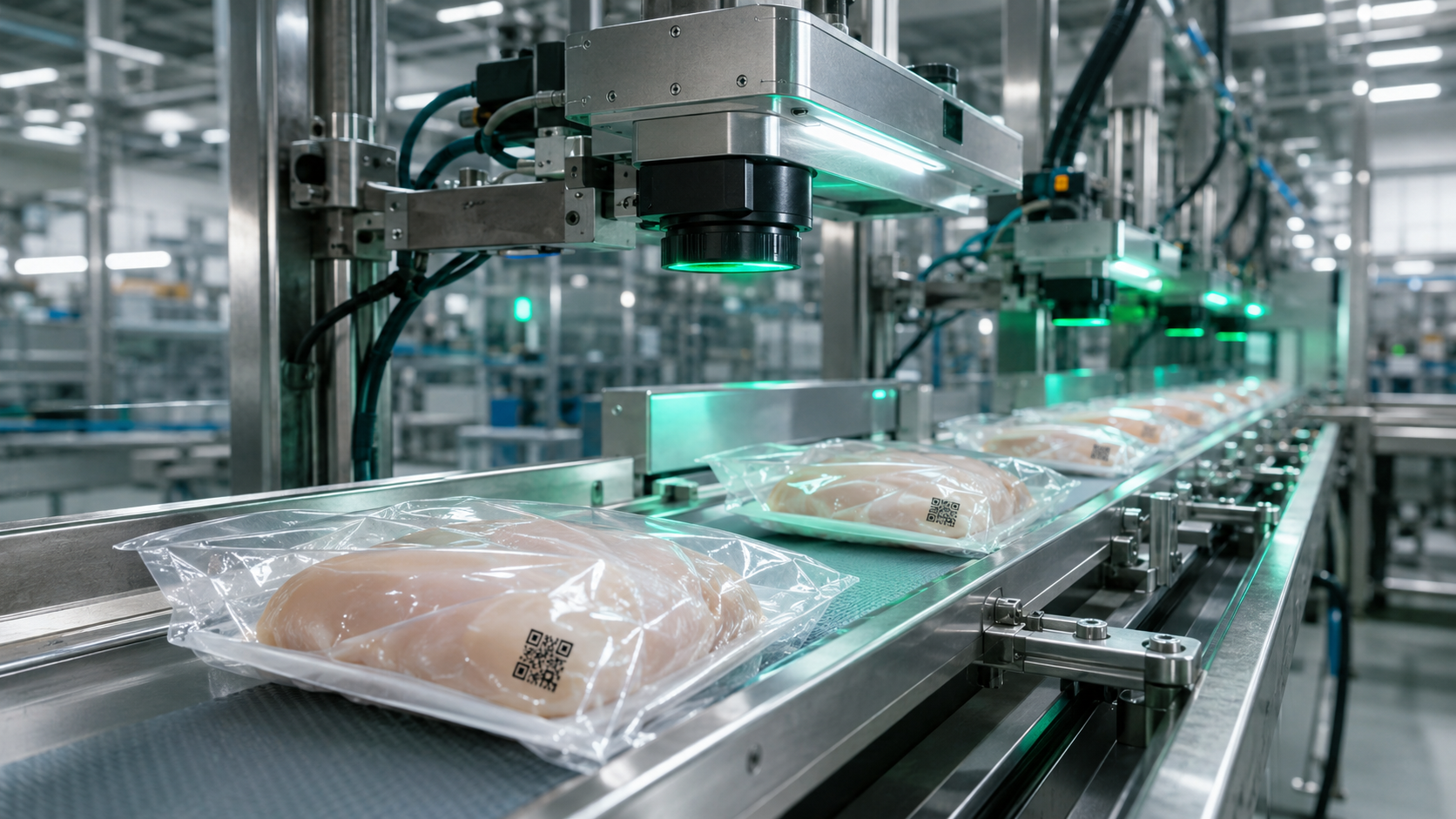
Horizontal flow wrapping forms a continuous web of film around products travelling through the machine. A longitudinal seal closes the material before transverse sealing and cutting create individual packs.
The technology is widely used in bakery, confectionery, snack and other packaged-food applications. Its suitability depends on product dimensions, packaging requirements and the rate at which products must pass through the line.
Consistent operation requires the machine to coordinate product feeding, film movement and sealing. Variations in product presentation or film characteristics can affect pack quality and the stability of the process.
FUJI has strengthened the Alpha X frame to provide greater mechanical rigidity. Maintaining alignment between moving components is important during repeated acceleration, film transport and sealing operations.
The manufacturer has not provided independently verified comparisons of operating speed, reject rates or maintenance requirements against the previous model. The revised construction should therefore be described as a design feature rather than evidence of a measured productivity improvement.
The new machine accommodates packaging-film reels up to 350mm in diameter. Larger reels can extend the period between material changes, depending on film thickness, pack dimensions and the quantity consumed per finished package.
Reducing the frequency of reel changes can support production continuity, although actual savings depend on whether a factory uses automatic reel changing, line buffering or other arrangements to manage material replenishment.
Control-system changes include an updated FUJI Vision System and a new generation of motion-control programmable logic controller.
Paramount also identifies remote access and radio-frequency identification for operator access management among the technical developments.
Remote connectivity can support authorised fault investigation and equipment maintenance, subject to the access controls and network policies established by the manufacturer and customer.
The presence of remote functionality does not establish that every installation will permit external access. Individual factories must determine how such connections are configured and managed.
RFID-based identification is intended to distinguish between operators, engineers and users with higher levels of authority. Different permissions can help control access to machine settings and maintenance functions.
The exact implementation will depend on the installed software and customer configuration. Paramount has not disclosed every available permission or authentication feature.
Packaging material compatibility forms another part of the Alpha X development. Paramount says the machine has been designed to accommodate selected recyclable mono-material structures, including polypropylene-based films, as well as suitable paper packaging materials.
Food manufacturers considering alternative materials must account for differences in stiffness, sealing behaviour, friction, barrier performance and resistance to damage during packing and distribution.
A thinner film may reduce material use but can be more sensitive to stretching, wrinkling or inconsistent movement through the forming section.
Successful conversion therefore requires practical trials using the intended product and packaging structure. Adjustments to sealing temperature, dwell time, pressure and film tension may be necessary.
Paramount has discussed potential reductions in plastic consumption when certain existing tray-based packaging formats are replaced by suitable mono-material flow wraps.
Those comparisons are application-dependent. They should not be interpreted as independently verified savings delivered by every Alpha X installation.
The environmental result of a packaging conversion also depends on material production, transport, product protection and the treatment of used packaging.
A reduction in packaging material does not automatically produce a lower overall environmental impact if the new structure leads to greater product losses or reduced shelf life.
Manufacturers must therefore confirm that alternative films meet the required mechanical, barrier and food-contact specifications throughout their intended use.
Packaging equipment also needs to work within the wider production system. Changes in wrapping performance may provide limited benefit if product feeding, inspection, secondary packaging or palletising restrict the output of the complete line.
When assessing new machinery, factories will need to consider planned operating speed, changeover requirements, cleaning access, maintenance arrangements and the compatibility of existing conveyors.
These factors influence the cost and practicality of introducing a wrapper into an established manufacturing operation.
The Alpha X’s appearance at PPMA provides an opportunity for British manufacturers to examine the forthcoming technology, but it does not constitute a confirmed UK customer installation.
Paramount has identified 2027 as the planned commercial launch period. It has not announced final UK pricing, a verified production trial at a British food factory or confirmed performance results from commercial operation.
The machine therefore remains a forthcoming equipment option rather than a demonstrated replacement for every existing wrapping arrangement.
Its revised mechanical design, control functions and ability to handle selected alternative packaging structures provide a basis for future application testing.
The decisive evidence for potential customers will come from trials using their products, production schedules and packaging specifications.
For food manufacturers, the relevant question is whether the equipment can deliver consistent pack quality and acceptable line performance while accommodating the materials and formats required by the business.