IN Brief:
- The proposed summer 2027 closure covers Marston’s Brewery and the associated primary logistics operation in Burton upon Trent.
- Around 310 employees are directly affected, while brewing and logistics are expected to continue during consultation.
- Hobgoblin, McEwan’s and Brooklyn remain priority portfolio brands, with homes sought for other regional ales.
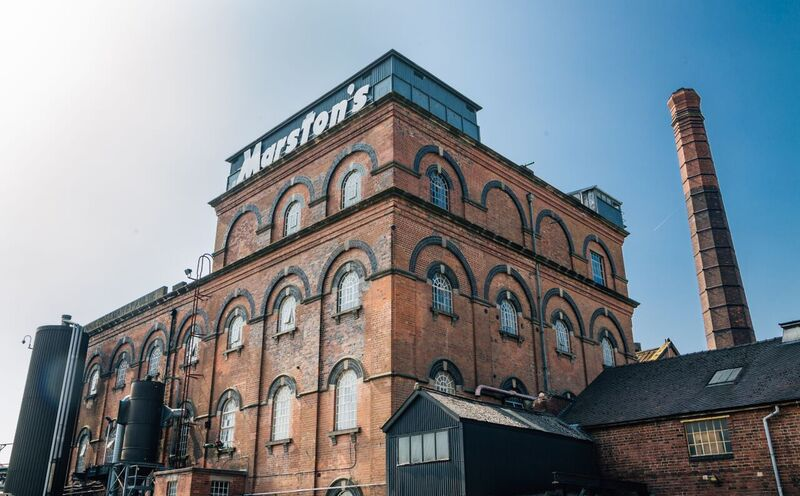
Carlsberg Britvic has proposed closing Marston’s Brewery in Burton upon Trent, together with its primary logistics operation at the site, in summer 2027 as the company responds to declining demand for cask ale.
Employees and trade union representatives were informed on 8 October and consultation is now under way. Approximately 310 employees are directly affected by the proposal. The brewery and logistics operation are expected to continue during the transition period, and a final closure decision has not been announced.
The proposal concerns the Burton brewery and its associated primary logistics function, rather than an exit from ale production across the Carlsberg Britvic portfolio. Hobgoblin, McEwan’s and Brooklyn are among the priority beer brands the company says it will retain; it is seeking new homes for other cask and regional ales. No receiving brewery or confirmed buyer has been identified for the affected brands.
Paul Davies, chief executive of Carlsberg Britvic, says UK cask ale volumes have more than halved in less than a decade. He has linked the proposed closure to that structural category decline and the company’s need to allocate resources across its wider beer and soft drinks business. The company has not released a brand-by-brand production plan or forecast the savings from closing the site.
Brewing and primary logistics are connected industrial operations at Burton. Raw materials enter against brewing schedules, while finished beer requires packaging, storage and onward transport in casks, kegs or other formats. Moving production away from the site would therefore involve more than transferring recipes: planners would need to establish where each retained product is made and how it reaches customers through a revised distribution network.
Cask-conditioned beer brings particular handling requirements because its maturation and presentation can continue after it leaves the brewery. Product condition depends on process control, packaging, handling, storage and the time between filling and service. Production at another site would have to reproduce the necessary specifications while ensuring that the logistics operation could sustain appropriate stock rotation and delivery arrangements.
No annual capacity figure has been provided for the operations that could leave Burton, and neither the allocation of cask ranges nor the need for further investment at other breweries has been specified. With those details outstanding, it is premature to quantify the reduction in installed production capacity or assume that all brands currently associated with the site will move together. The closure proposal sets a direction for consultation, not a fully defined industrial transfer programme.
John Marston established his brewery business in Burton in 1834, and the operation moved to Shobnall Road in 1898. The site has since accumulated production equipment and the process knowledge of generations of staff. Brewing records and equipment specifications are essential to product consistency, but transferring production also requires practical experience in fermentation, maturation, packaging, maintenance and quality checks.
The modern ownership structure dates to the joint venture formed by Carlsberg and Marston’s in 2020. Carlsberg acquired Marston’s remaining 40% interest in the brewing company in July 2024, giving it full ownership of the brewery and its brands. The current consultation is being led by Carlsberg Britvic and does not involve Marston’s PLC, the separate pub business.
The company’s 2024 restructuring announcement provides a striking point of comparison. While proposing the closure of Banks’s Brewery in Wolverhampton, it identified Burton as a site for more than £6 million of investment in cask and craft brewing capability. That was an earlier plan for the production network, not expenditure newly authorised with the October 2026 proposal. The change in intended use shows how the brewing footprint is being reconsidered as demand develops.
If brewing of retained brands moves elsewhere, water treatment, yeast management, fermentation time, conditioning and packaging equipment must be assessed against the characteristics of the finished beer. A receiving site may have nominal spare capacity without having the required cask line or process configuration. The company has not named specific transfers, so those constraints explain the work such a move could entail rather than any confirmed equipment changes.
Packaging suppliers, cask-handling operators and transport providers may also face altered collection and delivery routes if the Burton facility closes. Production changes can affect the location of warehousing, the movement of reusable containers and the way stock reaches pubs and retail customers. Carlsberg Britvic has not disclosed a transition plan for those contracts, which remain subject to subsequent decisions following consultation.
During consultation, employees and their representatives are the immediate focus of the company’s stated support arrangements. Burton is expected to keep producing and distributing beer while decisions are worked through, and the company has committed to communicating developments first to colleagues. Whether the brewery closes in summer 2027, and where its retained brands would be produced, remain unresolved until the consultation and production planning reach their conclusions.