IN Brief:
- Grupo Fuertes has acquired Nutrave, an integrated poultry processor based in Bargas, Toledo.
- Nutrave’s three founding families will retain stakes, with the new owner intending to keep its workforce.
- The transaction follows Grupo Fuertes’ July acquisition of the Tolvasa and Paasa poultry businesses.
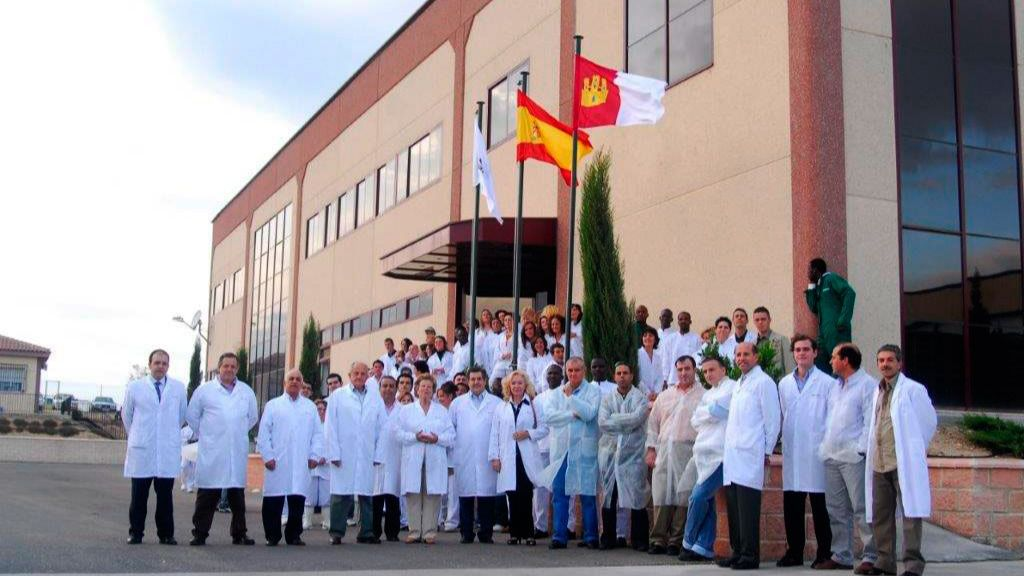
Grupo Fuertes has acquired Nutrave, a poultry producer and processor based in Bargas, Toledo, expanding its position in Spain’s chicken industry three months after buying the family-owned Tolvasa and Paasa businesses in Albacete.
Announced on 9 October, the completed transaction brings chicken and hen meat processing, distribution and prepared poultry products into the group’s operations. Nutrave makes its own feed and manages incubation as well as bird processing. Neither the price paid nor the site’s workforce and production volumes have been disclosed, and no changes to installed capacity have been announced.
By combining feed production, incubation and meat processing, Nutrave maintains oversight of several linked production stages. Grupo Fuertes identifies this structure as supporting traceability, food safety and animal welfare. The arrangement means that the acquired business already has established systems and working relationships across its production chain; it does not establish that those systems have been integrated with the buyer’s other operations.
Nutrave’s three founding families will retain a shareholding and support the transition alongside the Fuertes family. The buyer intends to maintain the existing workforce, although it has not specified future management responsibilities or the size of the founding families’ continuing stakes. Those commitments leave the operational organisation in place at the point of ownership change while questions about longer-term integration remain open.
The acquisition follows Grupo Fuertes’ July purchase of Tolvasa and Paasa, family companies operating in and around Albacete. Those businesses manage poultry breeding, feed, incubation, rearing, slaughter, cutting and distribution. With Nutrave now added, the group has acquired existing production chains in two parts of Spain rather than beginning with a single greenfield processing investment.
Feed mills, hatcheries, farms and processing plants have different production cycles, but they depend on one another’s output. Feed specifications influence flock management, while incubation and growing schedules determine the volumes and timing of birds arriving at slaughter. Processing plants must then match that intake with slaughter capacity, chilling, cutting and dispatch. The capacity of any one asset does not by itself determine how much finished product an integrated system can deliver.
Coordinating live-bird supply with processing requirements also involves variations in bird weight, customer specifications and the product mix. Fresh cuts may move through a different handling and packing sequence from prepared poultry products, while chilling and distribution remain time-sensitive. Whether Grupo Fuertes can gain operational efficiencies across the newly acquired businesses will depend on how it aligns those activities; the company has not disclosed a combined production plan or announced transfers between factories.
Traceability relies on connecting production records across each stage. Feed batches, flock identities, movements, slaughter records and packing lots must be recorded accurately if an operator is to trace a food safety problem back through the chain or identify which customers received affected products. Common ownership can make information exchange more straightforward, but the quality of the records and verification procedures determines whether a trace can be completed reliably.
Nutrave’s range includes meat from hens and manufactured poultry products alongside chicken, extending the group’s production mix. The handling and specification requirements differ between raw meat and processed foods, particularly where different recipes, ingredients or packaging formats are involved. No change in product range or investment in new machinery accompanied the acquisition announcement, so the current manufacturing footprint remains the relevant baseline.
Continuity of staff and founding-family involvement could help preserve operational knowledge and the relationships underpinning farm supply and distribution. Experience in livestock procurement, line scheduling, hygiene management and maintenance is tied to daily practice as well as written procedures. The buyer has signalled that it intends to retain that experience, without specifying whether procurement, planning or quality management systems will eventually be shared across the acquired sites.
Grupo Fuertes presents the purchases against a backdrop of consolidation in Spanish poultry, drawing attention to recent acquisitions by international operators. The Nutrave acquisition and the earlier purchase of Tolvasa and Paasa are two transactions covering three named businesses. Although Grupo Fuertes remains under Spanish family ownership, neither transaction establishes future production investment or its effect on market concentration. Those outcomes will depend on decisions taken after the transactions, as well as on demand and operating costs across the sector.
At Bargas, the confirmed change is ownership, with staffing continuity stated as the new owner’s intention. Grupo Fuertes has not announced cross-site production transfers, a timetable for shared planning and traceability systems, or quantified synergies from its poultry acquisitions.