IN Brief:
- Beacon Foods has installed a £60,000, 300-litre brat pan at its Brecon ingredients factory.
- The Winkworth machine handles approximately 50–150kg orders, complementing the site’s larger steam-jacketed kettles.
- The new equipment is intended for chutneys, compotes, relishes, candied zests and other cooked ingredients.
Beacon Foods has installed a £60,000 brat pan at its ingredients factory in Brecon, Powys, giving the business a smaller cooking option for orders that do not require its larger steam-jacketed kettles. The 300-litre machine, supplied by Winkworth Machinery, is intended for batches of approximately 50–150kg, including chutneys, relishes, compotes, candied zests and other cooked ingredients.
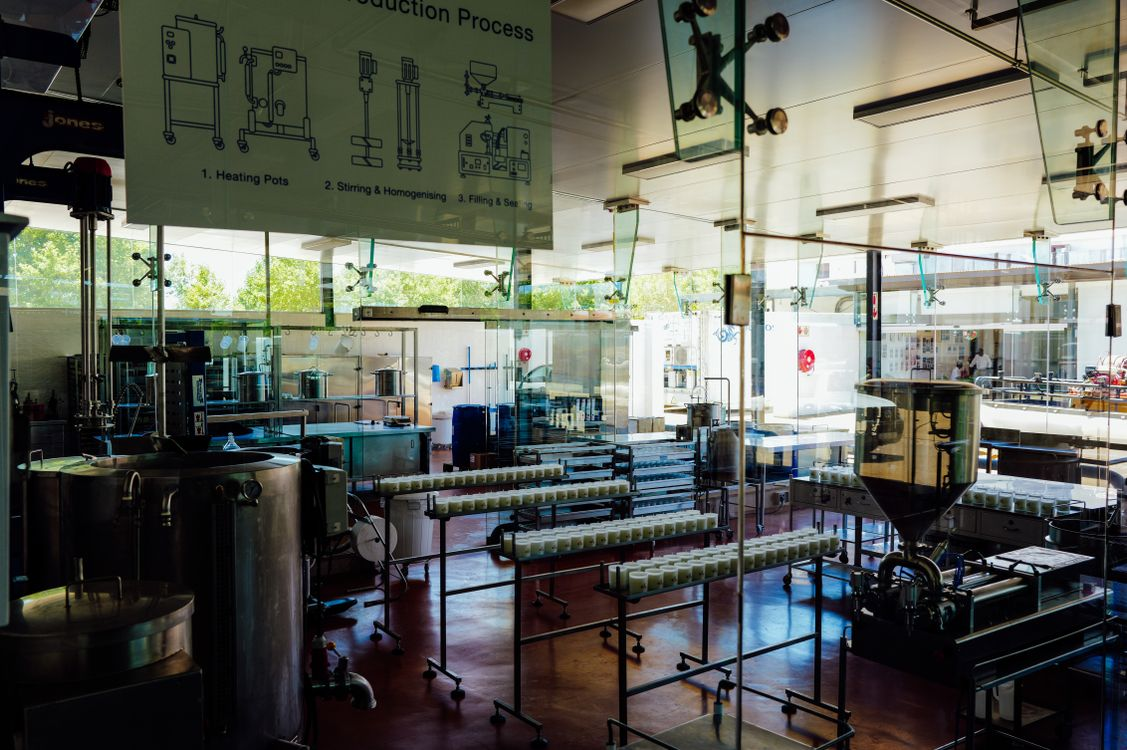
The company already manufactures a broad range of prepared fruit and vegetable components for food producers and foodservice customers. Its operations director, Jas Singh, has contrasted the new machine with the larger kettles used to fulfil customer orders of around two tonnes. That figure describes an order size, rather than the capacity of one vessel: Beacon’s published equipment information identifies two steam-jacketed kettles, each with a nominal 750kg capacity, agitation and homogenising equipment.
The brat pan adds a different scale of cooking to that existing arrangement. A small production run in a much larger vessel may leave less ingredient depth for mixing and alter the relationship between heated surface and product volume. Filling a vessel closer to its intended working range can make a recipe easier to manage, although the appropriate quantity still depends on viscosity, ingredient density, heating conditions and the manufacturer’s validated process. Beacon has not published comparative cycle times or yields for the new installation.
The stainless steel brat pan uses a high-pressure steam jacket to supply cooking heat. Steam transfers energy through the vessel surface without mixing directly with the food, allowing ingredients to be heated while they are stirred or reduced. It is a familiar arrangement in industrial kitchens, but a stated capacity of 300 litres does not automatically translate into a 300kg batch: the mass depends on the formulation, its density and the headspace needed during cooking.
Compotes, chutneys and candied zests demand different heating and reduction profiles, even when produced in the same vessel. A fruit compote may need controlled heating and evaporation without excessive breakdown of the fruit, while a chutney or relish can require reduction to a specified solids content and consistency. Candied zests introduce another set of requirements involving sugar concentration and heat exposure. The conditions that give an acceptable texture in one batch size cannot simply be assumed to remain unchanged when ingredient depth and heat-transfer area differ.
Beacon’s existing factory processes extend beyond kettle cooking. The operation has computer-controlled ovens with more than 1,000 programmes, roasting and chargrilling equipment, and the ability to prepare raw, ready-to-cook and ready-to-eat ingredients. Production records use a recipe management system and barcode-based traceability extending from goods inward to dispatch. Adding a cooking vessel creates another production route within that established system, rather than replacing the specification and recording controls applied to each batch.
Shorter campaigns may increase the frequency of recipe changes and cleaning, particularly when successive orders vary in colour, flavour, ingredient profile or allergen content. The additional scheduling flexibility therefore has to be balanced against time spent preparing the vessel, verifying line clearance and documenting the finished batch. Beacon describes separate high care, high risk and low risk production areas, making the controls applied to each recipe and processing zone part of any changeover plan. Those costs depend on the actual order mix; Beacon has not reported a reduction in changeover time, raw material loss or energy use attributable to the new equipment.
An earlier £6 million expansion programme had already doubled Beacon’s manufacturing and storage footprint by October 2023. Company updates at that time put the combined space at around 53,000 square feet. More recently, the company reported work on a high-care cold-blend area intended to increase capacity for products including dressings, marinades and mayonnaises. The new brat pan is a distinct purchase within this established manufacturing operation.
In October, Beacon also reported two new temperature-controlled vehicles, supplementing a fleet serving customers across much of mainland Britain. Chilled transport supports the movement of prepared ingredients after processing, but the additional vehicles do not establish that the brat pan will raise daily factory throughput by a particular amount or require a change to dispatch schedules.
Orders of 50–150kg can now be scheduled on a dedicated cooking vessel while the larger kettles remain available for heavier production campaigns. Production efficiency, achieved annual output and any savings in waste or utilities remain unquantified. Their assessment will depend on how often the new vessel is used, the number of changeovers required and whether small orders can be accommodated without interrupting longer cooking runs.