IN Brief:
- The 12-month RENEW trial randomised 417 postmenopausal women; 316 completed the intervention.
- Calcium-enriched whey permeate delivering 800mg calcium daily maintained bone mineral density similarly to calcium carbonate, with no additional advantage from inulin.
- Arla Foods Ingredients is developing a 10g dried fruit bar concept with 265mg calcium per serving, separate from the clinical trial.
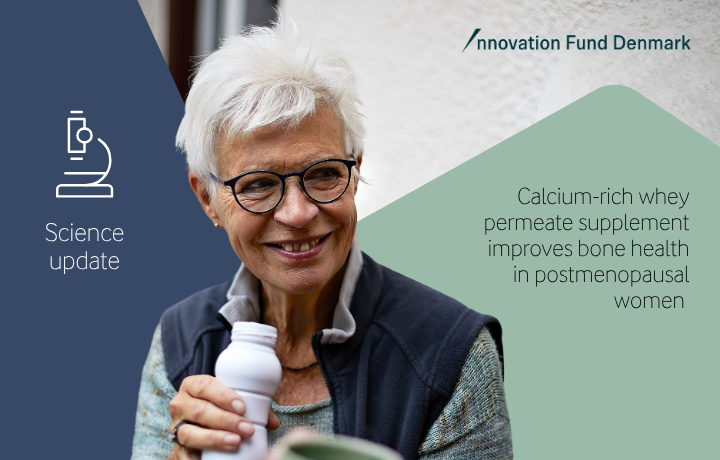
Arla Foods Ingredients is developing food applications for calcium-rich whey permeate after a Danish clinical trial found that the dairy-derived supplement could maintain bone mineral density in postmenopausal women. The company revisited the findings on 20 October, alongside work on a compact dried fruit bar containing a targeted 265mg of calcium per 10g serving. The underlying RENEW study was published online in May, making the new development an ingredient and product-formulation opportunity built on existing clinical evidence.
The 12-month randomised, double-blind trial compared four approaches: a placebo, calcium carbonate, calcium-enriched permeate and the same permeate combined with inulin. The three active groups each received 800mg of calcium daily in two doses, while all participants received 20 micrograms of vitamin D per day. Researchers enrolled 417 postmenopausal women, of whom 316 completed the study. Their results provide a comparison between a specified dairy ingredient preparation and conventional calcium carbonate under a shared vitamin D regimen.
Among those completing the trial, 78 were in the calcium-enriched permeate group and 75 in the placebo group. Arla reports that bone mineral density was maintained in the permeate group over the intervention, while the placebo group's density declined. The peer-reviewed analysis found reduced bone turnover markers in the active calcium groups relative to placebo and concluded that permeate maintained bone mineral density similarly to calcium carbonate. Adding inulin produced no additional measured benefit. These findings support the studied supplement and dose, rather than a claim that the dairy source outperformed conventional calcium supplements.
The researchers assessed bone turnover using blood markers as well as measurements of mineral density. C-terminal telopeptides of type I collagen, commonly abbreviated CTX, reflect the breakdown of bone, while procollagen type I N-terminal propeptide, or PINP, is associated with bone formation. Compared with placebo, the active groups showed reductions in these markers, and the study reported differences in mineral density at particular skeletal sites. Bone mineral density is a useful indicator of skeletal health, although the trial did not establish whether supplementation reduced fracture incidence.
The intervention material used Arla Foods Ingredients' Capolac milk mineral ingredient together with Variolac, a lactose-based ingredient associated with whey processing. Whey permeate is produced when components of the liquid whey stream are separated during dairy ingredient manufacture. It contains lactose and minerals that can be recovered for further use, with composition depending on the upstream separation and subsequent processing. Combining those constituents with a concentrated milk calcium ingredient creates a controlled formulation that can deliver the trial's specified calcium intake more consistently than an unspecified permeate stream.
That use of dairy co-products is also an industrial processing proposition. Converting permeate into a nutrition ingredient requires recovery, concentration and appropriate finishing, while formulation teams must consider mineral content, moisture sensitivity, flavour and compatibility with other ingredients. Food applications present different demands from capsules or sachets: the chosen matrix affects handling, texture, portion size and consumer use. Arla's clinical work establishes the biological outcome of its administered preparation; its subsequent food development addresses how dairy-derived calcium might be carried in an everyday product.
The proposed dried fruit bar is the first named example in the October statement. Arla describes a 10g serving containing 265mg of calcium, a compact portion designed to support flavour adaptation for different markets. The concept also incorporates an approach intended to reduce fruit waste. Because the trial delivered 800mg calcium daily in two doses together with vitamin D, the bar's smaller serving and different physical format cannot be equated directly with the tested regimen. The concept's reported specification is its calcium content and intended ingredient use, not a clinical outcome from eating the bar.
A fruit-based bar introduces practical manufacturing requirements that differ from preparing a dry supplement. Mineral-rich ingredients must be distributed consistently across small portions, and the moisture and texture of fruit material must be controlled as the bar is formed, packed and stored. Ingredient compatibility, taste and shelf stability will influence the suitability of particular fruit and calcium combinations. Arla has described the product concept and its target calcium content; the precise recipe and commercial production arrangements can be established when the formulation reaches a defined manufacturing specification.
The RENEW project brings together Arla Foods Ingredients, Arla Foods amba, the University of Copenhagen, Zealand University Hospital, Aarhus University and the USDA Western Human Nutrition Research Center, with funding from Innovation Fund Denmark. The peer-reviewed paper identifies the material supplied for the intervention and the researchers' clinical methods. That documented framework makes it possible to separate the evidence from the company's development plans, particularly when ingredient suppliers use clinical findings to guide new food formats.
Recovering nutritional value from permeate may give dairy processors another outlet for material generated alongside whey protein production. The environmental outcome of a specific product will depend on the energy needed for separation, concentration and drying, the treatment of fruit ingredients and the food or supplement being replaced. Arla presents circularity as a potential advantage of the concept, while the October statement centres on the 265mg calcium serving and the clinical evidence supporting further calcium ingredient development.
Further product work will therefore involve two parallel tests of suitability: whether a proposed food can deliver its declared calcium amount consistently through manufacturing and storage, and which nutrition claims are justified for that finished format. The RENEW results provide evidence for twice-daily calcium-enriched permeate supplementation in vitamin D-sufficient postmenopausal women. Arla's next step is to turn that controlled ingredient approach into a specified food product, with the dried fruit bar offering a concrete starting formulation for technical and commercial assessment.