IN Brief:
- Biotiful Gut Health will launch 3% and 0% fat Kefir Cottage Cheese variants in December 2026.
- Both products are supplied in 350g pots with a recommended retail price of £2.50.
- The declared recipe combines milk, live kefir cultures and salt, with wider retailer distribution planned for early 2027.
Biotiful Gut Health plans to enter the UK cottage cheese market in December 2026 with two products incorporating live kefir cultures. The new range will comprise 3% and 0% fat varieties in 350g pots, each carrying a recommended retail price of £2.50. The business is extending its kefir-based positioning into a spoonable cheese format, with distribution expected to widen across major UK retailers during early 2027.
The company describes both products as combining cottage cheese's naturally occurring protein with billions of live cultures associated with its kefir range. The stated formulation uses milk, live cultures and salt. Although the announcement does not detail the processing sequence or culture strains, the ingredient proposition establishes the central difference from a conventional cottage cheese range: the new pots are being marketed specifically around the addition of live kefir cultures.
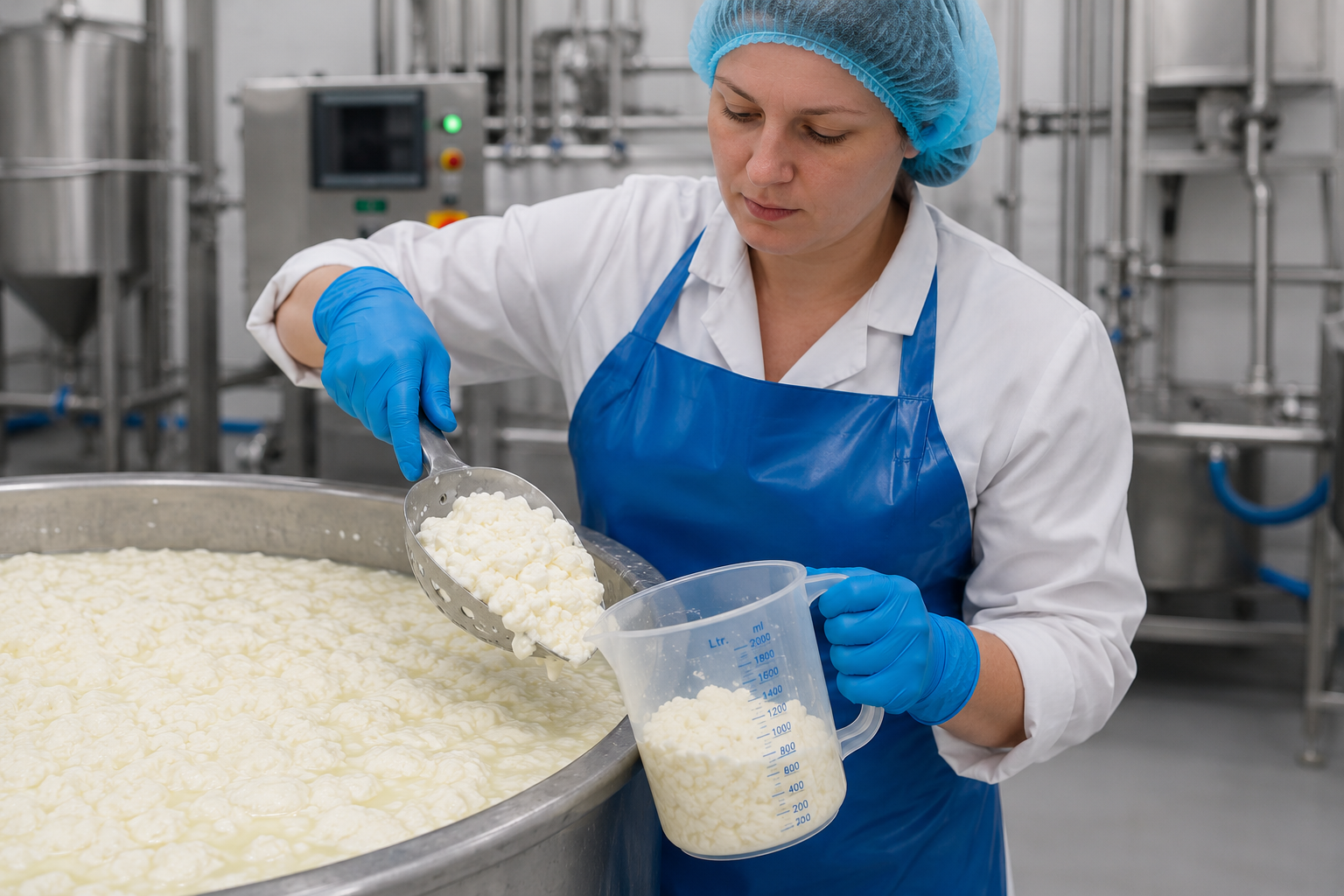
Cottage cheese production relies on controlled acidification of milk to form curds that can be cut, drained and combined with an appropriate dressing or liquid phase. The balance between curd structure and moisture affects spoonability, mouthfeel and how the cheese behaves during refrigerated storage. A formulation that incorporates additional cultures must preserve the required texture and flavour while meeting the product's microbiological specifications. The precise stages used for Biotiful's range have not been published, so its process cannot be described as identical to that used for its kefir drinks.
The 3% and 0% fat recipes present two different compositional targets. Fat is one of the factors affecting mouthfeel, while moisture, curd size and acidity contribute to the finished product's texture. Producing a lower-fat option alongside a 3% variety therefore requires consistency within each formulation, both in the separation and handling of curds and in the characteristics of the finished pack. Product-specific nutrition declarations will provide the clearest comparison once the labels are available.
Kefir is generally made using a community of microorganisms that ferment milk, but the expression 'contains kefir cultures' does not establish how long those cultures were active during manufacture or precisely when they were incorporated. Organisms can experience different conditions as acidity, salt, temperature and oxygen exposure vary. Their viability at the end of shelf life is an important technical consideration for any food marketed on its live-culture content. Biotiful states that the new cottage cheeses contain billions of live cultures, without providing a product-specific culture-count testing protocol.
Descriptions of the live cultures in the new range will need to be distinguished from claims about any physiological effect. A live-culture ingredient can be described as part of a product's composition, whereas a specific digestive or gut-health benefit must be supported by evidence and satisfy the rules governing claims in the relevant market. Biotiful's wider brand positioning is associated with kefir and gut health; the new product announcement does not describe a clinical study demonstrating a separate health outcome for either cottage cheese variant.
Refrigerated distribution is another element of the product proposition. A live-culture cottage cheese must remain within the storage conditions specified on its label as it moves through transport, retail cabinets and domestic use. Cup filling and sealing have to protect the curd and preserve pack integrity, while batch identification allows any quality complaint to be traced to the relevant production run. The company has not published specific shelf-life test results for this range.
The launch comes as cottage cheese attracts interest as a naturally protein-containing ingredient suitable for breakfasts, savoury snacks and prepared dishes. Its uses differ from those of a drinkable kefir product, allowing the brand to seek additional occasions within chilled dairy. The 350g format and £2.50 recommended price identify how Biotiful intends to position the new product against established cottage cheese lines. Individual retailers will determine actual shelf pricing and availability.
Alessandra Zehnder, the company's head of marketing, described the introduction as a way to combine familiar cottage cheese attributes with Biotiful's culture-led offer. That strategy expands the company's range rather than announcing a new industrial dairy installation. The technical aspects likely to determine consumer experience include how the curd texture holds during distribution, whether the flavour is consistent across the two fat specifications and whether live-culture declarations match the finished food throughout its labelled life.
The immediate milestones are the planned December launch and expansion into further retail outlets early next year. At that point the finished packs will provide nutrition information, storage conditions, use-by dates and the ingredient declarations against which the two varieties can be compared. The confirmed manufacturing development is the introduction of a new formulation combining cottage cheese with live kefir cultures, offered in distinct fat specifications and a common pack size.