IN Brief:
- Nelson-Jameson announced its authorised Strahman washdown service partnership on 20 October.
- Services cover calibration, preventive maintenance and repairs involving hose stations, mixing equipment and spray nozzles.
- The supplier expects improved reliability and resource efficiency but has published no measured plant-level results.
US food manufacturing supplier Nelson-Jameson has become an authorised third-party service provider for Strahman Group washdown equipment, covering calibration, preventive maintenance and repairs. The agreement gives food and beverage processors a manufacturer-authorised option for servicing hygiene equipment already used in industrial plants, without announcing a new installation programme or production facility.
Nelson-Jameson issued the original announcement on 20 October 2026, with wider distribution following on 21 October. It describes itself as the first and only third party authorised to provide the specified work on Strahman washdown equipment. That status is a company claim attached to the service agreement rather than evidence that it is the only organisation offering cleaning equipment maintenance generally.
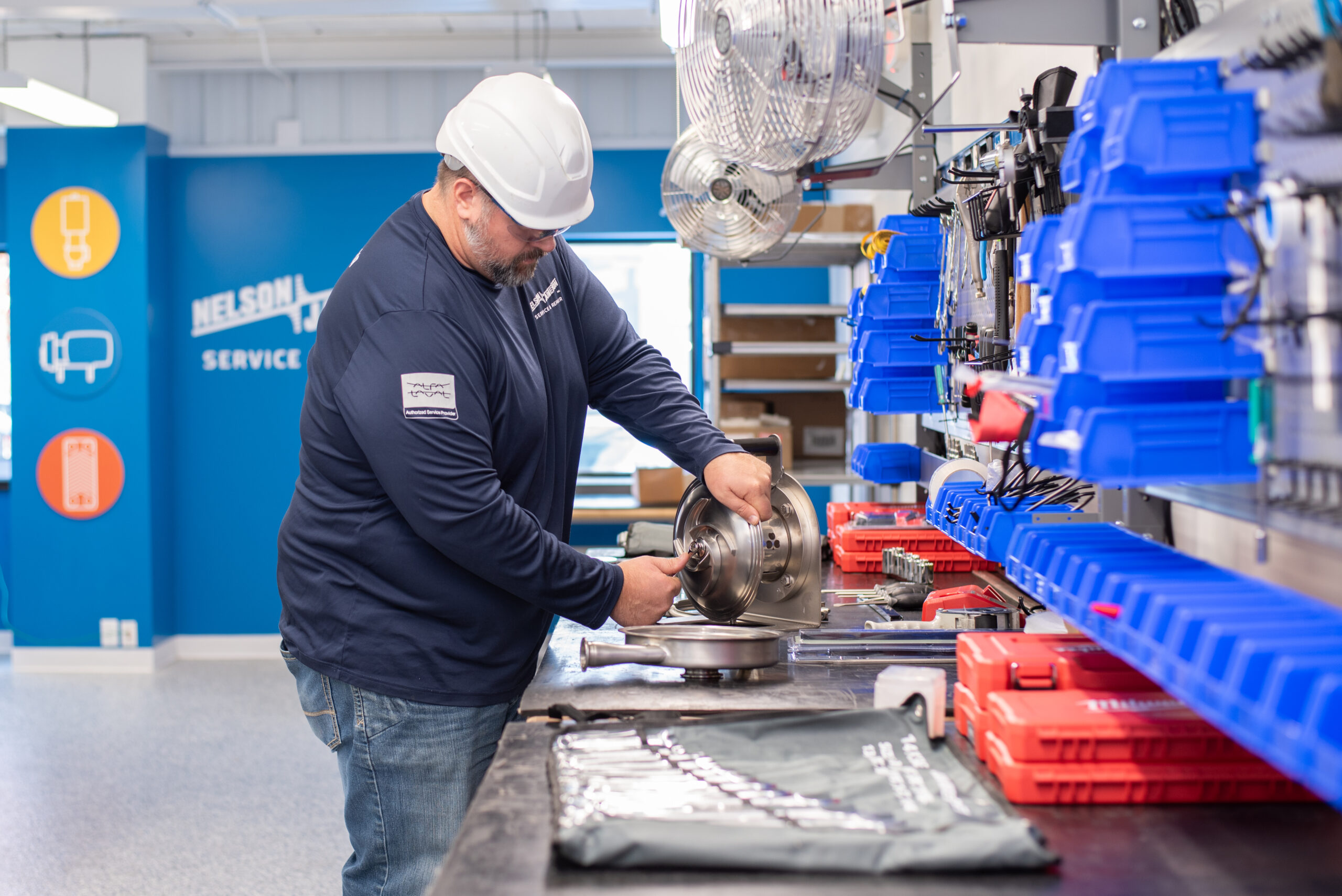
The arrangement covers hose stations, mixing units and spray nozzles. The equipment is designed for repeated use in food factories, where water delivery and appropriate cleaning conditions form part of plant sanitation procedures. Nelson-Jameson says trained technicians can inspect equipment, perform repairs and use genuine replacement parts to restore specified functions.
Washdown stations are routinely exposed to heavy use, changing pressures and temperatures, and mechanical wear. A hose may remain intact while a valve or other internal part is deteriorating. Service work therefore needs to account for the assembly and its control functions, not just the visible condition of the nozzle or hose attached to it.
Strahman’s portfolio includes mixing equipment used to supply water at the conditions required by the installation. Maintaining those systems involves checking the components that control hot and cold water or steam, inspecting wear items and confirming operation after repair. Nelson-Jameson’s agreement specifically includes calibration, which is distinct from simply replacing defective parts.
Calibration compares a relevant reading or control function with the required reference, helping to establish whether the equipment is operating within its intended specification. The announcement does not give a universal calibration interval, identify every applicable model or publish a new test standard. Requirements will depend on the equipment supplied and the manufacturer’s servicing instructions.
Preventive maintenance aims to identify components needing attention before a failure disrupts cleaning work or creates an unsafe condition. In a production facility, an unavailable washdown station can complicate planned sanitation, particularly when equipment must be cleaned between different food products or production runs. The service announcement does not quantify lost production hours caused by such failures.
Operator safety is a central part of the partnership. Nelson-Jameson highlights thermal shut-off valves and steam trap assemblies as items that need appropriate attention. Faults in systems handling hot water or steam can create burn hazards, and the company says correctly maintained components help protect sanitation personnel from unsafe conditions.
These claims should not be taken as a finding that existing Strahman equipment is defective or that a specific incident prompted the arrangement. No customer plant, workplace injury or product recall is identified in the company’s release. The new development is the authorised availability of servicing for equipment that may already have been in use for years.
Water efficiency is another proposed benefit. Worn controls or poorly performing mixing equipment may consume more water than intended, while unreliable temperature regulation can affect how a sanitation procedure is carried out. Nelson-Jameson says maintenance can help limit unnecessary consumption, but it has not supplied a measured reduction in water use or energy expenditure from customer installations.
The distinction matters because plant cleaning performance depends on several related controls. Water delivery, detergents, contact time, mechanical action and the design of the surfaces being cleaned all influence the effectiveness of a particular sanitation procedure. Servicing washdown equipment supports the availability of one part of that system, but does not validate every cleaning programme used by a food manufacturer.
Sanitation also has to accommodate different production environments. Dairy, meat, bakery and beverage factories do not all use the same equipment or hygiene arrangements. Water temperature and pressure must be appropriate to the installation and the job; applying an assumed universal setting would not provide a reliable basis for assessing the equipment.
The supplier argues that repair and component replacement can extend the working life of durable washdown assemblies. Whether that is cheaper than complete replacement depends on the model, its condition, replacement part availability and labour requirements. The announcement does not publish comparative lifecycle costs, failure rates or a guaranteed increase in service life.
Nelson-Jameson has established a service request route for customers seeking calibration, preventive maintenance or repairs. The form asks users to identify the equipment and describe the problem, providing a basis for the technical team to determine the work needed. It states that the repair team will follow up on a request within two business days, which is not a guarantee that repairs will be completed in that period.
The agreement adds an after-sales technical service to Nelson-Jameson’s established supply of sanitary processing products and equipment. The company has not disclosed the number of technicians trained, geographical coverage of every service location or a list of confirmed customer contracts. Its operating effect will be clearer once service volumes and maintenance outcomes are reported.
Food manufacturers using the relevant Strahman equipment now have an authorised third-party service route, while responsibility for plant sanitation and safe operating procedures remains with the facility operator. The source establishes the partnership and intended scope, not realised savings, new factory capacity or a completed maintenance programme across the sector.