IN Brief:
- New H1CP sizes are 100-250, 125-250, and 150-250, rated for flows up to 500m³/hour.
- Evoguard reports hydraulic efficiencies up to 83% and specifies four- or six-pole motors.
- Hygienic connections, mechanical seals, and a maintainable block-mounted design target brewery duties.
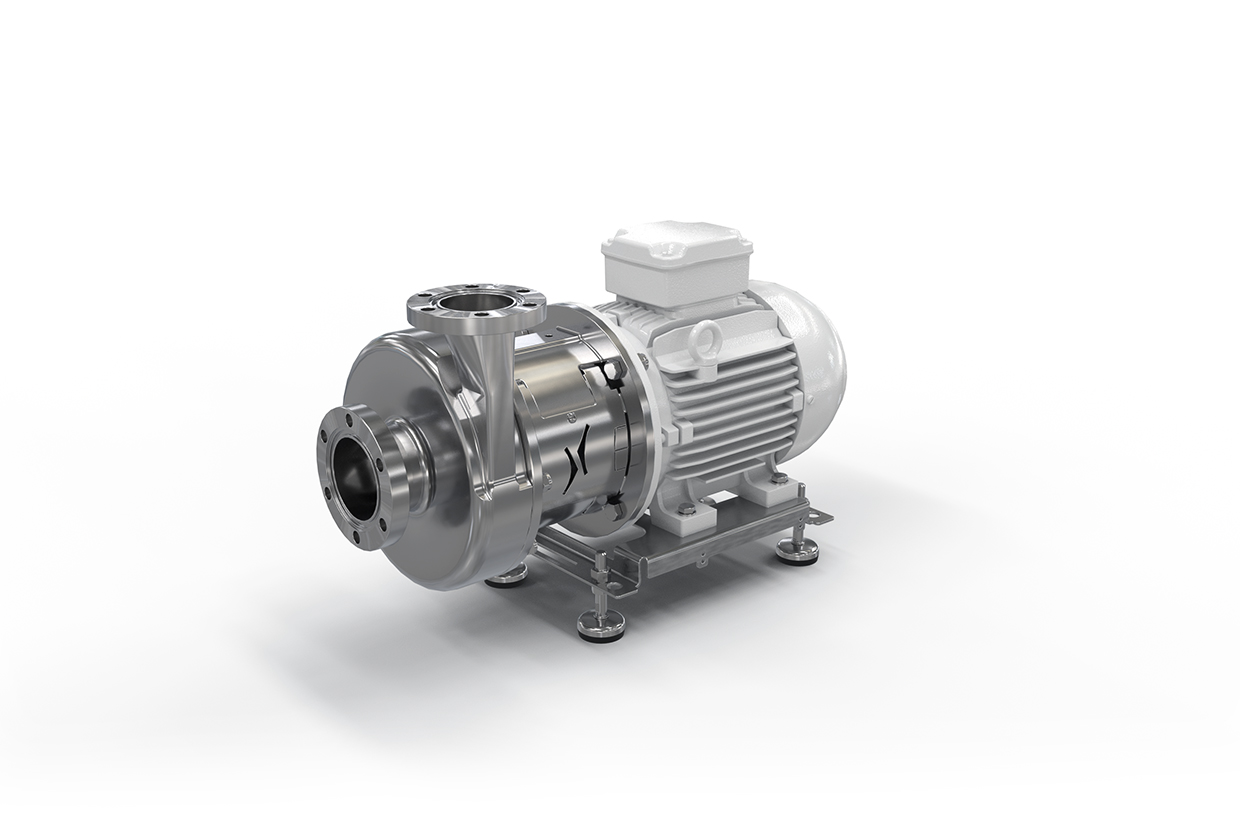
Evoguard has extended its H1CP hygienic centrifugal pump range with three larger variants designed to transfer mash and wort at high flow rates in brewery and beverage production. The new models are available in sizes 100-250, 125-250, and 150-250, with the manufacturer specifying capacities of up to 500 cubic metres an hour. The equipment adds higher-throughput options to an existing pump family used in hygienic food and drink processing.
The new variants combine enlarged hydraulic components with four- or six-pole electric motors. Evoguard reports hydraulic efficiency of up to 83% and says the pumps have been designed to maintain gentle product handling at high flow. The distinction is important for mash and wort duties because product characteristics, solids content, temperature, and pressure losses through pipework can influence pump selection. A high maximum flow figure does not mean that every installed pump will operate at that volume under all conditions.
H1CP is Evoguard’s single-stage, non-self-priming centrifugal pump family. A rotating impeller transfers mechanical energy to the liquid, and the pump casing converts part of that energy into pressure to move the product through the process system. At brewery scale, this equipment can serve transfer operations between brewhouse vessels and associated equipment. The new sizes are intended to extend the available operating range where large volumes must be moved without forcing the system to rely on multiple smaller units.
Efficiency depends on selecting a pump that operates close to the required flow and delivery head, rather than simply specifying the largest model. The operating point is determined by the intersection of the pump characteristic and the resistance of the connected pipework, vessels, and fittings. Hydraulic efficiency describes how effectively the pump converts mechanical input into energy in the liquid; it is not the same as overall electrical efficiency once motor and drive losses are included. Evoguard has not published a single energy-saving percentage for the new range against a named alternative.
A further selection constraint is net positive suction head, the pressure margin available above the liquid’s vapour pressure at the pump inlet. If the available margin is too small for a given flow, vapour bubbles can form at the impeller and then collapse, causing cavitation, noise, vibration, and damage. Evoguard says low NPSH requirements were a design priority for these sizes. Actual cavitation risk still depends on inlet pressure, product temperature, piping losses, and operating duty, so a low specified NPSH requirement cannot compensate for unsuitable installation conditions.
The construction follows hygienic engineering principles, including process connections with elastomer seals and a mechanical shaft-seal arrangement intended for sanitary service. Evoguard says the design is aligned with guidelines from the European Hygienic Engineering and Design Group. It has not, in the new announcement, specified an independent certification for each of the three additional sizes. Suitability for any individual product or cleaning procedure will therefore still require confirmation through the relevant technical documentation and installation specification.
Cleanability is especially important in systems that alternate between production and cleaning-in-place. Product-contact surfaces, seals, and cavities must be designed to avoid retaining residues that can compromise hygiene or delay the next batch. A shaft seal must also withstand the working medium and process temperatures while allowing inspection and maintenance. Evoguard highlights a block-mounted arrangement on a baseplate that makes relevant components accessible, with the intention of shortening maintenance activity and associated downtime.
The H1CP family has existed for several years, and the new development concerns an enlargement of its available capacities rather than the first introduction of hygienic centrifugal pumps by Evoguard. The company also manufactures self-priming and multistage pump variants for different duties. A self-priming configuration can be useful where air removal is required, while multistage pumps address higher pressure demands. The newly introduced H1CP variants are instead focused on moving large volumes of mash and wort through high-throughput brewery processes.
Evoguard operates within the Krones Processing network, supplying hygienic components for food and beverage production. The company has not named an installation, field-test result, or order quantity for the three newly introduced sizes. Selection therefore remains tied to published pump curves and the duty points of individual brewhouses, including the available suction conditions and required delivery head. The reported 500m³/hour maximum and 83% peak hydraulic efficiency describe different performance characteristics and should not be read as results that necessarily occur together at every operating point.