IN Brief:
- Wells Farm Dairy reports investment of more than £3 million in a processing plant and automated filling line.
- The stated plant capacity increases from 30,000 to more than 70,000 litres per hour, subject to actual operating conditions.
- HSBC UK funding is supporting further growth, including plans for 15 jobs and a 25% rise in contracts.
Wells Farm Dairy has invested more than £3 million in a new milk processing plant and automated bottle-filling line at its Staffordshire operation, supported by HSBC UK financing. The family-owned business says its nominal processing capacity will increase from 30,000 litres to more than 70,000 litres per hour. It is also planning 15 additional jobs as it seeks to increase volumes supplied to retailers and foodservice distributors. The capacity figures are company-reported plant ratings, rather than audited measurements of sustained production.
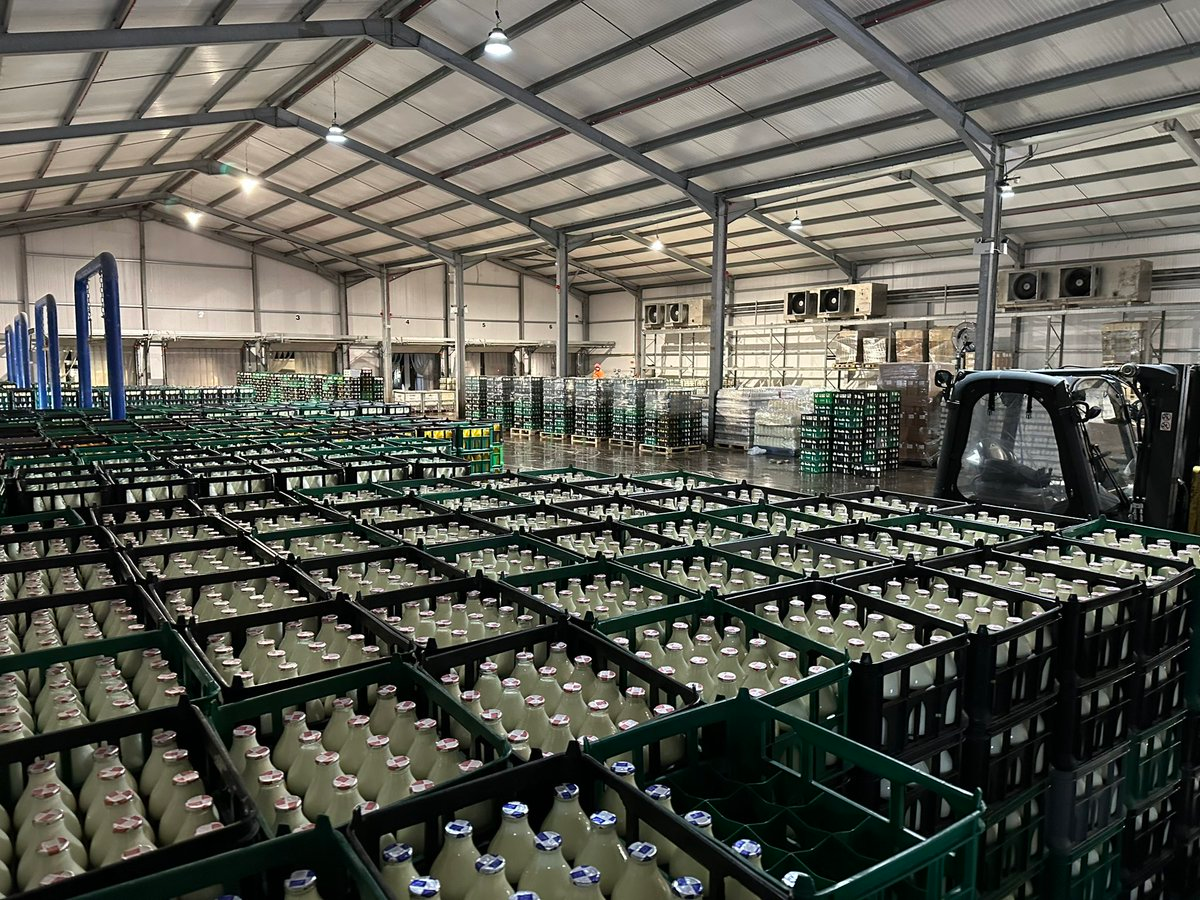
The new equipment is located in the packing hall, where filling, labelling and packing can be coordinated for different bottle formats. Wells Farm Dairy processes milk and cream at Bradley, near Stafford, and supplies conventional and organic dairy products through retail and wholesale channels. The company has not named the filling-line manufacturer, specified the individual machine speeds or said when the maximum rated capacity will be reached across operating shifts. Those details will determine the mix of packs and volumes the expanded operation can handle in practice.
In an automated milk bottling operation, container supply and filling must be matched with closing, labelling, packing and movement into chilled storage. Interruptions downstream can force a filler to slow or stop, while a constraint in upstream milk treatment may leave installed filling capacity idle. Integration can reduce repeated handling between machines, but its effectiveness depends on line balancing and the packaging formats selected. Wells Farm Dairy has reported a streamlined process without publishing cycle-time comparisons, operator-hours saved or measured reductions in packing waste.
Wells Farm Dairy’s own description of its production system shows the importance of those upstream stages. It sources milk from approximately 50 local farms, tests incoming loads and stores accepted milk in silos before pasteurisation and transfer through holding tanks to fillers and chilled storage. That process imposes requirements beyond the nominal filling speed: incoming milk must meet specification, sufficient pasteurisation and storage capacity must be available, and the finished product must move into a controlled cold chain. Increasing the performance of one stage does not automatically increase output at every other stage.
The increase from 30,000 litres to more than 70,000 litres per hour represents over twice the stated capacity of the previous arrangement. The announced figure does not establish that the site has already doubled its milk sales or daily output, which also depend on raw-milk availability, product demand, cleaning cycles, shifts and finished-pack movement. Pack size changes the number of units processed for a given litre volume, while variations between organic and conventional products may require controlled changeovers. The economic benefit will therefore depend on utilisation and the relative volumes carried through each part of the plant.
Wells Farm Dairy supplies several retail and wholesale formats, including one- and two-litre plastic bottles, returnable glass pints, pergal bags and larger bulk containers. Its company materials also identify organic and conventional milk and a range of fat contents. Every format can have different handling and hygiene requirements, and customers may ask for distinct labels, quantities or delivery patterns. The announced automation is specifically described as a bottle-filling improvement; it should not be assumed to replace or modernise every existing bulk packing operation.
Hygiene and traceability are essential to running the expanded operation because raw milk, treatment batches and packed products must remain identifiable and within the site’s food-safety controls. Wells Farm Dairy describes computerised monitoring from silos through pasteurisation to filling, alongside incoming-milk checks. Those existing systems give the new equipment an established processing environment, although the investment announcement does not specify a new traceability platform or inspection technology. Maintaining cleaning and verification routines will remain part of the line’s available operating time.
The financing also supports recruitment and working capital as Wells Farm Dairy pursues higher sales volumes. Its 15 planned positions cover human resources, quality assurance, production and technical management, adding to a workforce reported at approximately 180. Recruitment at those functions reflects the need to control documentation, product standards, customer requirements and production scheduling as capacity rises. The appointments are a plan rather than a count of completed hires, and the company has not assigned a separate capital value to the bottling equipment.
The company is targeting a 25% rise in retail and foodservice contracts and expects turnover, currently around £70 million a year, to increase by 10% over the next twelve months. Those are company objectives rather than secured orders or guaranteed financial results. Its customer base includes foodservice distributors, which operate differently from individual retail outlets in their requirements for pack sizes, delivery timing and repeatability. The expansion provides room to respond to growth, but the release does not identify specific new customer agreements.
Wells Farm Dairy operates in the Staffordshire milk field and describes a supply network designed around short journeys from neighbouring farms to the Bradley processing site. Its distribution arrangements also include depots and a vehicle fleet serving customers across several regions. Extra production volume will have to be coordinated with chilled storage and outbound deliveries, where a larger processing rate can concentrate handling into shorter windows. The company has not disclosed a new refrigeration, warehousing or fleet investment as part of this project.
Commercial growth targets now sit alongside the increased processing capacity. Wells Farm Dairy is seeking 25% more retail and foodservice contracts and a 10% rise in turnover from approximately £70 million over the next twelve months. Delivering those objectives will depend on customer orders, available milk volumes and performance of the packing and refrigerated-distribution operations, rather than solely on the new plant’s nominal rating. Subsequent production volumes, utilisation and contract wins will establish the extent of the expansion.