IN Brief:
- KHS is offering connected line audits, component replacement, conversions and digital maintenance for existing returnable glass systems.
- The LESS bottle-washer retrofit can lower spray-pump electricity use by up to 40% relative to operation without the option.
- Filler servicing, adjustable conveying stars and operating-hour-based tasks are designed to limit stoppages and extend equipment use.
KHS has expanded the range of modernisation and maintenance services available for existing returnable glass bottling lines, bringing together line audits, mechanical retrofits, control-system upgrades and digital tools. The Dortmund-based equipment manufacturer is addressing installations where a replacement machine might require substantial alterations to the building and prolonged production stoppages. Each intervention is intended to address a particular operating constraint rather than replace the entire production system. KHS has not announced a new bottling-line order alongside the service programme.
Returnable glass lines have to clean incoming bottles before they pass through inspection, filling, closing and often pasteurising or labelling stages. Each operation has its own operating rate and potential stopping points, so improving one machine does not necessarily raise finished-product output. KHS says its audit process examines individual machines alongside the conveyors and processes connecting them, using production losses and the reasons for downtime to guide investment. That assessment can lead to limited mechanical work, a control-system replacement or a combination of measures across several stages.
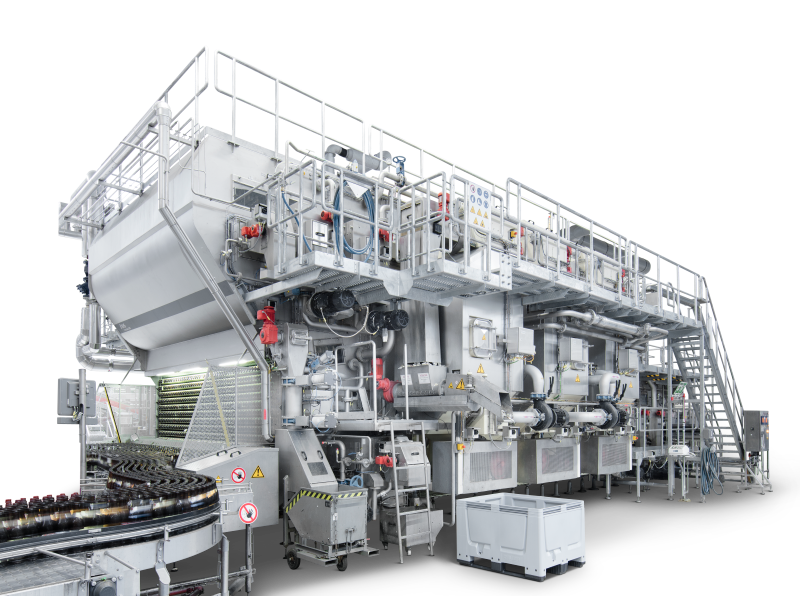
Bottle washing is one of the principal targets because the equipment handles large volumes of heated liquid. KHS says washing systems may heat several cubic metres of solution to temperatures of up to 80°C. Its Innoclean ECO carrier is intended to reduce the transfer of heat and liquid between process zones, limiting losses associated with bottles moving through successive cleaning stages. The intervention addresses a different source of consumption from the pumps and drives used to circulate and spray wash liquid.
The Liquid Efficiency Spraying System, known as LESS, tackles a different part of bottle-washer consumption. Frequency converters lower the power drawn by spray pumps during line or machine stops while keeping the bottles damp until production resumes. KHS claims a reduction of up to 40% in spray-pump electricity consumption compared with operation without the option, without changing cleaning performance. The figure refers to those pumps alone; it is not a measured reduction in the washer’s total energy requirement, still less in an entire beverage factory’s electricity or heat demand.
Filler maintenance presents a separate source of downtime, especially on lines with a large number of filling valves. KHS proposes replacing an agreed set of valves with prepared spares at scheduled intervals, rather than dismantling every valve during one extended overhaul. The manufacturer says the rolling approach can bring a maintenance interruption down to around ten hours and, when aligned with planned shutdowns, reduce additional downtime almost to zero. That is an indicative service claim, not a guaranteed result for every Innofill Glass installation; the scope of work and existing machine condition determine the actual interruption.
Downstream of the filler, an Innopas SX tunnel pasteuriser can be fitted with flexible speed control intended to maintain a steadier product flow. Reducing unnecessary starts and stops also reduces repeated thermal transitions through heating and cooling stages. The company identifies lower utility demand as a possible outcome and notes that cooling-tower installation can lessen fresh-water use in appropriate configurations. No universal percentage reduction in heat or water consumption has been specified for these pasteuriser modifications.
Changes to the bottles themselves present another operating constraint. A filling or labelling machine traditionally uses conveying stars sized to a particular bottle geometry; changes to diameter can therefore require a star-wheel exchange and mechanical adjustment. KHS is offering the Tyrolon Star from partner Tyrolon-Schulnig for compatible Innoket Neo labellers and Innofill Glass fillers. Its adaptable geometry allows a wider variety of bottle sizes to be handled without replacing the star wheel each time, reducing the work associated with frequent production format changes.
KHS ConnectApp Guide extends the programme into maintenance task management. The cloud-based application can prompt operators to complete defined checks and routines on machinery, including older equipment that does not need a new controller merely to display the tasks. When upgraded interfaces support ConnectApp Access, maintenance can be triggered by recorded operating hours instead of a fixed calendar interval. Such monitoring changes when work is requested; it does not independently diagnose every mechanical fault. Spare-parts ordering and augmented-reality remote assistance are provided through other KHS services.
The option to retain machine frames while replacing control hardware and software is particularly relevant to constrained beverage plants. New production equipment can require changes to access routes, services, foundations or roof openings, alongside commissioning and validation of the complete line. A retrofit can avoid parts of that work, although every upgrade still has to be assessed against the installed system’s mechanical condition, safety controls, sanitation requirements and achievable throughput. KHS has not named an additional customer order or quantified an overall payback period for the combined programme.
Combining these measures requires a line audit because a faster filler may still be limited by washing, conveying or pasteurising capacity. The company has published no general payback figure or measured line-wide efficiency improvement for the package. Instead, the documented savings concern specific duties, including the LESS spray pumps and the duration of defined filling-valve service work. The proposed route is to retain serviceable machinery while modifying the components that restrict its operating life, throughput or flexibility, subject to the condition of the installed line.