IN Brief:
- The Dutch ingredients company has announced a global price increase covering lactic acid and lactate products.
- Corbion cites higher raw-material and manufacturing costs alongside volatile international supply arrangements.
- Implementation varies by region, product and existing customer contracts; no single percentage increase has been disclosed.
Corbion has raised prices globally for lactic acid and lactates, with the increases taking effect immediately where existing contracts permit. The Dutch ingredients supplier attributes the change to persistent increases in key inputs and manufacturing costs, compounded by volatile international supply chains. It has not announced a single percentage increase for all customers. Instead, the adjustment varies by product, region and contract, so the timing and amount of any change will depend on the purchasing arrangement already in place.
The company says productivity programmes, operational improvements and expenditure controls have moderated some of the additional costs, but have not removed the need for changes to selling prices. Account managers are to contact customers about implementation. The immediate effect is therefore not uniform across food factories using its ingredients: a producer whose agreement permits changes now may be treated differently from one operating under a fixed-term contract with a later review date. Corbion has not published a revised price list or disclosed the financial effect expected from the decision.
Lactic acid is used as an acidulant, flavour component and preservation ingredient across several food and drink categories. Corbion produces it by fermenting sugars and then processes the resulting material into products for different applications. Lactate salts, including sodium and potassium lactate, provide related functionality in food systems but are not interchangeable with lactic acid in every recipe. The distinction affects both the formulation and the purchasing decision because acidity, ionic composition and end-product performance differ.
Lactic acid and lactate salts can serve different preservation and processing functions. Lactic acid is used in certain meat-treatment applications, whereas sodium or potassium lactates may form part of recipes designed to control product quality and microbial growth. Corbion markets its PURASAL products for specified preservation uses, but performance depends on product formulation, dosage, handling and relevant food-safety requirements. A surface treatment during processing is therefore not interchangeable with an ingredient incorporated into a finished food without evaluating the whole process and its validated shelf life.
Lactic acid is also used to adjust flavour and acidity in confectionery and beverage products. Acidity affects how a recipe tastes and can influence the behaviour of gelling systems and other formulation ingredients during processing. Buffered acids may help producers manage the balance between sourness and processing conditions, but their behaviour cannot be assumed identical across different recipes. Such technical variation is one reason that a global price increase for a family of ingredients does not translate into a single cost adjustment across every food category.
Ingredient pricing is not the same as the final cost of a finished food. The share attributable to lactic acid or lactate depends on the inclusion rate, the purchased concentration, the quantity of product made and whether an ingredient is part of a larger formulated blend. Larger buyers may also use purchasing arrangements that stagger the point at which raw-material prices are reflected in manufacturing accounts. The increase is therefore relevant to recipe costing and procurement negotiations, but it cannot be translated into a standard increase in the retail price of meat, sweets or drinks.
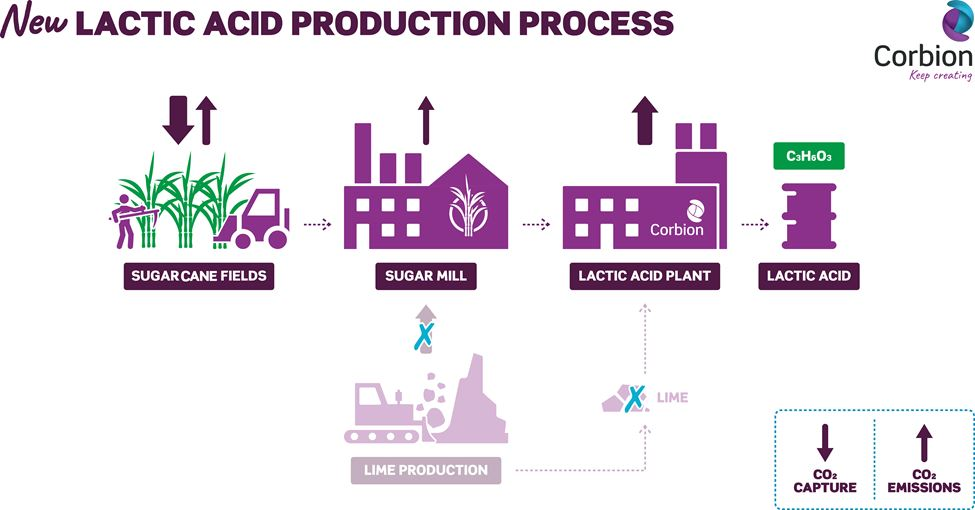
The production economics behind these materials include sugar feedstocks, fermentation, separation and purification, as well as subsequent conversion or blending into the required grade. Energy, utility use, chemical recovery and by-product handling all affect the cost of production. Corbion has previously invested in a gypsum-free lactic acid process associated with its Thailand manufacturing programme, seeking to reduce chemical inputs and by-products. That investment is relevant background to the company’s efforts to improve operating efficiency, but the November price announcement does not identify a particular plant or quantify its contribution to the increases.
The company operates in a market where food-grade requirements, concentration and technical specification can limit the speed at which a buyer changes suppliers. A reformulation can alter flavour, pH and microbiological performance; if a particular lactate provides a validated preservation function, an alternative ingredient may require renewed trials and shelf-life verification. Procurement teams consequently have to consider the total formulation cost and process controls rather than assessing an acid or lactate solely by its quoted price per kilogram. No specific customer response or supply disruption has been disclosed.
Corbion has identified broad cost and supply chain pressures but has not broken them down by feedstock, energy source, production site or country. Nor does the announcement give a timetable for another pricing review or describe a change in manufacturing capacity. The verified development is a contract-dependent global selling-price increase. It should not be read as evidence of a lactic acid shortage, plant outage or product withdrawal, none of which has been reported in the company’s 10 November announcement.
Customers will receive the applicable adjustments from Corbion’s account managers, while the effective date remains governed by existing supply agreements. Ingredient concentration, technical grade and contractual specifications will still determine the actual impact on individual production costs. The company has not quantified the increase in finished-product costs and has not provided a portfolio-wide rate that would support such a calculation. The immediate change is therefore to commercial terms, with manufacturing operations and product availability unchanged in the published information.