IN Brief:
- Leicester-based Label Apeel has launched Carton Apeel to extend its specialist label-printing services into folding cartons.
- An Edale CartonLine FL6p integrates flexographic print, foil, embossing, varnish, lamination and die cutting in one line.
- The service advertises no minimum order quantity and a typical 10–15-day turnaround, with both food and non-food applications.
Label Apeel has launched Carton Apeel, a folding-carton printing service produced with an Edale CartonLine FL6p flexographic press at its Leicester operation. The converter is extending its premium label business into decorative cartons for smaller and independent brands. Its target markets include tea, coffee, confectionery and craft beer multipacks, as well as cosmetics, fragrance and gifting. The 10 November launch provides a new UK production service, rather than a claim that the FL6p itself has just entered the market.
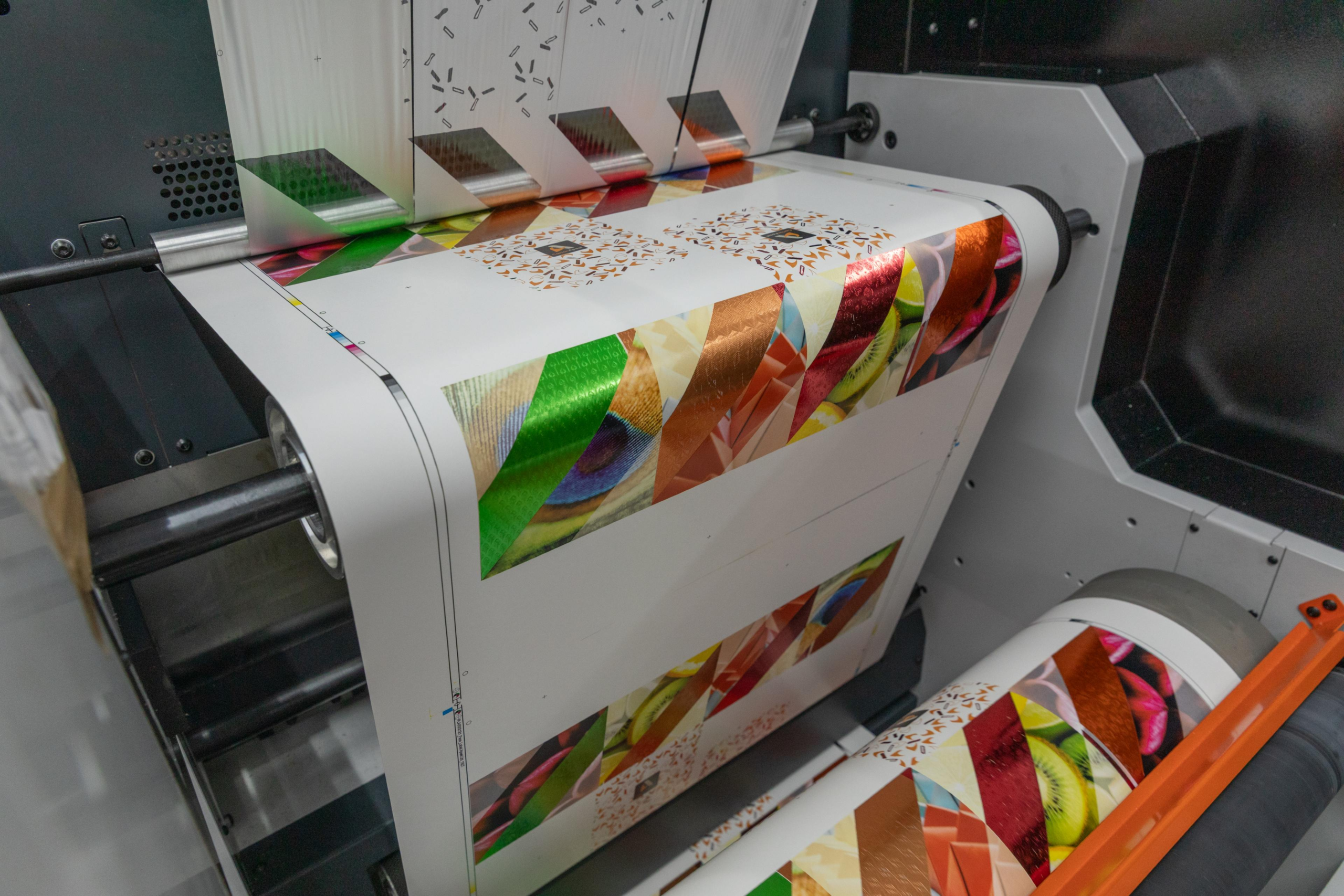
The press brings flexographic printing together with hot and cold foiling, embossing, varnishing and lamination, with die cutting on the same production line. It can also print both sides of a carton. These integrated operations allow a decorated board web to pass through printing and converting without being routinely moved between separate finishing machines. The exact workflow depends on the stations installed and the specification of the carton, but the combined process is central to Label Apeel’s new offering.
Label Apeel previously specialised in self-adhesive labels, including complex decorative work for food and drink packaging. Carton Apeel allows customers to commission both the label for a bottle or jar and its accompanying folding carton through one converter. The company says it can schedule the jobs close together and produce them to a common colour standard. That process still involves matching different substrates and finishing systems against approved proofs, since colour reproduction on adhesive label stock and cartonboard will not always behave identically.
Flexographic printing uses relief plates to transfer ink to the substrate as it travels through the press. Foil and embossed effects must be aligned with the printed artwork, while creases and die-cut edges need to correspond to the intended folding geometry. Edale describes servo-controlled web handling and automatic registration on the CartonLine platform to maintain the position of these operations. The manufacturer lists configurations in the 600–650mm web-width range; the precise mix of finishing capabilities depends on the selected line equipment.
Combining these stages can reduce the amount of work in progress held between machines and the number of times partly finished materials are moved around a print works. It can also remove some intermediate set-ups when a job would otherwise pass through several production processes. Those gains depend on artwork complexity, material choice, finishing requirements and the way jobs are scheduled. Neither Edale nor Label Apeel has published comparative figures for scrap reduction, energy use or total labour hours at the Leicester site, so the scale of any savings is not yet quantified.
Carton Apeel is offered without a minimum order quantity, with the converter citing a typical turnaround of 10–15 days. Label Apeel says it can accept orders from one carton to 10,000, allowing core ranges to be replenished separately from seasonal promotional packaging. This flexibility may limit the amount of printed stock that a smaller company holds between campaigns. The quoted turnaround is a typical supplier estimate, rather than a guaranteed lead time for every substrate, decorative treatment or order volume.
Premium cartons can involve several decorative layers that have to work together without obscuring required product information. Foil produces a metallic or reflective effect, embossing introduces raised or recessed features, and varnish can alter gloss or tactile contrast. Inside printing can add secondary branding or explanatory material where permitted by the pack design. A coordinated production route may make it easier to reproduce the intended look across cartons and labels, but artwork approval remains important because the two substrates and print geometries have different production constraints.
Stuart Kellock, director at Label Apeel, said: “The FL6p lets us extend that approach from labels into cartons.” He described the company’s press operators as craftspeople who work closely with designers to achieve particular decorative effects. Combining label and carton orders is intended to give brands more consistent visual treatment across their packaging components, while the operational savings from reduced handling have not been quantified for the Leicester site.
The press is manufactured by Edale, a British company within Canon’s portfolio. The FL6p belongs to its CartonLine range, which is designed for short and medium production runs as well as more complex decorative applications. Edale managing director Lachlan Buirds said the line combines “print, embellishment and die cutting in a single pass”, allowing converters to extend their range of work. The equipment was already part of Edale’s portfolio; the new development is Label Apeel’s carton service and application of the platform.
Food and drink applications may require several distinct packaging components, including primary containers, adhesive labels and presentation cartons. A carton printed for tea, coffee or confectionery must also accommodate ingredient declarations, batch information and other required details without compromising the finish. Buying labels and cartons from one converter can simplify artwork approval and repeat ordering, but the brands remain responsible for specifying materials appropriate to their products. The Carton Apeel launch does not by itself establish approval for direct food-contact use of every board, ink or coating option.
Label Apeel says rapid changeovers on the FL6p allow it to produce repeat labels and carton orders in close succession, with jobs scheduled around customers’ core ranges and short promotions. Edale managing director Lachlan Buirds describes the press’s combination of printing, decoration and die cutting as a route into new converting work. The launch establishes a single-pass folding-carton service at the Leicester printer, with its available finishing options and 10–15-day typical turnaround to be tested against the range of customer jobs it attracts.