IN Brief:
- Ceredigion County Council has selected suppliers for £639,325 of pilot food processing equipment, excluding VAT.
- SiccaDania will provide a multi-stage spray dryer, while Axium Process has been selected for three membrane filtration systems.
- The contracts remain pending, with completion provisionally scheduled for April 2027.
Food Centre Wales is progressing the acquisition of £639,325 worth of pilot food processing equipment, with SiccaDania Denmark and Swansea-based Axium Process selected to supply spray drying and membrane filtration systems.
Ceredigion County Council, acting on behalf of Food Centre Wales, has published two contract-award notices covering equipment for the organisation's Innovation and Manufacturing Hub. The proposed investments are intended to support food and beverage development, process optimisation, and trials ahead of commercial-scale manufacturing.
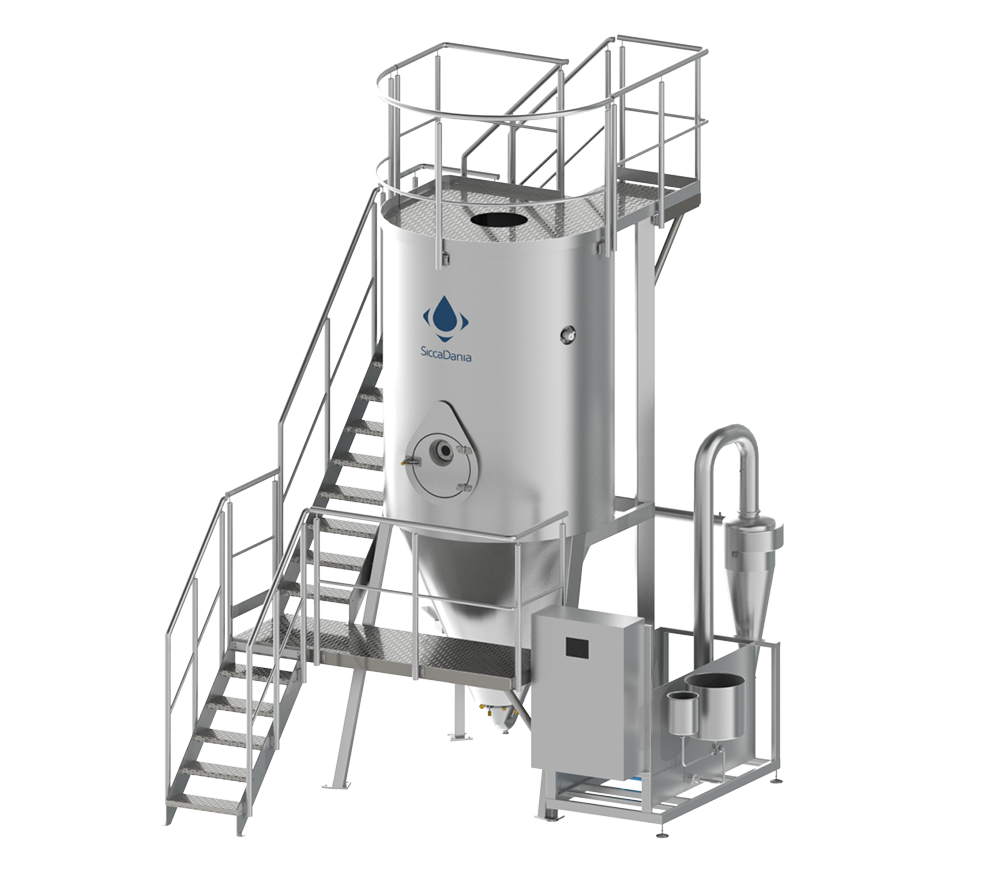
The first contract, valued at £319,500 excluding VAT, identifies SiccaDania Denmark A/S as the supplier of a multi-stage spray dryer incorporating an integrated fluidised bed. A separate £319,825 contract names Axium Process Limited for the supply of three membrane filtration pilot systems.
Both awards remain pending signature, with the notices identifying 19 November 2026 as the anticipated contract-signing date. The planned contract period extends from 20 November 2026 to 30 April 2027.
The procurement therefore represents supplier selection rather than completed equipment installation. Neither notice confirms that the systems have been delivered, commissioned, or made available for production trials.
The spray drying contract covers the design, manufacture, delivery, installation, commissioning, and support of a complete pilot system. SiccaDania will also be responsible for acceptance testing, operator training, and associated technical documentation.
Spray drying is used to convert liquid ingredients into powders by atomising the feed into heated air. The droplets lose moisture during their passage through the drying chamber, leaving particles that can be recovered and subsequently processed or packaged.
The relationship between feed composition, atomisation, air temperature, and residence time determines how effectively moisture is removed and influences the physical properties of the resulting powder.
Different ingredients respond differently to these conditions. Materials containing proteins, sugars, or other heat-sensitive components may require careful control of drying temperatures and exposure times to preserve their intended functional characteristics.
An integrated fluidised bed provides an additional processing stage within the dryer. Air passing through a bed of particles can maintain their movement while supporting further moisture removal under controlled conditions.
SiccaDania describes multi-stage drying as a means of combining initial evaporation with subsequent drying and powder conditioning. Its equipment can be configured for different particle properties and manufacturing requirements, including applications involving dairy ingredients and other food powders.
The supplier also uses fluidised bed technology to support the production of agglomerated particles where required. Agglomeration changes how individual particles combine, potentially influencing their handling, dispersibility, and subsequent processing behaviour.
Whether those characteristics can be achieved in a particular application depends on the ingredient formulation and equipment settings. The contract notice does not disclose the precise evaporation capacity, drying temperature range, or products intended for the Food Centre Wales installation.
It would therefore be premature to assign the technical specifications of a particular standard SiccaDania machine to the awarded system.
The second procurement adds membrane separation capabilities through three distinct installations. Axium Process has been selected to supply a combined microfiltration and ultrafiltration pilot plant, a reverse osmosis and nanofiltration pilot plant, and a laboratory bench-top system.
Membrane filtration separates components of a liquid using a selectively permeable barrier. Depending on the membrane and operating conditions, some constituents pass through as permeate while others are retained and concentrated.
Microfiltration is generally suited to separating larger suspended components, while ultrafiltration can be used to retain selected proteins and other macromolecules. Membrane selection depends on the feed composition and the required separation.
Nanofiltration and reverse osmosis provide more selective separation and concentration capabilities. Their applications can include reducing water content or controlling the composition of liquid ingredients before further processing.
Differences in membrane characteristics, pressure, flow rate, and temperature affect both separation performance and the throughput achieved. The selected systems will allow these variables to be investigated before manufacturers commit to larger production equipment.
Bench-top trials offer a smaller-scale route to comparing membranes and assessing the behaviour of unfamiliar ingredients. Results can then inform subsequent testing on the larger pilot installations, although scale-up requires further assessment of operating conditions and equipment performance.
Membrane fouling is one of the constraints that must be considered. Constituents accumulating on or within a membrane can reduce flow and change separation characteristics, making cleaning procedures and feed preparation important parts of process development.
For applications involving food proteins or other valuable constituents, the balance between product recovery, concentration, membrane performance, and cleaning requirements influences the practicality of an industrial process.
The award notices identify ingredient recovery, concentration, membrane screening, and process optimisation among the intended uses of the new equipment. They do not specify particular food manufacturers or commercially approved formulations that will be developed using the installations.
Spray drying and membrane filtration can support complementary stages of food ingredient production. A liquid may be concentrated or separated before drying, potentially reducing the amount of water that must be evaporated in a subsequent operation.
The two awards do not establish that Food Centre Wales intends to connect the systems into one permanent processing line. Their combined presence will nevertheless provide a broader range of individual processing trials within the hub.
Both suppliers must satisfy the applicable equipment safety, food hygiene, and operational requirements. Commissioning and acceptance testing will be important in establishing whether the installed systems perform according to the agreed specifications.
Operator training and technical documentation are also included in the procurement, supporting repeatable trials and the maintenance of suitable processing conditions after installation.
The contracts are scheduled to conclude in April 2027, subject to signature and subsequent delivery. Confirmation of equipment availability will depend on successful installation, acceptance testing, and commissioning.