IN Brief:
- Clayton Park Bakery plans approximately £10 million of investment in a converted warehouse opposite its Petre Road operation.
- The proposed production site covers 60,000 sq ft, adding to the existing 20,000 sq ft Petre Road factory and the Huncoat operation.
- Parent company James Hall & Co is financing the project, which is expected to be completed in autumn 2027.
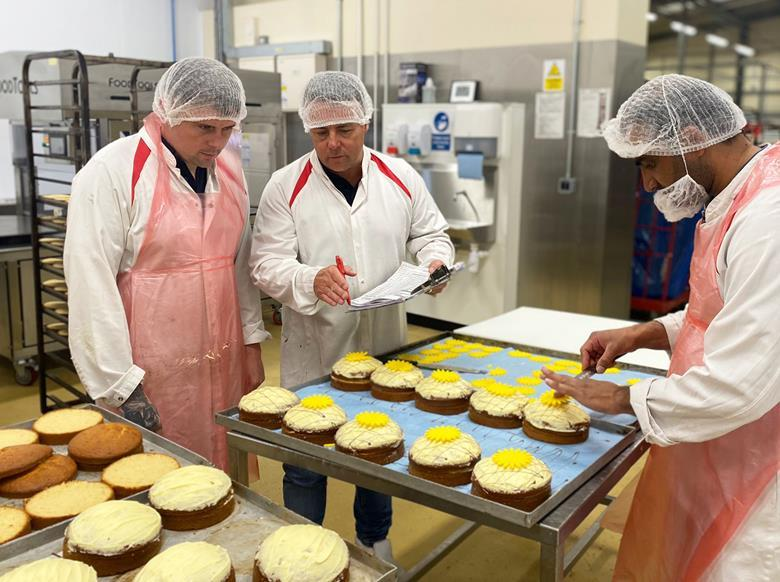
Clayton Park Bakery plans to convert a former warehouse in Clayton-le-Moors, Lancashire, into a 60,000-square-foot production facility through a project costing approximately £10 million. Parent company James Hall & Co is funding the work, which is expected to be completed by autumn 2027. The building is opposite the bakery’s existing Petre Road plant and would provide room to reorganise manufacturing as demand grows for bread, morning goods, cakes, pies and savoury products.
The proposed new space is three times the size of the existing 20,000-square-foot factory on Petre Road. Clayton Park also operates a second 20,000-square-foot site at nearby Huncoat, meaning the new building would substantially increase the company’s total manufacturing footprint. More floor area does not translate automatically into a proportional increase in finished output: actual capacity will depend on ovens, dough handling, cooling, packing, staffing, and the hours for which each line operates. No target annual unit volume has been announced for the converted warehouse.
Founded by Barry Thomas in 1995, the business initially made sausage rolls and meat pies for sale at a family market stall. It moved to Petre Road in 2005 and became part of James Hall & Co in 2011, subsequently adding the Huncoat facility in 2013. The business now employs more than 200 staff across the two existing operations and produces more than eight million units a year, according to the published project details. The company has not stated how many additional employees the expansion will require.
Bread, morning goods, cream cakes and savoury bakery products call for different production layouts and handling conditions. Dough preparation, proofing, baking and cooling can be organised as connected sequences for some products, while cream-filled cakes require appropriate chilled ingredient handling and post-bake controls. Pies and savouries introduce their own filling and allergen segregation requirements. The range therefore has to be accommodated through separate equipment or carefully managed shared operations rather than simply adding floor space to a single uniform baking process.
Founder and managing director Barry Thomas has linked the investment to pressure on the existing Huncoat operation and a need to streamline morning goods and bread production. A converted building could allow equipment and ingredient flows to be rearranged to reduce repeated transfers between operations, but the company has not identified the machinery to be purchased or the production scheduled for each site. No measured reduction in handling time, labour demand or changeovers can yet be attributed to the project.
Converting an existing warehouse introduces design constraints that differ from those of a purpose-built food factory. The building needs layouts suited to hygienic zoning, product flow, drainage, oven extraction, ventilation, fire safety and the distribution of electrical and other utilities. Some products also require temperature-controlled storage and appropriate separation of raw materials, allergens and finished goods. Those are general requirements for bakery fit-out; the public project information does not specify which services will be installed or how the warehouse will be divided into production zones.
Expansion of bread and morning goods output can alter demand on upstream ingredient handling and on downstream cooling, slicing, packing and dispatch. If oven capacity grows faster than packaging capacity, the constraint moves rather than disappears. Equally, storage and loading arrangements must accommodate the order patterns of different retail and foodservice customers. Clayton Park has not released the equipment layout, oven specification, refrigeration duty or packaging line capacity planned for the new building, making an independently calculated production increase impossible at this stage.
Clayton Park supplies customers including Booths, Spar and Asda outlets as well as cafés, schools, hospitals and other commercial buyers. Different delivery channels have different order quantities, shelf-life windows and handling requirements. Fresh bakery and cream products can demand tighter production-to-dispatch scheduling than ambient confectionery, particularly when seasonal peaks change the product mix. The investment could create more room to organise those flows, but no new distribution agreement or timetable for moving individual lines has been announced.
James Hall & Co has owned the bakery since 2011 and added the Huncoat facility in 2013. Funding the proposed conversion through the parent company links the project to an established regional food manufacturing and distribution business. The £10 million figure covers the overall expansion, but no published breakdown identifies how much is for building works, equipment, utilities or other costs. Clayton Park currently reports more than eight million finished products annually and more than 200 employees across its existing operations; neither figure has been revised for the planned development.
Autumn 2027 is the stated target for completing the building project, not a verified date for the first products to leave the new lines. Installation, commissioning and food safety validation will determine when the converted space can operate routinely. Equipment selection and the allocation of production between the three buildings will determine the resulting annual output. The £10 million project and planned floor area are established, while the precise capacity gain will depend on the final layout, installed machinery and operational commissioning.