IN Brief:
- South Holland has allocated €1.5m in its 2027 budget to develop the Food Value Factory collaboration at Dutch Fresh Port.
- The regional cluster estimates that around 55 million kilograms of fruit and vegetable residual streams arise annually.
- The initiative aims to connect suppliers and end users using shared information, data, and potential processing partnerships.
The Province of South Holland has allocated €1.5m to develop a food recovery initiative at Dutch Fresh Port, bringing produce businesses, processors, researchers, and potential buyers together to find new uses for fruit and vegetable material that would otherwise lose commercial value. The funding appears in the Dutch province’s 2027 budget, approved on 11 November, and was detailed publicly on 12 November.
The Food Value Factory will connect businesses that generate residual food streams with processors and other potential users of those materials. It is being developed as a collaborative network using existing operations, rather than as one new physical factory. Processing capacity, quality requirements, and the intended market will determine which matches can become commercial supply agreements.
Dutch Fresh Port, the food logistics and trading cluster around Barendrecht and Ridderkerk near Rotterdam, estimates that approximately 55 million kilograms of fruit and vegetable residual streams arise there each year. That figure describes the volume of material potentially available for better utilisation, not a confirmed quantity of edible food currently discarded or the amount the initiative has already recovered.
Importers, wholesalers, growers, and food processors operate close to one another around Dutch Fresh Port, alongside logistics and distribution companies. That proximity can reduce the distance between a source of surplus produce and a potential purchaser, but it does not solve differences in collection timing, product quality, or handling capacity. A processing plant cannot plan around a surplus stream unless its volume, condition, and availability can be specified with reasonable consistency.
Data and artificial intelligence are expected to help the partners match material availability with demand. Records covering volume, product type, quality, collection windows, and customer specifications could identify streams suitable for further processing. The province has not confirmed a completed shared data platform or set a quantified food recovery target, so the proposed information system should not be treated as an operating production service.
Surplus produce could be directed to juice, soup, or purée manufacture where food safety and formulation requirements can be met. Other streams may be better suited to animal feed or non-food applications. The programme’s partners are exploring potential products and raw materials; the funding announcement does not identify completed offtake contracts or establish that those applications are already operating commercially.
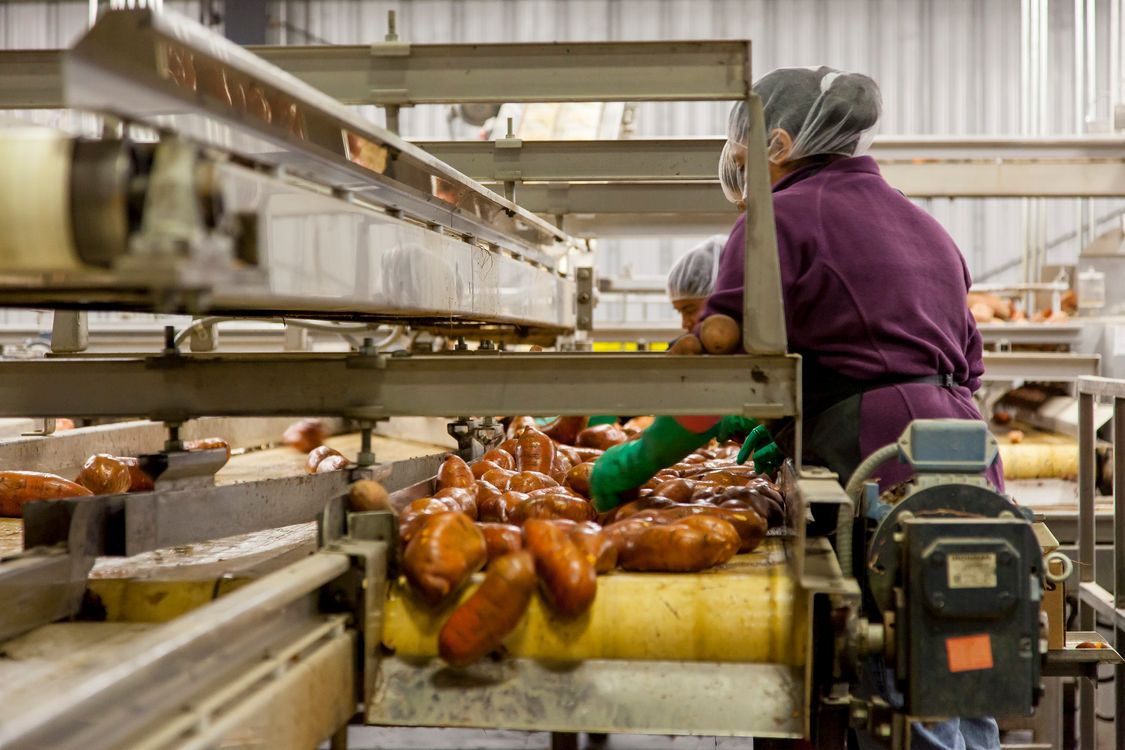
The condition of the material determines how it can be processed. Produce rejected because of size or appearance may remain suitable for washing, cutting, or pulping, whereas contamination, deterioration, or inadequate temperature control can rule out food use. Sorting, traceability, hygiene, and the interval between collection and treatment therefore influence whether a recovery pathway is technically and commercially workable.
The Netherlands has a broader incentive to recover such material. Provincial officials cite Wageningen University figures indicating that more than two billion kilograms of food were lost in the country in 2023, equivalent to roughly 127 kilograms per person. The national estimate provides context for the initiative, but it is not a measurement of loss at Dutch Fresh Port and cannot be used to calculate the scheme’s prospective savings.
The Food Value Factory will build on existing activity rather than start a wholly new programme. The province intends to bring together its food agenda, the Reststromenhub residual-stream initiative, Dutch Fresh Port cooperation, the regional development agreement, and work on data applications. Aligning these activities should help partners identify resources already available before deciding where further processing or logistical capacity is necessary.
Partners identified by the province include the municipalities of Barendrecht, Ridderkerk, and Rotterdam, the Nieuw-Reijerwaard intermunicipal organisation, and businesses operating at Dutch Fresh Port. Seven initiators have joined in the DFP Regie Coöperatie to take joint responsibility for developing the cluster. Fruitful Ventures, with links to Olympic Fruit and the Half Baked living lab, is taking an active role on behalf of that group; Rabobank is also participating in discussions.
Turning an identified stream into an ingredient supply calls for consistent descriptions of what is being offered. Suppliers must establish quantities and product condition; buyers need specifications for composition, packaging, and delivery; and processors must determine whether suitable treatment, preservation, or quality checks are available. Those decisions influence the cost of recovery as much as the physical distance between the businesses.
Seasonality can complicate that arrangement. A short harvest-related peak may support batch processing or storage, whereas an ingredient included in a standard recipe often requires dependable supplies throughout the year. Even where a purchaser can formulate a useful product from a surplus vegetable or fruit, irregular collection volumes can undermine a continuing manufacturing contract.
The province has also connected the project with food access and public health, suggesting that some suitable material could reach community organisations rather than industrial processors. Such distribution is governed by different requirements from manufacturing ingredients, notably the condition of donated products, delivery logistics, and whether an organisation can handle them safely.
The €1.5m allocation will support the development and coordination of the network. The province has not published a completion date, a new plant capacity figure, or a measurable reduction in food losses attributable to the programme. Progress will depend on partners establishing verified material streams, technical specifications, and repeatable supply agreements that demonstrate how much produce is actually being put to use.