IN Brief:
- Third-quarter net sales grew 13.1% to $228.9 million and organic sales increased 11.5%.
- Food equipment orders rose 13% to $229 million, with a record backlog of $446 million at quarter end.
- Midera raised its 2026 sales guidance to $953 million–$973 million after separating from Middleby in July.
Midera Food Processing raised its 2026 sales outlook on 17 November after third-quarter net sales and orders increased across its industrial food equipment business. The US-headquartered group recorded sales of $228.9 million for the quarter ended 3 October, up 13.1% from $202.3 million a year earlier. The results follow the company’s separation from Middleby on 6 July, making this the first full reporting quarter after the spin-off.
Organic net sales rose 11.5%, excluding the effects of acquisitions and currency movements. Midera attributed the increase to aftermarket parts and services, pricing, and equipment sales across protein, bakery, and snack processing. New orders grew 13% year on year to $229 million, while the outstanding order backlog reached a record $446 million at quarter end. The figures describe equipment supply activity, not the overall capital expenditure of food manufacturers.
Third-quarter adjusted EBITDA increased to $42.9 million from $29.6 million in the comparable 2025 period, while net earnings rose to $20.9 million from $14.3 million. The company attributed the earnings improvement to equipment shipments, aftermarket demand, acquisitions, and operating efficiencies, with higher costs providing a partial offset. Adjusted EBITDA is a non-GAAP measure defined by Midera and cannot be treated as equivalent to statutory operating profit or cash flow.
Full-year net sales are now forecast at $953 million to $973 million, compared with the previous guidance range of $935 million to $965 million. The forecast for estimated standalone adjusted EBITDA has increased to $168 million to $178 million, from $160 million to $176 million. At their midpoints, management expects about 13% reported sales growth, 7% organic growth, and 24% growth in the estimated standalone adjusted EBITDA measure compared with 2025. Forecasts remain conditional on deliveries, costs, and customer acceptance rather than constituting revenue already earned.
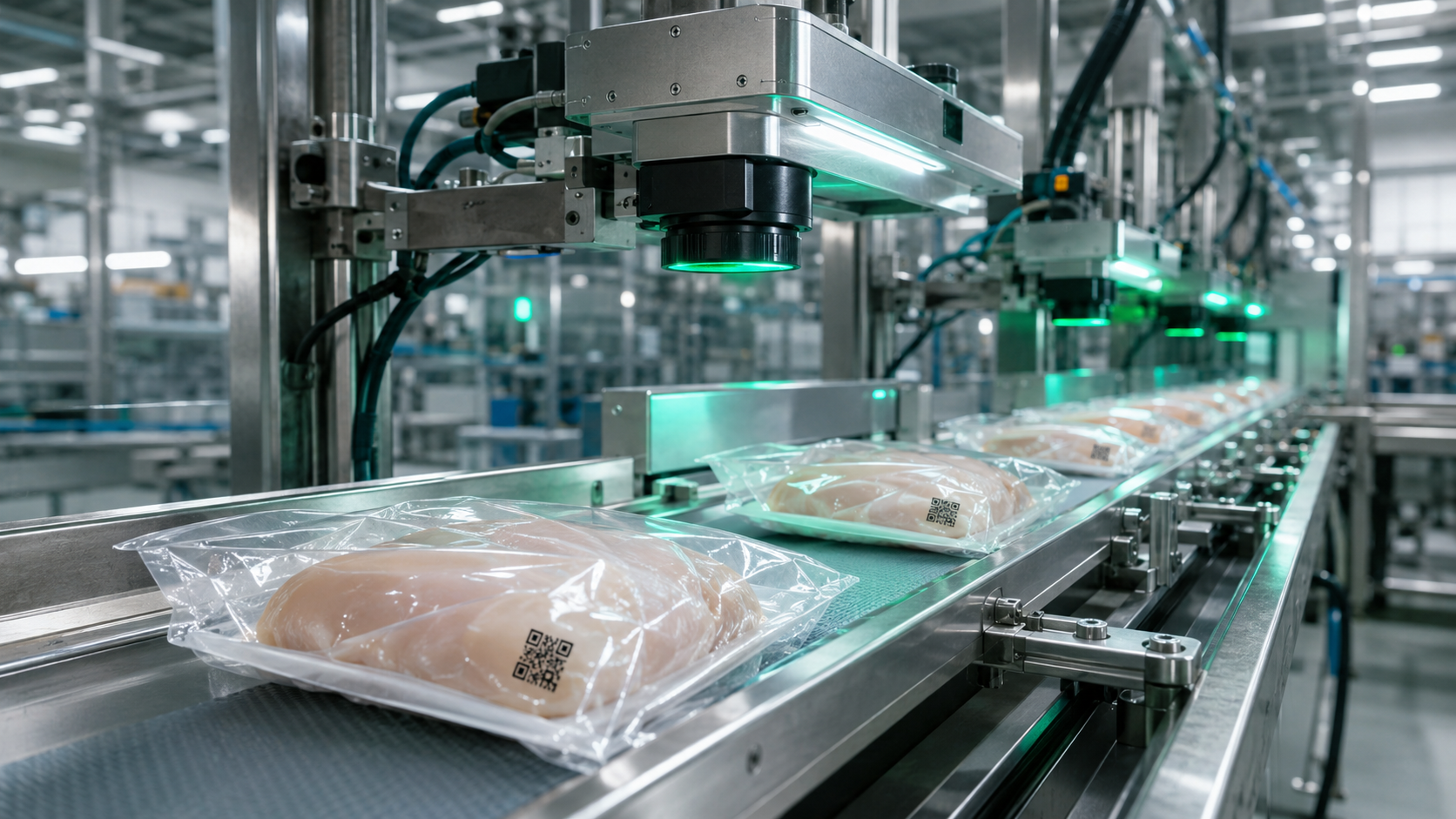
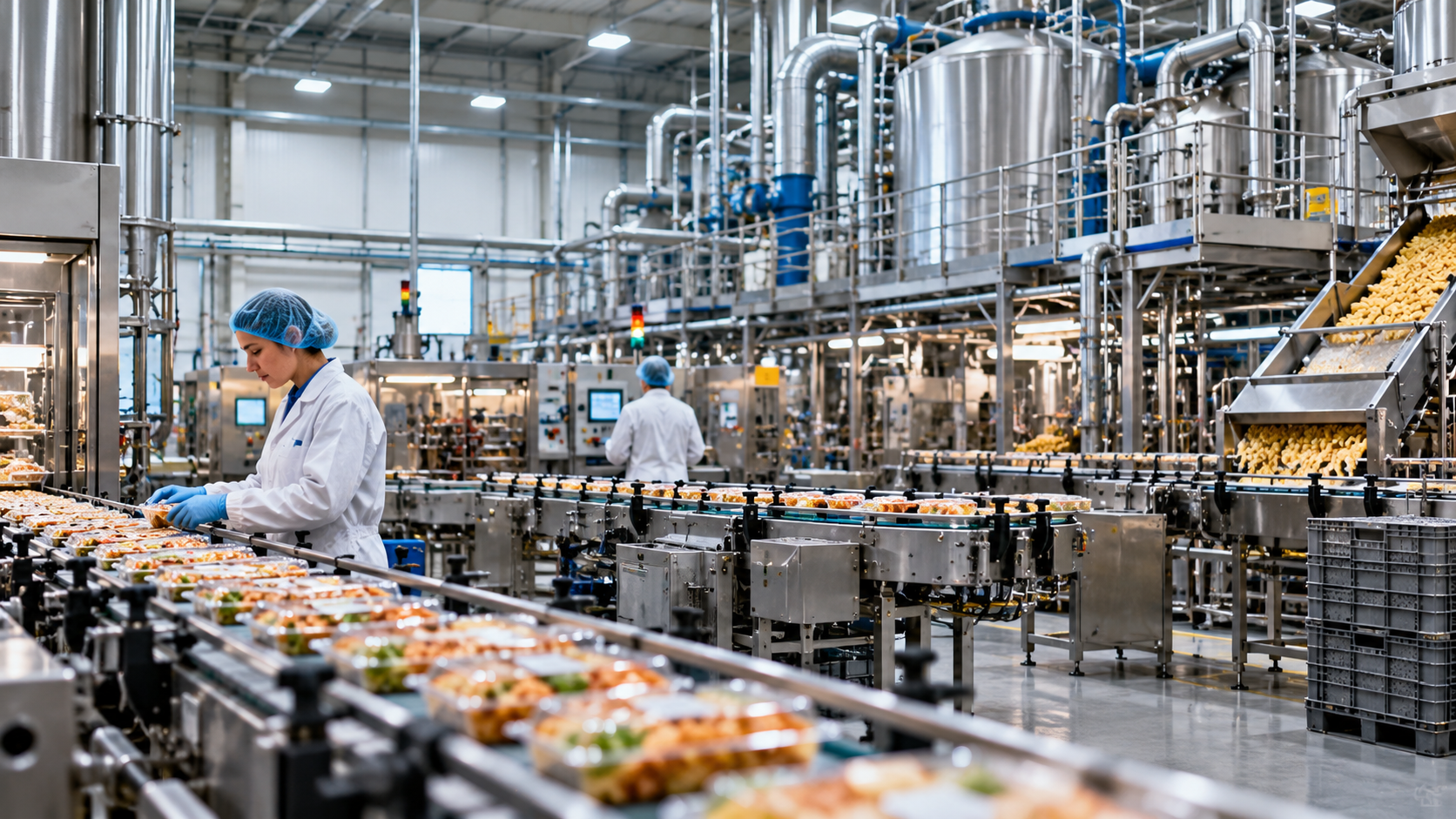
Midera supplies processing equipment used at successive stages of food production, including preparation, size reduction, forming, mixing, cooking, and packaging. The company’s order growth therefore reflects demand across several types of industrial equipment, although it has not disclosed the contribution of each food segment to the new orders. In an integrated line, the capacity of a single machine can be overtaken by a bottleneck in conveying, heating, cooling, or packaging, making complete system design an important element of capital projects.
In industrial protein processing, a machine’s rated throughput is only one component of line performance. Upstream preparation, conveying, product temperature, portion control, and downstream cooking or chilling can each impose a lower practical limit. Bakery and snack lines present different constraints, including dough consistency, heat transfer, residence time, and the ability to change products without disproportionate downtime. Integrators selling multiple stages as a coordinated system are therefore exposed to both new project decisions and the performance of equipment already in operation.
Aftermarket parts and service activity contributed to growth during the quarter. Continuous industrial production exposes blades, seals, bearings, mechanical drives, and control components to wear, while food-contact areas also require validated cleaning and inspection. Planned maintenance can extend the useful life of established lines, but its commercial profile differs from a turnkey equipment order that depends on site construction and commissioning. The results do not break out the precise quarterly contribution of aftermarket sales by equipment category.
Its business structure changed materially when Middleby completed the separation on 6 July, creating an independently traded food processing technology group. Comparisons with earlier periods rely on historical financial information prepared for the business before separation, which may not reproduce exactly the costs it would have carried as a standalone company. The first full quarter therefore provides a clearer view of current trading, but still needs to be read alongside the accounting changes associated with establishing independent operations.
Midera’s October acquisition of Phoenix Innovations occurred after the 3 October quarter end. The poultry processing equipment business therefore did not contribute to the reported third-quarter orders or sales, although its expected contribution is reflected in management’s forward planning. The acquisition extends Midera’s portfolio in protein processing, and its operational effect will be visible only in subsequent periods.
The record backlog points to contracted work still to be delivered, not a guarantee of revenue or a uniform schedule for factory investment. Long lead times, site preparation, validation work, customer acceptance, and changing production plans can affect when an order becomes recognised sales. Aftermarket orders also behave differently from new turnkey installations: they can recur throughout the operating life of a line and carry different margins from major capital projects.
Midera reported five successive quarters of double-digit organic order growth, adding context to the latest order book. Converting the $446 million backlog into recognised sales will depend on installation schedules, customer readiness, acceptance testing, and the availability of critical components. Further results will show how much of the stronger demand is sustained by new factory equipment and how much comes from recurring service and replacement work.