IN Brief:
- Brenntag is demonstrating a fermented kabanossi prototype without added nitrates at Fi Europe 2026.
- The recipe incorporates soy and other vegetable proteins alongside fibres to support the intended product characteristics.
- Brenntag reports comparable colour and shelf life, but commercial use requires product-specific microbiological and processing validation.
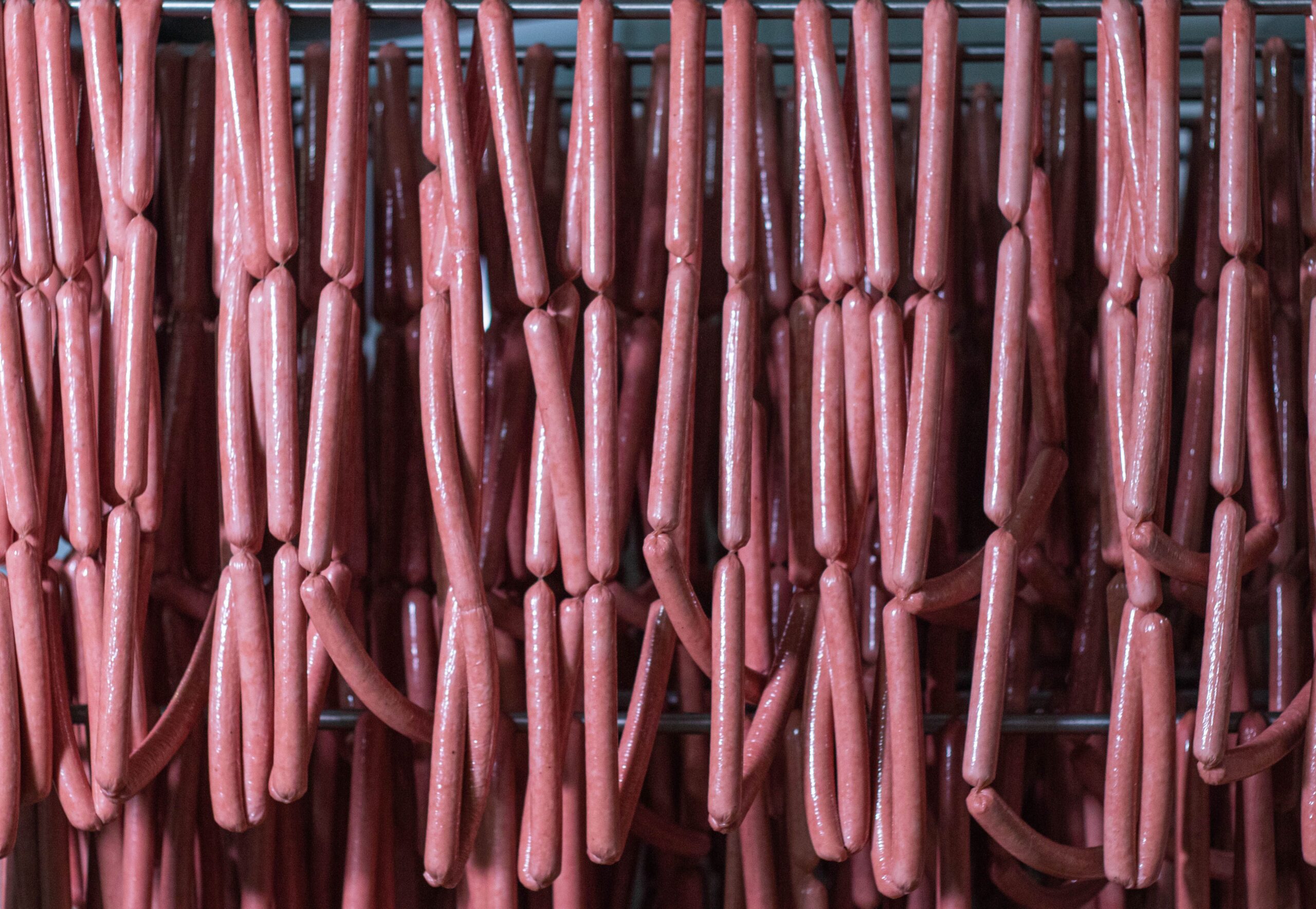
Brenntag is demonstrating a fermented kabanossi sausage formulation without added nitrates at Fi Europe 2026, using plant proteins and fibres to address the technical challenges associated with reformulating cured meat products.
The prototype is being presented in Frankfurt from 17 to 19 November as part of the company’s food and nutrition ingredient programme. Its formulation incorporates soy protein, other vegetable proteins, and fibres, with Brenntag reporting that the resulting sausage retains colour and shelf-life characteristics comparable with a conventional reference product.
Remedios Marcos, President of Nutrition EMEA at Brenntag, described the demonstration during the exhibition, explaining that removing added nitrates creates challenges involving product appearance, storage stability, texture, and manufacturing costs.
The development concerns a formulation prototype rather than the launch of a commercially manufactured sausage. Brenntag has not disclosed the complete ingredient composition, manufacturing parameters, or independent microbiological results supporting the performance claimed for the demonstration product.
Nitrates and nitrites have established functions in cured meat production. Nitrite contributes to the development of characteristic cured-meat colour through reactions involving muscle pigments, while also providing antimicrobial activity under suitable formulation conditions.
Nitrate can act as a precursor to nitrite in products where microbial activity converts it during processing. Its contribution therefore depends partly on the organisms present and the conditions maintained during fermentation and curing.
Removing these compounds requires consideration of the complete preservation system. Colour development and microbial inhibition involve different mechanisms, so reproducing the appearance of a conventional cured sausage does not independently establish equivalent food safety performance.
The formulation must also remain compatible with the manufacturing processes used for fermented sausages. Mixing, filling, fermentation, and drying influence the product’s physical characteristics and microbiological stability, with processing conditions determined by the recipe and intended finished-product specification.
During fermentation, selected microorganisms can influence acidity and the development of flavour compounds. Subsequent drying reduces the availability of water required for microbial growth, although the effectiveness of these processes depends on achieving suitable conditions throughout the product.
Changes to the ingredient system can affect moisture distribution, protein interactions, firmness, and the behaviour of the sausage during processing. The use of plant-derived ingredients consequently requires evaluation of their technological functions as well as their contribution to the product’s nutritional composition.
Soy protein can contribute to water binding and the physical structure of processed meat formulations. Other vegetable proteins provide different functional characteristics depending on their source, composition, and manufacturing history.
Fibres can influence water retention and texture, although their effects vary with the type and concentration used. Combining these ingredients may help a manufacturer adjust the consistency of a reformulated sausage, but their presence does not automatically reproduce the preservation functions associated with conventional curing agents.
Brenntag has not identified the individual vegetable proteins or fibres used in its kabanossi prototype, beyond the broad ingredient groups discussed at Frankfurt. Recommended concentrations and the processing adjustments required for the demonstration have not been published.
The supplier reports achieving comparable colour and shelf life in its formulation trials. However, the available results do not establish the organisms tested, storage conditions, analytical methods, or acceptance criteria used to support that comparison.
Commercial validation would need to consider the characteristics of the finished sausage and the hazards associated with its intended processing and distribution arrangements. Depending on the formulation, this can involve assessing acidity, water activity, microbial populations, storage temperature, and stability throughout the intended shelf life.
Changes to a curing system may also affect food labelling. A statement that a product contains no added nitrates does not necessarily establish that it contains no naturally occurring nitrate, nor does it automatically substantiate a broader claim that the product is free from preservatives.
The distinction between nitrate and nitrite is equally important. They are related compounds but perform different roles in some cured meat processes, and a formulation claim concerning one cannot be assumed to cover the other unless the ingredient composition and manufacturing process support it.
Brenntag already has an established development programme addressing the removal of added nitrate and nitrite curing ingredients. Its CARNIFLORA technology uses selected food cultures and associated formulation components to support colour development in processed meat products.
CARNIFLORA was introduced before the current exhibition, with Brenntag previously identifying applications including ham, frankfurters, salami, kabanossi, bacon, and processed poultry. The supplier has not confirmed publicly whether the Frankfurt prototype incorporates that technology or a separate combination of ingredients.
The distinction matters when considering the present development: the 2026 demonstration establishes a new application example involving vegetable proteins and fibres, while the earlier curing technology remains part of the company’s existing portfolio.
Brenntag is also presenting yeast and fava bean proteins, alongside flavour-modulation technologies, as ingredients for broader food reformulation. Marcos has identified the interaction between nutritional quality, sensory characteristics, and ingredient costs as an important consideration in the company’s current development work.
Fava bean protein and other vegetable ingredients can offer alternative functional properties, but their flavour characteristics, processing behaviour, and economics vary. Ingredient substitution must therefore be evaluated within the complete formulation rather than on protein content alone.
The EU has already reduced permitted levels of certain nitrate and nitrite additives in meat products through amendments to its food additives legislation. Those changes have increased the relevance of alternative formulations, but they do not remove the obligation to demonstrate the microbiological safety of finished foods.
Brenntag’s kabanossi prototype shows how plant proteins and fibres are being incorporated into the development of cured-meat alternatives. Its industrial application will depend on validated processing conditions, repeatable product characteristics, and evidence that the reformulated sausage satisfies the applicable food safety and labelling requirements.