IN Brief:
- Clifton Packaging won the Promotional Print category at the FlexoTech Awards ceremony in London on 8 October 2026.
- Its Fingerprint Quartz 2026 sample was printed in six colours on a PET/PE substrate at a stated screening resolution of 240 lines per inch.
- Official competition records identify a Uteco Onyx Go press, Sandon sleeves and anilox rollers, Flint inks, DuPont plates and YRG Group prepress.
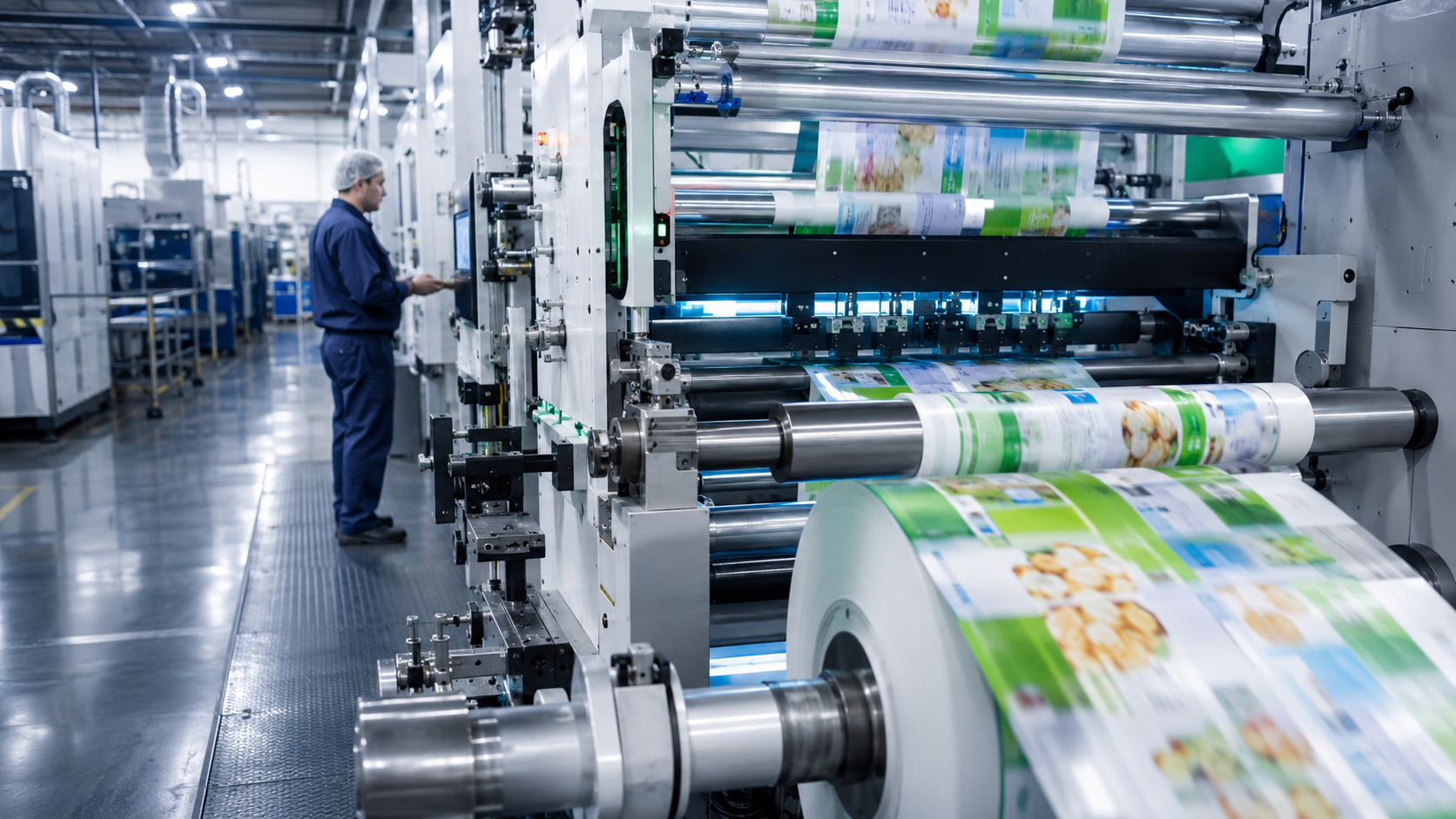
Clifton Packaging, part of the Carton Pack Group, has won the Promotional Print category at the FlexoTech Awards 2026 for a technical printing showcase produced using its ULTRA HD FLEXO capabilities. The winning Fingerprint Quartz 2026 sample used six colours on a PET/PE substrate, with a reported screening resolution of 240 lines per inch and prepress technology supplied through YRG Group.
The award was presented at the InterContinental Park Lane in London on 8 October, while Clifton subsequently issued details of the winning work. The timing separates the original competition result from the company’s later communication. The award recognises the quality of a promotional printing demonstration, not the commissioning of new manufacturing equipment or the launch of a commercial food packaging product.
Clifton’s entry was assessed for image reproduction, technical difficulty and final print quality. The judges selected the Fingerprint Quartz sample as the category winner, acknowledging the detail and colour reproduction achieved through the printing process. The company has not released a quantified comparison of image accuracy against the other entries or against conventional production settings.
The FlexoTech Awards’ technical entry records identify a Uteco Onyx Go printing press for the project. They also list Sandon sleeves and anilox equipment, Flint inks, DuPont printing plates, YRG Group prepress and Clifton’s own finishing operation. Those specifications provide more detail about the winning sample than the company’s general description of its high-definition printing capability.
The substrate is recorded as 12 PET / 100 White PE, identifying a construction based on polyethylene terephthalate and white polyethylene. The competition information does not provide a complete barrier specification, identify a commercial food product using the material or establish the food-contact conditions for a finished pack. Its significance within this entry is as the substrate on which the detailed print was produced.
Flexographic printing transfers ink from a flexible relief plate onto a moving web. An anilox roller meters the ink presented to the plate, while contact between the plate and substrate creates the printed image. Where several colours are applied, each printing station must reproduce its part of the artwork in the intended position relative to the other colours.
Fine screening places additional demands on the process. A halftone image is formed through small printed elements whose distribution produces the appearance of tonal variation. At higher line-screen rulings, control of plate preparation, ink transfer and impression conditions becomes increasingly important because changes to very small image elements can alter the appearance of the finished print.
The stated figure of 240 lines per inch describes the halftone screening used for the sample. It should not be confused with digital image resolution or the engraved cell count of an anilox roller. Those are distinct measurements associated with different parts of the image preparation and ink transfer process, even though they may all influence the final reproduction.
YRG’s Quartz S technology was used in preparing the high-definition print. The relationship between image processing, plate manufacture and the printing conditions determines whether the intended detail survives transfer to the substrate. The competition records identify the principal equipment and suppliers, but they do not disclose every plate characteristic, press setting or ink transfer measurement associated with the successful sample.
Six-colour reproduction also requires accurate register control. Small differences in web position or movement can cause image elements printed by separate stations to misalign, creating visible defects in fine detail or colour boundaries. Flexible substrates can respond to web tension and temperature changes, making consistent handling important throughout the printing sequence.
Impression pressure presents another practical constraint. The printing plate must contact the substrate sufficiently to transfer the image, but excessive pressure may distort printed elements and affect tonal reproduction. Ink viscosity, drying conditions and the characteristics of the film surface can further influence the result, requiring the various components of the process to operate together.
Clifton’s sample was entered specifically in the Promotional Print category. The competition distinguishes such demonstrations from finished packaging supplied for a named commercial product. A promotional entry can be designed to demonstrate fine detail, colour reproduction or difficult image structures without being subject to all the operating and cost requirements of a customer’s routine packaging contract.
That distinction also affects the interpretation of the result. The award establishes that Clifton produced a sample meeting the judges’ standards, but does not quantify production speed, press setup waste or sustained performance across a commercial run. Further data would be needed to determine whether the same screening conditions are used routinely for large volumes of food packaging.
Clifton supplies flexible packaging for food markets including snacks, meat products and prepared foods. Commercial work in these categories combines printed presentation with requirements covering sealing, strength, barrier properties and compatibility with packing machinery. A pack’s technical specification is determined by its intended contents and handling conditions, rather than by the reproduction quality achieved on its outer surface.
Printing materials used in food packaging also require appropriate control. Ink and substrate selection, drying and any lamination stages must be evaluated against the finished package’s intended use. The fact that a promotional sample uses PET/PE does not establish that the same construction is suitable for direct contact with every food, or that the complete material satisfies a particular recycling specification.
Shane D’Souza, chief executive of Clifton Packaging, attributed the recognition to the work of the company’s team and its strategic supply partners. The entry’s documented involvement of equipment, ink, plate and prepress suppliers reflects the contribution of several technologies to the finished result. No separate expansion of Clifton’s production capacity was announced in connection with the award.
The Promotional Print result provides recognition of a technically demanding flexographic sample produced with a specified six-colour configuration and 240 lpi screening. Its wider manufacturing significance will depend on how the demonstrated reproduction quality translates into repeatable commercial production, including stable register, acceptable waste levels and compatibility with customers’ packaging requirements.