IN Brief:
- Cranswick has automated final-stage packing for pigs-in-blankets production.
- The system uses autonox Delta robots, CWM Automation integration, and Rockwell Automation controls.
- Prepared-meat producers are adding end-of-line robotics to manage labour pressure, seasonal peaks, and pack consistency.
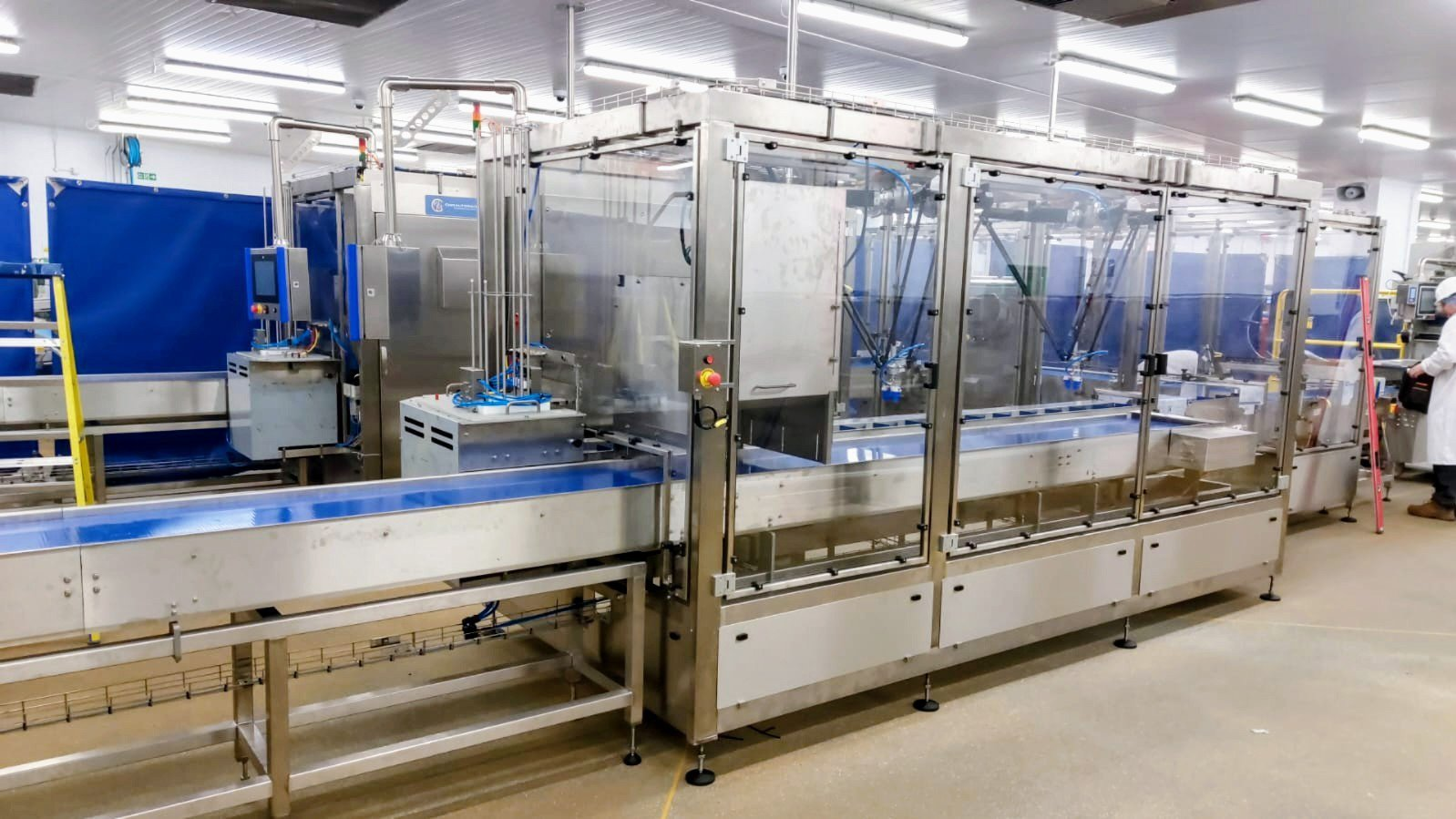
Cranswick has commissioned a robotic end-of-line pick-and-place system to automate final-stage packing on its pigs-in-blankets production line.
The installation uses autonox Delta robots, CWM Automation integration, and Rockwell Automation control technology. The system detects the presence and orientation of each sausage wrapped in bacon, picks it from the conveyor, aligns it, and places it into the correct package at up to 240 pieces per minute.
The cell is powered by Allen-Bradley Kinetix VP low-inertia servo motors and controlled by an Allen-Bradley GuardLogix 5380 safety controller. CWM Automation designed and delivered the automated system, working with Rockwell Automation and Cranswick’s engineering team to meet the production deadline for a highly seasonal product.
Pigs-in-blankets production places acute pressure on packing operations because volumes are concentrated heavily around Christmas. The final packing stage had previously required manual picking from the conveyor and placement into packaging, creating constraints around speed, labour availability, ergonomics, and shift-to-shift consistency.
Robotic pick-and-place technology is becoming more common in food factories as repetitive handling tasks become harder to staff. In high-volume production, the gains are not limited to labour reduction. Robotics can improve placement accuracy, reduce fatigue-related variation, maintain spacing and orientation, and allow line staff to move into supervision, quality, maintenance, and changeover roles.
Prepared meat also presents technical handling challenges. Products are not always perfectly uniform, and bacon-wrapped sausage formats can vary in orientation, surface behaviour, and presentation. Successful automation depends on sensing, gripper selection, motion control, conveyor timing, guarding, and pack presentation, not simply the presence of a robot above a belt.
End-of-line automation is increasingly being used to protect the value of upstream processing equipment. A forming, cooking, wrapping, or slicing line cannot deliver full output if manual packing becomes the limiting stage. Once products reach the end of the line, delays can also increase handling, rework, and the risk of product damage.
Seasonality strengthens the case for automation in prepared meat. A line supplying a concentrated Christmas product cannot rely indefinitely on short-term labour, overtime, or rapid manual ramp-up. A robotic cell gives producers a more repeatable route to peak output, provided it can be cleaned, maintained, and adjusted around real product variability.
Control architecture is central to this type of installation. The robot, conveyor, safety controller, vision or detection system, and pack-handling equipment all need to operate as one coordinated cell. Poor integration can simply move the bottleneck elsewhere, while strong integration can stabilise flow through the final packing stage.
Hygiene and cleanability also shape the equipment specification. Meat-processing environments require controlled access, effective sanitation, and equipment layouts that do not create hidden harborage points. Automation cells must therefore be designed for both motion performance and food-plant reality, including washdown, guarding, maintenance access, and safe operator intervention.
The wider food automation market is shifting from large isolated projects toward targeted robotic applications that solve visible production constraints. Case packing, tray loading, product orientation, inspection, and palletising are common entry points because they sit at the junction of labour pressure, repeatability, and throughput.
Cranswick’s installation demonstrates how robotics is moving deeper into prepared-meat packing, particularly where seasonal demand, manual handling, and product consistency intersect. As labour pressure continues and retailers demand reliable peak supply, automated handling at the end of the line will become a more routine part of meat-processing investment.