IN Brief:
- Drought has been declared across North Wales and the Upper Severn following record low rainfall and river flows.
- North Wales and the Upper Severn received less than 2% of expected July rainfall before the declaration.
- Food production faces growing exposure through reduced crop and forage output, abstraction controls, livestock pressure, and constrained factory water resilience.
Natural Resources Wales has declared drought status across North Wales and the Upper Severn following successive heatwaves, exceptionally low river flows, wildfires, and a prolonged lack of rainfall.
The affected areas include North Gwynedd, Ynys Môn, South Gwynedd, Dee in Wales, Clwyd, and the Upper Severn. Remaining catchments across south-west Wales have moved from normal conditions to prolonged dry weather, while south-east Wales had already entered that classification.
All of Wales is consequently experiencing either drought or prolonged dry weather. North Wales and the Upper Severn received less than 2% of the rainfall normally expected for July before the declaration, with many areas recording no significant rain since 6 July.
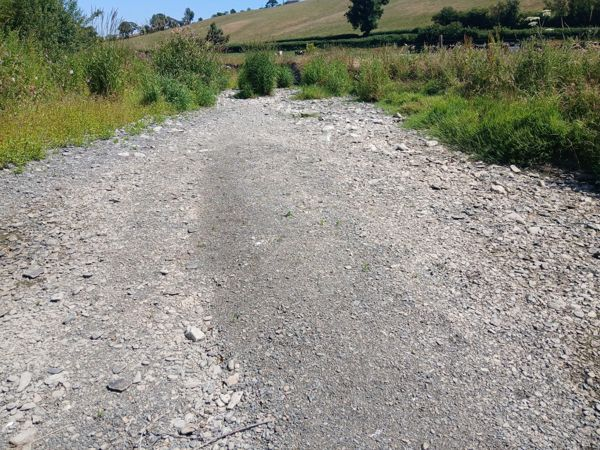
River flows are exceptionally low for the season, with some monitoring locations recording new monthly minimums and others approaching previous records. Groundwater continues to decline, while elevated river temperatures are placing further stress on fish and other freshwater species.
Reservoir levels remain generally healthy, and drought status does not automatically impose restrictions on public water supplies. The classification encompasses a wider shortage affecting rivers, groundwater, ecosystems, farming, land management, and licensed abstraction.
Additional reservoir releases have been made in some locations to support river ecosystems, while abstraction controls and other drought response measures are being applied under regional plans. Monitoring teams are assessing whether more catchments need to move into drought status.
Agricultural pressure is building across grazing, crop development, irrigation, animal welfare, and fire prevention. Reduced soil moisture limits grass recovery and crop filling, while livestock require additional drinking water and may show heat related reductions in feed intake, fertility, and productivity.
Factory water risk begins before the gate
Lower crop yields, smaller produce, variable milk output, altered raw material composition, and earlier harvesting can change factory intake well before a processing site experiences any direct water restriction. Production schedules then have to absorb both lower availability and greater quality variation.
Water restrictions at the Willand poultry processing site previously halted operations because hygiene, scalding, washing, chilling, cleaning, and welfare systems could not run safely without a reliable supply, demonstrating how quickly a utility constraint can become a production stop.
Across food factories, water functions as an ingredient, cleaning medium, transport mechanism, coolant, heating utility, and hygiene control. The balance differs between sectors, but potable quality and adequate pressure are often prerequisites for legal production rather than optional operating preferences.
Cleaning and disinfection programmes are validated around defined volumes, temperatures, chemical concentrations, contact times, and mechanical action. Reducing water without reassessing the complete process can leave residues, weaken chemical coverage, alter rinse performance, or increase cross contamination risk.
Factories can improve resilience through metering, leak detection, dry cleaning where appropriate, optimised clean in place cycles, counter current rinsing, recovery of suitable condensate, segregated water grades, and tighter control of hoses and open flow operations.
Reuse schemes require detailed hazard assessment because water acceptable for cooling, yard cleaning, or an initial rinse may not be suitable for direct product contact. Treatment, storage, pipe identification, backflow protection, monitoring, and automatic diversion must prevent recovered water entering a higher risk use.
Sites relying on rivers, boreholes, or other private abstractions face different exposure from factories supplied entirely by the public network. Low flow or groundwater levels can reduce permitted volumes or trigger licence conditions, while source quality may change as contaminants become more concentrated and temperatures rise.
Concentrated sourcing regions create another vulnerability. A factory may retain sufficient water but receive less milk, grain, vegetables, or meat because supplying farms cannot maintain normal output, while replacement material from another region brings freight, testing, approval, storage, and specification work.
Capital planning is also changing as drought events become more frequent. Water efficiency projects have traditionally competed with automation, energy, production, and packaging investment, particularly where normal supply was inexpensive; avoided downtime and secure output now carry more weight within payback calculations.
Emergency planning should identify minimum safe water demand by process rather than treating the site as one undifferentiated load. Some activities may be reduced or stopped to preserve supply for animal welfare, critical refrigeration, hygiene, boilers, or products that cannot be abandoned safely midway through production.
A period of rain may improve river flow temporarily, but recovery depends on duration, distribution, soil infiltration, groundwater recharge, and the location of reservoir catchments. With July approaching the driest recorded in Wales for almost 190 years, agriculture and processing operations remain exposed through the rest of the summer.