IN Brief:
- Single-dose packaging remains under pressure as foodservice, travel, and sampling formats face material-reduction demands.
- Papersnap uses Easysnap’s fold-and-squeeze format with a pack structure made from more than 80% paper.
- The development adds another route for brands and co-packers seeking portion-control formats with lower plastic content.
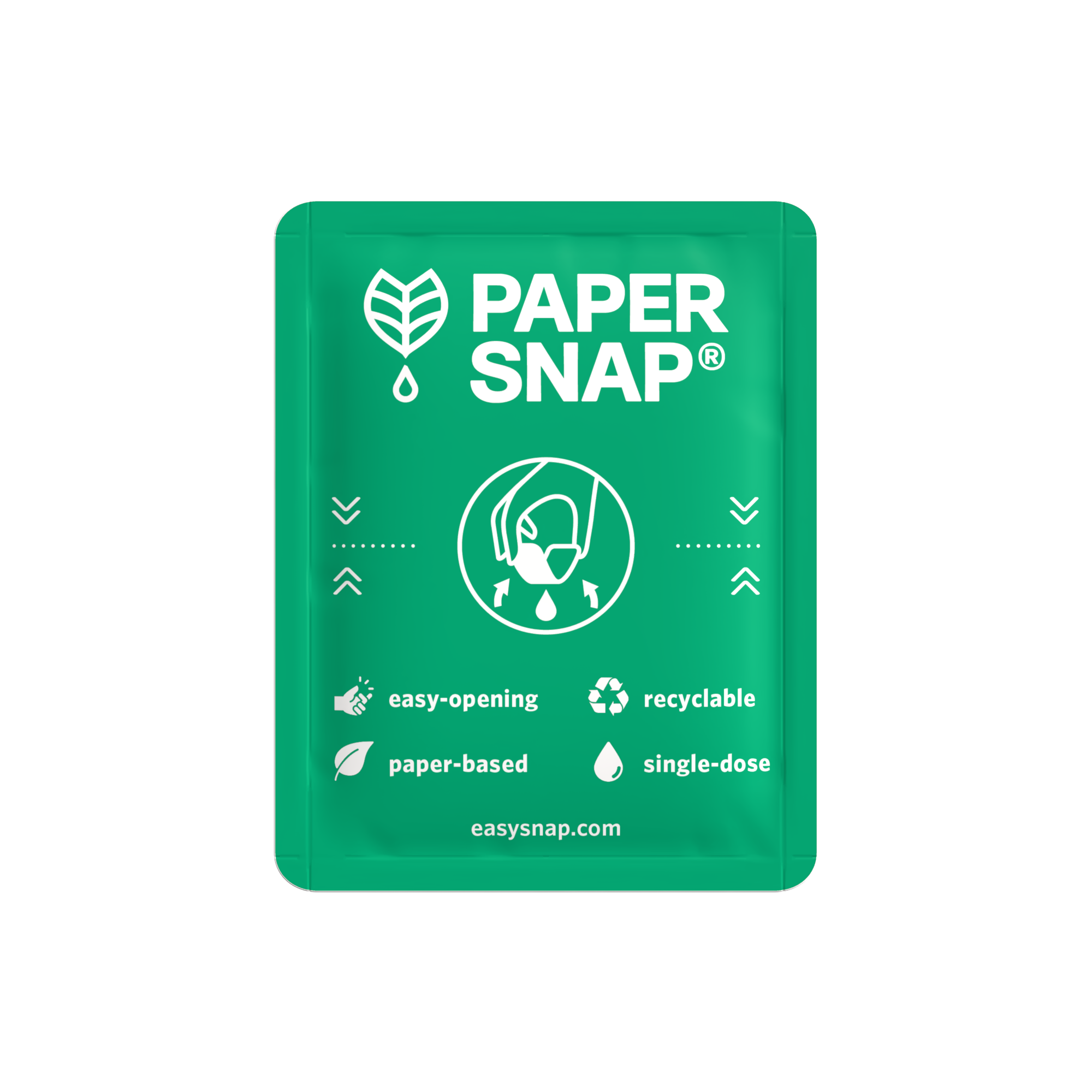
Easysnap Technology has launched Papersnap, a paper-based single-dose pack designed for liquid and semi-liquid food products including sauces, condiments, syrups, dressings, toppings, and samples.
The pack uses Easysnap’s fold-and-squeeze opening system, allowing the contents to be dispensed by bending the pack rather than tearing it open. Papersnap is made with more than 80% paper content and has been developed for fill volumes from 0.1 ml to 30 ml, covering applications from tasting samples to standard condiment portions.
Easysnap has developed the format for recyclability in the paper stream, with Cyclos-HTP certification and a reported recyclability level of 78% under EN 13430 and ISO 14021. The opening mechanism is based on the company’s existing single-dose technology, while the material structure is designed to reduce plastic content and preserve controlled dispensing.
Single-dose packaging is one of the harder areas of food packaging transition. Sachets, mini-pouches, and thermoformed portions remain useful because they support hygiene, dosing, portability, long distribution, and portion control. Their small size and mixed-material construction, however, make recovery and recycling difficult, particularly in foodservice and on-the-go channels.
The fold-and-squeeze format also addresses usability. Tearing a small pack can be awkward, messy, or impractical for some users, while conventional sachets can leave product trapped in the corners. A pack that opens through bending and dispenses through pressure offers a cleaner interaction, especially for sauces, dressings, oils, and toppings with variable viscosity.
Food-contact materials have been facing broader regulatory and technical scrutiny, from fibre-based packaging performance to chemical safety questions such as EFSA’s consultation on hazardous bisphenols in food-contact uses. Papersnap sits in the material-reduction part of that transition, but the underlying direction is similar: packaging choices are being shaped by compliance, recyclability, consumer use, and factory performance together.
For sauce, condiment, and topping manufacturers, the practical test will sit on the filling line. Paper-rich structures need to protect the product, seal reliably, resist leakage, and maintain shelf life while running at industrial speeds. They must also withstand secondary packaging, bulk transport, temperature variation, and distribution handling without compromising the portion.
Co-packers may be an important route for adoption. Single-dose formats are used across hospitality, airlines, events, meal kits, promotional sampling, healthcare, and retail multipacks, often with short runs and frequent SKU changes. A paper-based format that can handle multiple products and fill sizes could give co-packers a more flexible answer to material-reduction requests from brand owners.
The format also reflects a wider shift away from single-use packaging decisions based only on weight. Lightweight flexible plastics can perform extremely efficiently, but recyclability, collection infrastructure, paper-stream compatibility, and consumer disposal behaviour are now part of the pack specification. Fibre-based formats need to justify themselves through a full balance of material use, barrier performance, processability, and end-of-life route.
No single format will settle the single-dose debate. Mono-material plastics, fibre-based structures, refill systems, reuse models, and product redesign will continue to compete across different applications. Papersnap adds another option for products where small portions remain commercially and operationally necessary, while reducing reliance on conventional plastic sachet structures.