IN Brief:
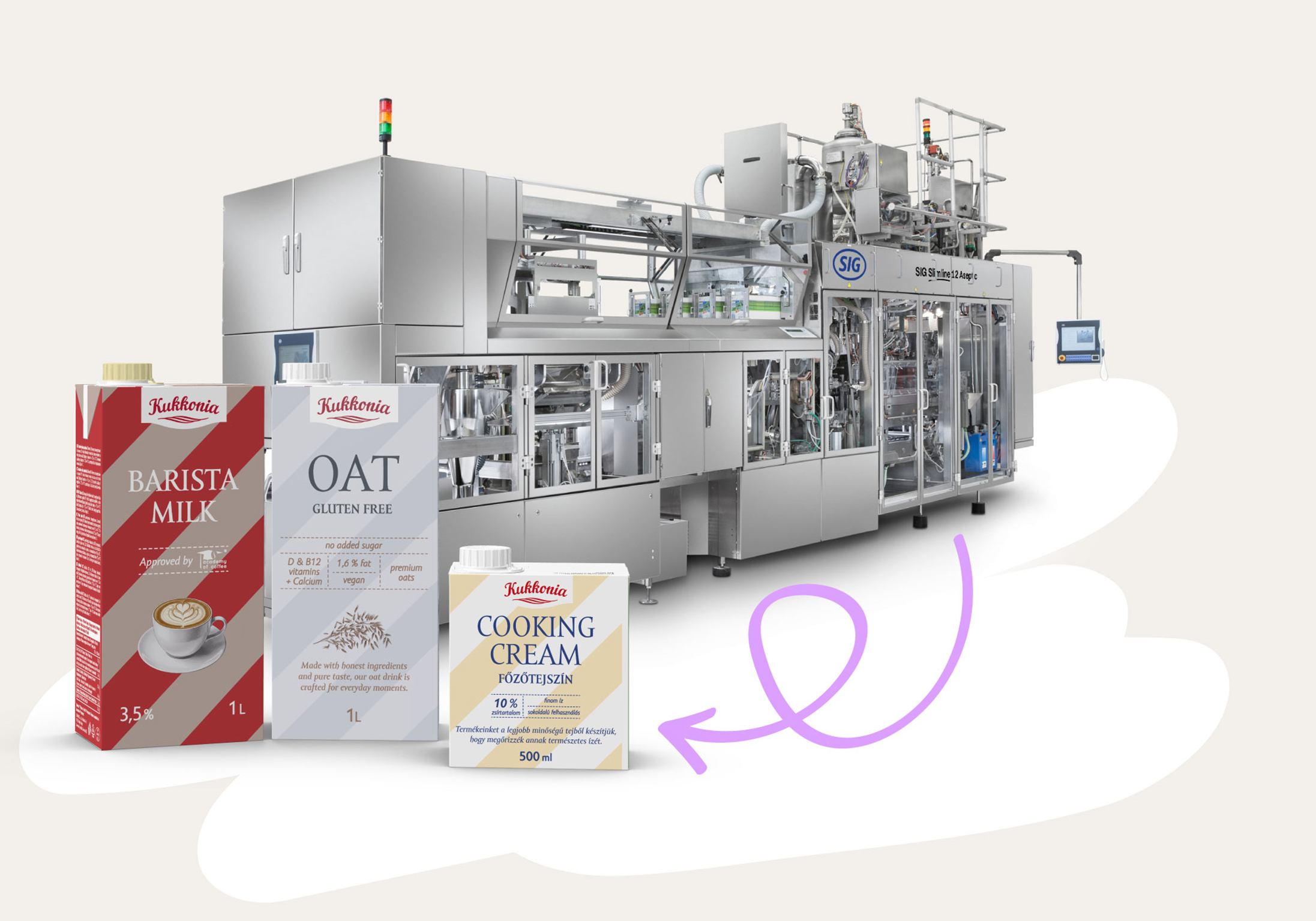
- Euromilk is installing a SIG Slimline 12 Aseptic filler rated at up to 12,000 carton packs an hour.
- The machine handles 500ml, 750ml, and one-litre formats, with changeovers designed to take less than 15 minutes.
- Standard, aluminium-free, and forest-based polymer packaging materials can run on the same filling platform.
Euromilk is installing a SIG Slimline 12 Aseptic filling machine at its dairy operation in Slovakia, adding capacity while allowing the processor to switch between carton volumes and packaging materials on one platform. The line can fill up to 12,000 packs an hour in 500ml, 750ml, and one-litre formats.
The investment extends a relationship between Euromilk and SIG that has lasted more than 25 years. Euromilk produces preserved milk, cream, and other dairy products, while the new line is also intended to support oat drinks and barista milk as the company broadens its portfolio.
Format changes are designed to take less than 15 minutes where the packs retain the same base dimensions. Operators change the sleeves, adjust the filling volume, and load the new parameters through the human-machine interface. A simple artwork change requires no mechanical conversion, according to SIG.
On mixed dairy lines, the difference between an artwork change and a mechanical format conversion directly affects available production time. High nominal speed offers limited value when each short campaign is followed by a long rebuild. Quicker, repeatable changes allow more of the shift to be used for filling while giving planners greater freedom to schedule smaller product runs.
The machine can handle standard aseptic carton structures alongside SIG Terra Alu-free material and packs using forest-based polymers. Euromilk already uses both alternatives. The Alu-free structure is intended for plain liquid dairy products without an aluminium barrier layer, while selected plastic components in the forest-based option are linked to renewable wood residues through an independently certified mass-balance system.
Running those materials on one filler reduces the risk that a future packaging change will require a separate filling asset. Product protection, shelf life, sealing, and machinability still need to be validated for each structure, but a common platform avoids duplicating operator training, maintenance routines, spare parts, and floor space.
The same flexibility will support products beyond Euromilk’s established milk and cream range. Dairy and plant-based drinks may share filling equipment, yet they can differ in formulation, viscosity, thermal treatment, allergen controls, and campaign length. A flexible filler cannot resolve those upstream requirements, although it can prevent packaging conversion from becoming the limiting step once the product reaches the line.
Aseptic filling also gives processors access to ambient shelf life and wider distribution without continuous chilled storage. That advantage brings stricter demands around sterilisation, hygienic design, sealing, and process control. At 12,000 packs an hour, a deviation can expose a substantial volume before the line is stopped, making inspection, traceability, and disciplined maintenance essential to the capacity increase.
Installation and ramp-up will determine how much of the stated flexibility reaches daily production. Operators need validated recipes, changeover instructions, cleaning sequences, and quality checks across all three volumes. Maintenance teams must establish spare-parts holdings and diagnostic routines, while planners need to protect enough commissioning time to prove stable seals, accurate fills, and acceptable waste levels before loading the line to its nominal rate.
Flexible carton dimensions can also alter secondary packaging and logistics. A change from 500ml to one litre affects case counts, pallet patterns, line accumulation, and warehouse locations, even when the filler converts quickly. Euromilk will need the downstream packer, palletiser, coding, and inspection systems to change at a similar pace if the filling machine’s shorter conversion is to translate into a shorter overall stoppage.
The investment combines three operating objectives: greater output, shorter format changes, and a wider choice of packaging materials. Each affects line economics differently. Added capacity supports volume growth, faster changes reduce lost production time, and material flexibility limits the chance that a packaging specification will force another major capital project.
Those gains depend on the rest of the plant keeping pace. Upstream processing, cleaning capacity, labour, utilities, warehousing, and distribution can still constrain output even when the filler has spare headroom. A faster line may also reveal bottlenecks that were previously hidden by the older equipment.
Euromilk’s installation therefore provides more than a headline speed increase. The stronger proposition is a line that can carry several pack sizes and material structures without sacrificing much of the working day to conversion. As dairy portfolios fragment across conventional, premium, and plant-based products, that combination of throughput and adaptability gives the processor more room to alter its production mix without rebuilding the packaging hall around every change.