IN Brief:
- Flavourfresh has introduced Tomalina tomatoes in Asda using Paranova’s FibreFresh paper-based punnets.
- The launch follows Paranova’s £500,000 investment in Boix punnet-forming technology.
- The project moves fibre-based fresh produce packaging into a commercial retail format.
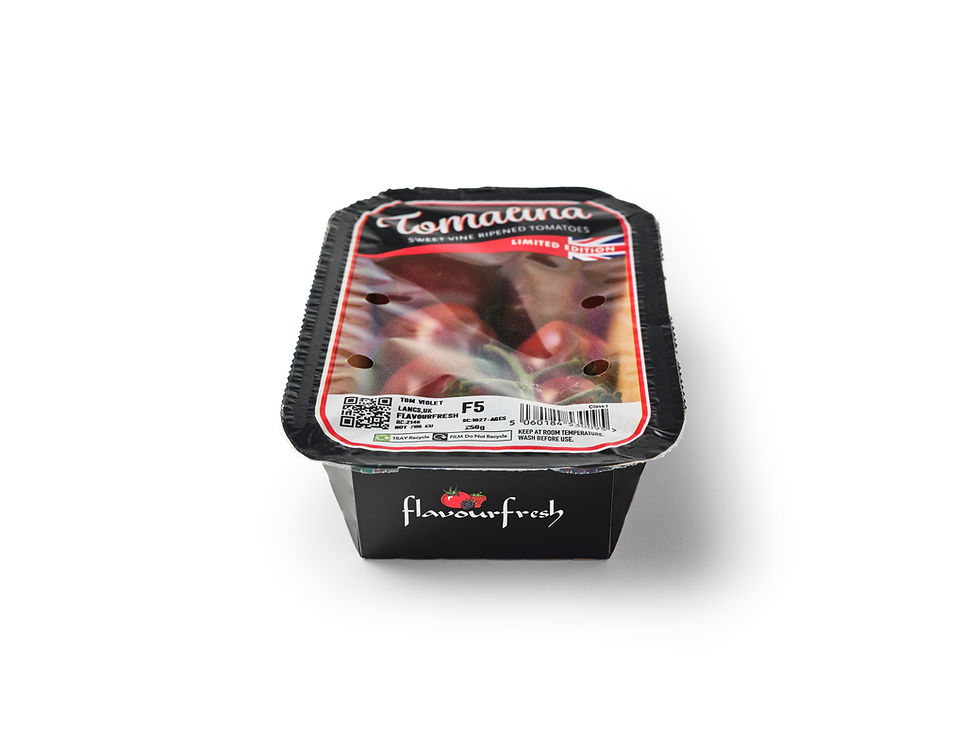
Flavourfresh has launched Tomalina tomatoes in Asda stores using FibreFresh heat-sealed paper-based punnets developed by packaging specialist Paranova.
The summer launch marks the commercial debut of Paranova’s FibreFresh punnet technology. The format has been developed for fresh produce applications as retailers, growers, and packers look for alternatives to conventional plastic punnets without weakening product protection or packing efficiency.
The launch follows a £500,000 investment by Paranova in Boix punnet-forming technology, supporting the company’s move into heat-sealed paper-based formats. The investment extends Paranova’s existing position in nested trays into fibre-based packaging systems designed for commercial produce supply chains.
Tomalina is a premium tomato range grown by Flavourfresh for Asda. The FibreFresh packaging is built around recyclability and produce performance, including the need to manage respiration and transpiration in fresh tomatoes. The format will now be tested in the practical conditions of retail distribution, shelf presentation, and customer handling.
Fresh produce packaging is under sustained pressure because plastic reduction targets have to be balanced against shelf life, visibility, ventilation, strength, moisture control, and packing speed. A punnet protects fragile produce during handling, supports shelf presentation, allows retailer stacking, and forms part of the product’s waste and recyclability profile.
Material substitution in tomatoes is therefore more complex than a simple move from plastic to paper. Tomatoes are delicate, moisture-active products with shelf-life sensitivity. Packaging must avoid excessive condensation, bruising, collapse, and quality loss while still allowing efficient lidding or heat sealing.
The investment in Boix equipment gives the FibreFresh project a stronger production base than a limited material trial. Packaging innovation becomes useful to fresh produce suppliers only when the format can be produced repeatedly, supplied at the necessary scale, and integrated into packing operations without creating avoidable downtime.
Fibre-based food packaging is advancing across several European markets. In France, dry moulded fibre packaging production is being scaled for food, dairy, and reusable packaging applications, reflecting the same push to move cellulose-based formats from concept to industrial production. The shared challenge is consistency at commercial volume.
Fresh produce economics are tightly linked to speed and waste. If a pack slows the line, damages product, fails in transit, or increases shrink at retail, the sustainability benefit becomes weaker. Growers and packers need packaging systems that reduce plastic while preserving the operational discipline of established formats.
Retailers also need visible packaging progress. Fresh produce aisles have historically used large volumes of plastic trays, films, flow wrap, and bags. Paper-based punnets provide a clear material-change signal, but the environmental balance depends on product protection. Food waste generally carries a heavier environmental burden than packaging alone, so protection and material reduction have to be managed together.
The Flavourfresh and Paranova launch gives the format a live retail test with a named grower and retailer. Shelf performance, packer feedback, product quality, and consumer handling will determine whether the system can move into wider produce categories or larger volumes.
Fresh produce packaging will continue to move toward lower plastic use, but the most durable formats will be those that hold several requirements together: strength, ventilation, recyclability, sealing performance, product visibility, packing speed, and shelf-life protection. Flavourfresh’s tomato launch puts that balance into commercial practice rather than leaving it at exhibition level.