IN Brief:
- Frontmatec AiRA has opened a new manufacturing and innovation facility in Cardona, Spain.
- The site expands robotic systems capacity for meat processing and other food production applications.
- The investment reflects continuing demand for automation in labour-intensive and physically demanding protein operations.
Frontmatec AiRA has opened a new manufacturing and innovation facility in Cardona, Spain, expanding its capacity to develop and build robotic systems for meat processing and other food production applications.
The facility forms part of Fortifi Food Processing Solutions and gives the business a larger base in Catalonia for production, engineering, and applied technology development. Its opening also marks the 25th anniversary of AiRA, which was founded in 2001 and now operates as Frontmatec’s main Southern Europe production centre.
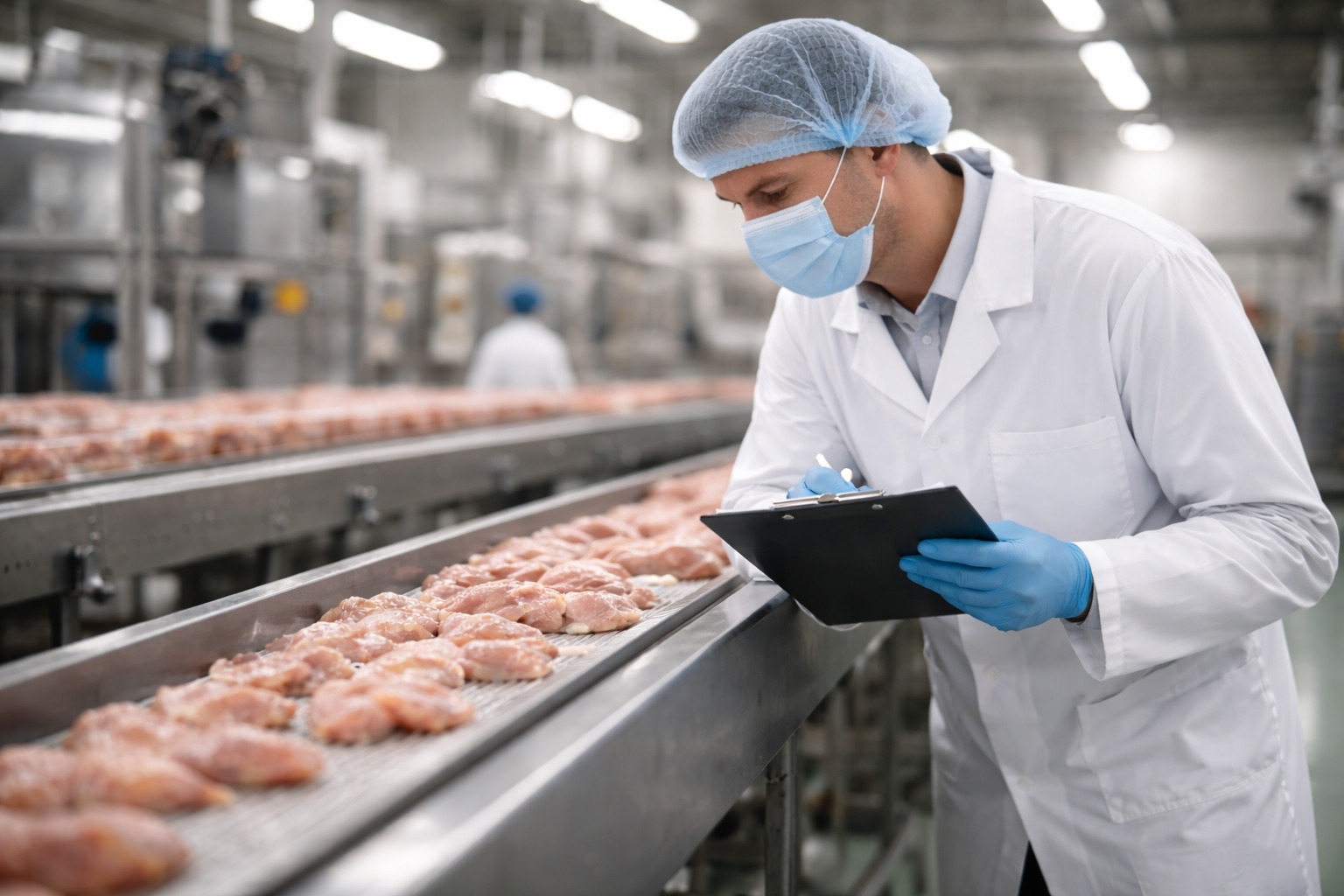
From the new site at La Cort II Industrial Estate, Frontmatec AiRA will support robotic systems that combine automation, vision, and process engineering for demanding food production environments. The company’s systems are used in meat processing operations where repeatability, cutting accuracy, hygiene, and operator safety all influence plant performance.
Automation in meat processing remains technically difficult because the raw material is variable by nature. Carcass dimensions, fat distribution, bone structure, temperature, surface condition, and product orientation all create differences that must be managed in real time. Unlike component manufacturing, the process does not begin with uniform parts, and small errors can affect yield, product quality, or downstream packing.
Robotic systems used in protein processing therefore depend on more than mechanical movement. Vision, sensing, software, cutting tools, hygienic design, and line integration all need to work together at production speed. A robot that can complete a motion in isolation still needs to recognise the product, calculate the correct path, operate safely around other equipment, and withstand sanitation cycles.
The labour case is equally strong. Deboning, trimming, cutting, dressing, and handling tasks are difficult to recruit for and often involve repetitive movements, cold environments, sharp tools, and ergonomic strain. Automation can reduce exposure to those conditions while improving process consistency, but adoption depends on systems that preserve yield and avoid creating new downtime.
Hygienic engineering is becoming a stronger part of this calculation. Developments such as hygienic drive surface treatments and washdown-ready control components show how equipment suppliers are responding to plants that need machinery to survive aggressive cleaning without adding maintenance burden. Robotics in meat production must meet the same expectation, with design choices that reduce harborage points, support sanitation access, and protect electrical and mechanical components.
The Cardona facility gives Frontmatec AiRA more room to develop systems around those production realities. Meat processors are increasingly looking for automation that can be introduced into existing facilities rather than requiring complete plant redesign. That places pressure on suppliers to deliver equipment with practical footprints, serviceable layouts, and integration routes that fit around established line flows.
Robotics is also becoming part of wider data-led production control. Vision systems and software can generate information about product dimensions, process consistency, and line behaviour, creating opportunities for better yield tracking and quality management. The value of that data increases where it can be linked to production planning, traceability, maintenance, and quality systems.
The expansion in Spain comes as protein manufacturers across Europe continue to balance labour pressure, cost control, welfare expectations, and food safety requirements. Automation cannot remove all variability from meat processing, but it can help standardise the tasks where human performance is hardest to maintain consistently across shifts.
Frontmatec AiRA’s new site strengthens its production and development base at a point when meat processors are moving from experimental automation toward more targeted deployment. The most effective systems will be those that reduce physical strain, improve repeatability, protect yield, and fit into plants that cannot pause production simply to accommodate a new generation of machinery.