IN Brief:
- GEA will invest around $25 million in a 70,000-square-foot expansion of its Janesville, Wisconsin campus.
- The project combines manufacturing, assembly, testing, training, and application capabilities, with drying technology among its core areas.
- Full operation is planned for early 2028, extending earlier Janesville investments in equipment production and New Food pilot processing.
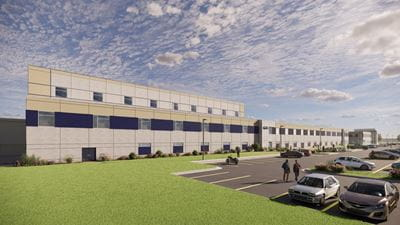
GEA is investing around $25 million to add approximately 70,000 square feet of office, manufacturing, research, and industrial space to its Janesville campus in Wisconsin, extending a site that already combines equipment production with food process development. Construction is expected to begin in autumn 2026, with completion targeted for the end of 2027 and the enlarged facility scheduled to become fully operational in early 2028.
The new building will bring manufacturing, assembly, application engineering, testing, and training functions into a more closely integrated campus, with technologies from GEA’s Nutrition Plant Engineering portfolio forming part of the expansion and drying identified among the core capabilities. The City of Janesville development agreement links the project to 52 full-time-equivalent positions, while GEA says its cumulative investment in the location since the first local tax increment financing agreement in 2022 will reach around $75 million.
Janesville already carries a wider range of functions than a conventional machinery assembly site, following the opening of a production, repair, logistics, and training facility in 2024 for equipment including separators, decanters, valves, and pumps. GEA added its New Food Application & Technology Center in 2025, giving customers access to pilot-scale work in precision fermentation, cell cultivation, and plant-based processing before committing processes to commercial equipment.
Placing those functions beside the planned manufacturing expansion shortens the organisational distance between product trials and equipment delivery, particularly where a process changes during development and the implications have to be carried into plant design. Pilot results can affect vessel configuration, heat transfer, separation, drying, cleaning, instrumentation, and downstream handling, so reducing the number of handovers between application teams and manufacturing engineers can remove delay from projects that already require several rounds of testing.
Drying technology gives the expanded site a direct role in established dairy, nutrition, and ingredient markets as well as newer fermentation applications. Feed composition, solids level, heat sensitivity, desired particle properties, energy demand, cleaning cycles, and powder handling all influence how a drying system performs, leaving pilot work and application testing closely connected to the final plant configuration rather than treating the dryer as a standalone equipment purchase.
The New Food centre extends the same process logic into precision fermentation and cell cultivation, where a promising laboratory process can encounter different mixing, oxygen transfer, heat removal, separation, and concentration conditions as scale increases. Access to larger pilot equipment allows developers to identify some of those constraints before ordering commercial systems, although successful trials still have to be converted into reliable production economics once equipment is installed.
GEA is also using Janesville to increase the amount of technical and manufacturing capability available inside North America, reducing dependence on long-distance movement of specialists and equipment during customer projects. Regional support cannot eliminate global supply dependencies for machinery components or specialist expertise, but it can shorten response times during testing, design changes, training, commissioning, and subsequent service where engineering access is part of the production risk.
The near-30-acre campus planned after the land combination gives the company space to place those activities within one location while supporting further growth around existing facilities. A separate $2 million environmental investment is referenced in GEA’s project material, although the company notes that the individual measures have not yet been confirmed for external use, so they remain outside the operational claims attached to the expansion.
Food and beverage capital projects increasingly ask the same equipment supplier to deliver higher throughput, stronger hygiene control, lower energy consumption, better process data, and more flexible product handling within one installation. Application centres can test some of those requirements before the final equipment is built, while training facilities reduce the gap between engineering design and the operators expected to run the process after handover.
Combining pilot work with manufacturing does not guarantee a shorter project on its own, because customer approval, permitting, construction, component lead times, validation, and commissioning still determine the delivery schedule. It does, however, give GEA a larger local platform on which process questions can be tested and carried into equipment decisions without moving each stage between separate international locations.
Full operation remains more than a year away, leaving the investment dependent on continued North American demand for food, beverage, and nutrition projects through 2027 and into 2028. By the time the new building opens, Janesville will combine core equipment production, New Food pilot processing, application engineering, customer training, and an expanded manufacturing footprint, giving GEA a regional site capable of following projects from early process testing much further into industrial delivery.