IN Brief:
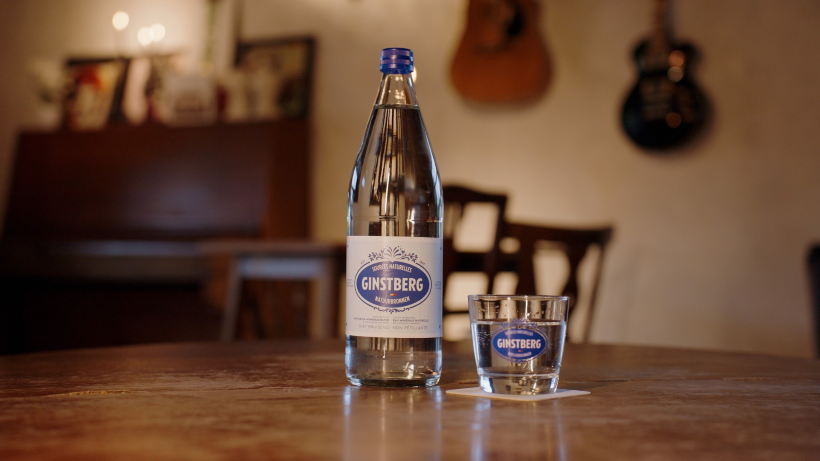
- Ginstberg has selected Amcor’s 28mm Flat Cap for Glass Tamper Evident for mineral water bottles.
- The closure supports still and sparkling beverages, carbonisation levels up to 4.3 vol, and ISCC+ traceability.
- Refillable, reusable, and deposit-return systems are making closure performance more strategic for European beverage brands.
Ginstberg has selected Amcor’s 28mm two-piece tamper-evident closure for its Belgian mineral water bottles, adding a glass-specific closure designed for product security, user handling, and refillable-system readiness.
The Amcor 28mm Flat Cap for Glass Tamper Evident has been developed specifically for glass bottles. It uses a patented lightweight design and is engineered for still and sparkling beverages, supporting carbonisation levels of up to 4.3 vol. The closure is also available with ISCC+ certification for traceability of recycled content.
Ginstberg bottles natural mineral water at source on the edge of the Flemish Ardennes. The brand’s water is officially recognised as natural mineral water and is bottled without additives or additional processing. Its spring location gives the water a nitrate-free and low-salt profile, placing packaging performance at the centre of product protection and brand presentation.
Closures are carrying a heavier technical load in beverage packaging. A cap must protect the product, provide tamper evidence, support carbonation where needed, allow easy opening and reclosing, maintain compatibility with bottle finishes, run efficiently on filling lines, and meet sustainability and circularity expectations. In glass systems, it must also perform reliably through distribution and, where applicable, reuse cycles.
The closure is one of the first physical interactions a consumer has with the bottle, but its industrial role is broader. Closure selection affects capping torque, seal integrity, line speed, rejection rates, carbonation retention, leakage risk, tamper-band performance, and pack presentation. A closure that looks simple after filling can become a source of waste, downtime, or complaints if it does not behave consistently across the line and distribution chain.
“Consumer experience of our brand begins with the packaging, so it is essential that the closure is durable and reliable and easy to open and reclose, as well as offering the reassurance of tamper evidence,” said Evi Van De Velde, COO of Ginstberg. “The Amcor closure has both the necessary technical and aesthetic attributes.”
European beverage packaging is being reshaped by deposit return schemes, refillable models, tethered-cap rules, recycled-content requirements, and the wider move toward reusable packaging systems. The sector’s shift toward integrated soft drink packaging efficiency has already shown how line performance, circularity, lightweighting, and regulatory readiness are becoming part of the same engineering brief. The Ginstberg closure decision fits that pattern at component level.
Glass bottles occupy a distinctive place in that transition. They can support premium presentation and reuse systems, but they also bring weight, breakage, logistics, washing, and handling considerations. Closures used in those systems must be robust enough to maintain performance across filling, storage, transport, retail handling, consumer use, and potential return loops. Weak closure performance can undermine the whole refillable proposition.
Amcor’s refillable-ready range includes the 28mm Flat Cap for Glass TE, 28mm PolyVent, and 28mm PolyGuard models. The company positions the range for both glass and PET bottle applications as European beverage brands adapt to changing regulation. “Our refillable ready range is designed to meet the needs of both glass and PET bottles, ensuring brands can adapt to evolving regulation across Europe,” said Uli Kolbert, product line manager – beverage closures and home care triggers at Amcor Global Rigid Packaging Solutions.
The ISCC+ option adds a compliance layer. Traceability of recycled content is becoming more important as packaging claims face stronger evidence requirements. Beverage companies need to substantiate material choices through certification, supplier declarations, and documentation that can support customer, regulator, and internal reporting demands. Claims around circularity are becoming less useful without auditable backing.
New closure systems also have to integrate cleanly into existing operations. Cap feeding, torque control, inspection, bottle finish compatibility, changeover routines, and operator handling all influence the total value of the component. If a closure supports sustainability goals but creates line instability, its benefit weakens. A component that strengthens tamper evidence, product protection, and circularity without slowing operations becomes a more strategic procurement choice.
The Ginstberg project shows how beverage packaging innovation often happens in small components rather than headline format changes. A cap may not transform the visual identity of a bottle, but it can affect safety, usability, regulation, recyclability, refillability, and line performance. As Europe’s circular packaging framework tightens, closures will remain one of the points where brand experience and industrial compliance meet.