IN Brief:
- Gousto is considering closing its Clay Lake facility in Lincolnshire, putting around 290 roles at risk.
- The company is looking to consolidate production around its high-tech Warrington site.
- The proposal reflects pressure on meal kit and prepared food networks to simplify operations and reduce cost per portion.
Gousto is consulting on the possible closure of its Clay Lake facility in Lincolnshire as it considers consolidating production around its Warrington operation.
The proposal could put around 290 jobs at risk. Gousto’s Warrington facility, which opened in 2022 and employs around 600 people, has received sustained investment and now produces the majority of customer orders across a 300,000 sq ft estate.
The company has said the current two-site structure has become increasingly duplicative and less efficient, with Warrington fulfilling most demand at greater scale and lower cost per portion. Consolidating production would create a simpler operating model and support more accessible pricing in a competitive food market.
Gousto reported 10% revenue growth in FY25 and a third consecutive year of positive adjusted EBITDA. The proposed closure therefore sits within an efficiency-led restructuring rather than a withdrawal from the category.
Timo Boldt, founder and CEO of Gousto, said: “This is an incredibly difficult proposal given the impact on our colleagues in Clay Lake, who have contributed enormously to Gousto’s journey over a number of years. In a highly competitive food market, it is however essential that we operate as efficiently as possible so that we can continue to invest in our proposition and keep prices as low as possible for customers.”
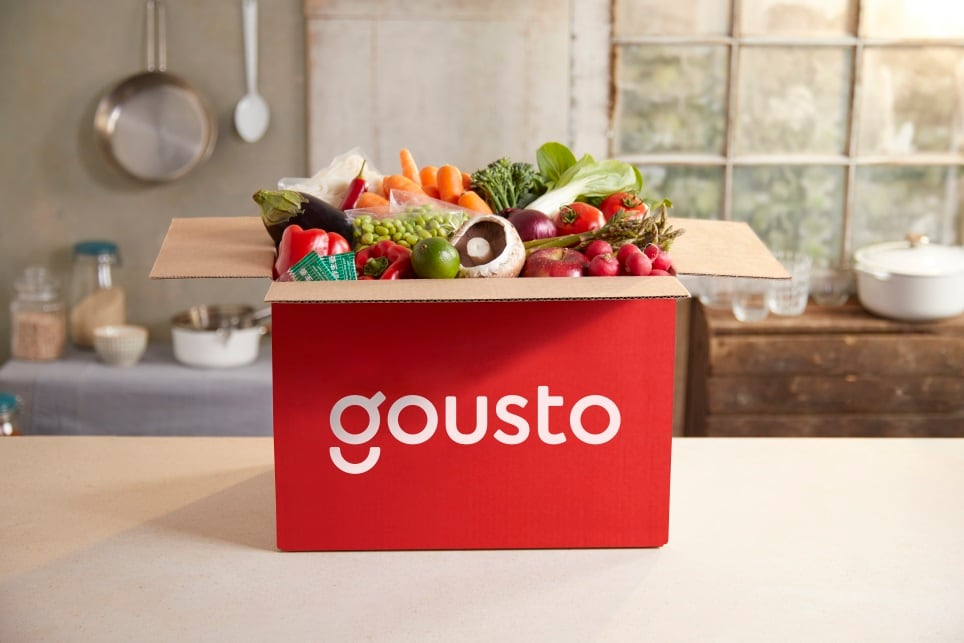
Recipe box operations combine food manufacturing, chilled logistics, menu planning, packaging configuration, labour scheduling, and direct-to-consumer fulfilment. The model depends on assembling highly variable orders with tight dispatch windows, accurate stock rotation, and careful temperature control.
Duplicated capacity becomes expensive in that environment. If one highly invested site can fulfil most demand at lower cost per portion, a second facility has to justify itself through resilience, geography, growth capacity, or specialist capability. Consolidation can reduce overhead and complexity, but it also increases reliance on one large site, making business continuity planning more important.
Food fulfilment networks are moving toward larger, more technically capable sites where automation, systems, labour planning, and inventory visibility can be concentrated. PepsiCo’s recent Wrocław logistics expansion follows the same broad movement toward more disciplined food and beverage distribution capacity, albeit in a different operating model.
Meal kits have a distinct pricing challenge. Customers expect variety, convenience, portion control, and freshness, while the cost base includes chilled handling, recipe complexity, packaging, marketing, and last-mile delivery. When household budgets are stretched, operational efficiency becomes part of the price proposition.
SKU complexity adds another layer. A weekly menu creates multiple ingredient flows, portion sizes, allergen controls, packing instructions, substitutions, and quality checks. Labour-intensive processes can become limiting if order volume rises or if the mix changes quickly. High-tech fulfilment sites can integrate forecasting, weighing, portioning, picking, packing, labelling, and dispatch data more effectively.
Packaging also shapes the economics. Recipe kit operations handle small-format ingredients, chilled components, ambient items, recipe cards, insulation, ice packs, and secondary packaging. Reducing complexity in the fulfilment footprint can support better packaging control, but it also requires close coordination between procurement, stock rotation, order systems, and dispatch.
The proposed Clay Lake closure will be watched because it sits between growth and consolidation. Gousto’s performance suggests continuing demand, while the operating model is being reshaped around cost, scale, and site efficiency. That is the more mature phase of the meal kit market, where network discipline follows category expansion.
If the consultation proceeds to closure, the employment impact in Lincolnshire will be substantial. Operationally, the wider point is that convenience and personalisation still have to work within hard industrial limits. Product has to be made, assembled, packed, and dispatched at the right cost, speed, quality, and service level.