IN Brief:
- Holderhof Produkte has installed an SMI LWP 30 ERGON case packer and APS 620 ERGON palletising systems.
- The Sulgen fruit processing centre can process up to 15,000 tonnes of cider apples each year.
- The equipment supports glass bottle and jar formats, wrap-around trays, wrap-around cases, and 800x1200mm europallets.
Holderhof Produkte has installed new SMI end-of-line packaging equipment across its Swiss fruit processing operations, adding case-packing and palletising capacity for bottles, jars, trays, and wrap-around cases.
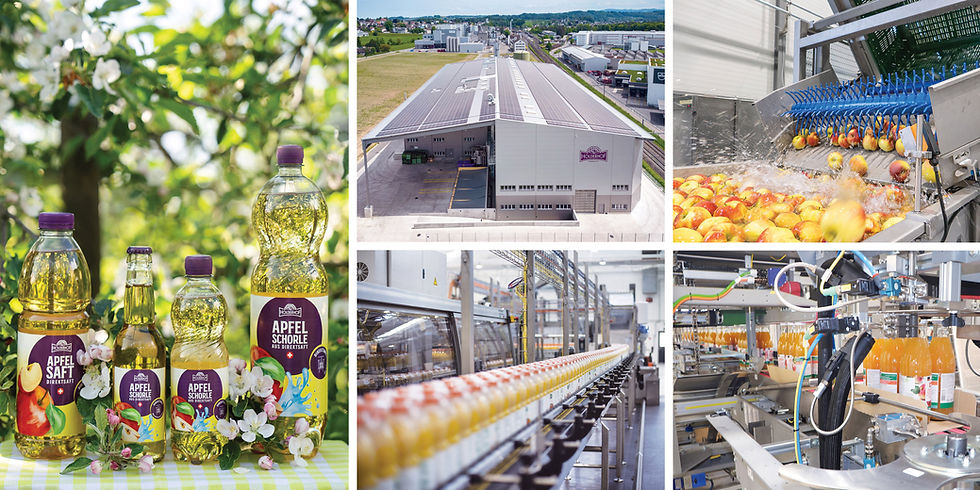
The project includes an SMI LWP 30 ERGON wrap-around case packer and APS 620 ERGON palletising equipment for Holderhof’s fruit processing centre in Sulgen, along with a second APS 620 ERGON palletiser for its Henau plant. The Sulgen facility processes up to 15,000 tonnes of cider apples a year and includes a line capable of filling up to 2,000 jars per hour, depending on format.
The LWP 30 ERGON handles several glass bottle and jar configurations. It packs 0.36l, 0.72l, 0.75l, and 1l glass bottles in wrap-around trays in a 2×3 format, packs 0.25l and 1l glass bottles in wrap-around cases in a 2×3 format, and packs 0.37l jars in wrap-around trays in a 3×4 format. Downstream, the APS 620 ERGON palletiser builds 800x1200mm europallets.
Holderhof’s investment strengthens the end of the line, where many beverage and fruit processing plants still encounter bottlenecks. Filling capacity attracts attention, but secondary packing and palletising often determine whether a plant can actually sustain throughput. If a case packer or palletiser cannot match the pace and format mix, upstream capacity becomes stranded.
Fruit processing carries additional variability because raw material intake, crop quality, juice balance, sauce production, glass formats, and retailer requirements can shift across the season. Equipment built around a single pack type can become a constraint when demand moves between bottles, jars, trays, and cases. Flexible changeover therefore has direct value in protecting both production planning and customer service.
The investment also reduces exposure to manual handling at a point where labour availability and ergonomic risk remain persistent concerns. Glass bottles and jars add weight, fragility, and repetitive handling demands. Automated case packing and palletising can improve consistency, reduce damage, and stabilise load quality, provided the upstream filling and pack presentation remain controlled.
Food manufacturers are steadily linking processing modernisation with inspection, robotics, and end-of-line performance. Upgrades to Mr Kipling processing systems, for example, combined process equipment, robotics, inspection, and utility reduction rather than treating each area as a separate improvement. Holderhof’s project follows the same industrial logic, with packaging automation tied closely to overall plant performance.
Wrap-around trays and cases have to perform both mechanically and commercially. They protect glass through distribution, support stacking, and can contribute to retail presentation where secondary packs are visible. Board strength, blank consistency, glue performance, pack geometry, and machine handling all affect line reliability. A weak secondary pack can create stops, damaged product, unstable pallets, and rework even when filling is running well.
Palletising carries its own technical demands. European distribution systems depend on standard pallet footprints, stable load patterns, and compatibility with automated warehouses and handling equipment. Variations in tray alignment or case integrity can become larger problems once layers are stacked. Automated palletisers improve repeatability, but only where the incoming pack stream is stable and the selected pallet pattern suits product weight and logistics requirements.
Holderhof’s vertically integrated model gives the company control across agricultural raw material, fruit processing, beverage production, and packaging. The SMI installation strengthens the final stage of that chain, where product leaves the controlled production environment and enters storage, transport, and retail networks.
End-of-line automation is becoming more valuable as SKU complexity increases. Shorter runs, private-label variants, seasonal products, premium glass formats, and changing retailer specifications all place pressure on older packaging systems. Machinery that can switch formats efficiently helps plants avoid the trade-off between variety and productivity.
The Holderhof installation shows how fruit and beverage manufacturers are reworking the practical mechanics of flexibility. The next productivity gains may come less from faster filling and more from stable secondary packaging, cleaner changeovers, safer handling, and pallets that arrive intact. That is where plant performance is often protected or lost.