IN Brief:
- Nestlé will cease production at its Diósgyőr confectionery factory by the end of 2026.
- The plant specialises in seasonal hollow chocolate figures, a category affected by sustained demand decline.
- Sale discussions could preserve manufacturing activity, while affected Nestlé products are expected to move to an external producer.
Nestlé will cease production at its Diósgyőr confectionery factory in Hungary by the end of 2026 after a sustained decline in demand for the seasonal hollow chocolate figures manufactured at the site.
Located in Miskolc, the factory produces moulded products including chocolate Santas, Easter figures, and other seasonal lines for several international markets. Their short selling periods and exposure to changing retail orders have left the operation with falling volumes and an increasingly difficult capacity profile.
Discussions have begun with a potential investor over the sale of the factory, creating the possibility that confectionery production could continue under new ownership. Employee representatives were informed of the planned closure in July, leaving the company, local authorities, and prospective buyers several months to determine whether the plant can support another industrial use.
Affected Nestlé products are expected to transfer to an independent manufacturing partner operating to the group’s quality standards. Although the move should protect continuity for retailers, it will require the controlled transfer of recipes, moulds, packaging specifications, quality documentation, production schedules, and approved raw materials.
The Diósgyőr plant represents less than 3% of Nestlé Hungária’s revenue and approximately 0.4% of its domestic production volume. Its contribution is therefore relatively small within the wider Hungarian business, although the closure carries greater weight for the local workforce and the suppliers supporting its specialised seasonal production.
Nestlé’s other Hungarian factories at Szerencs and Bük are unaffected. Those operations cover different product categories and have received continued investment, giving the group a broader manufacturing base that is less dependent on a single, highly seasonal confectionery segment.
Seasonal production faces tighter economics
Hollow chocolate figures depend on a manufacturing model that concentrates production, packing, warehousing, and sales into short annual cycles. Retailers must commit orders before final demand is visible, while manufacturers begin producing months before Christmas or Easter to build sufficient stock for distribution.
When a season underperforms, unsold inventory is difficult to carry into the following year because packaging, promotions, date coding, and retailer ranges change. Buyers can then reduce subsequent orders, leaving factories to spread fixed labour, maintenance, energy, and depreciation costs across fewer units.
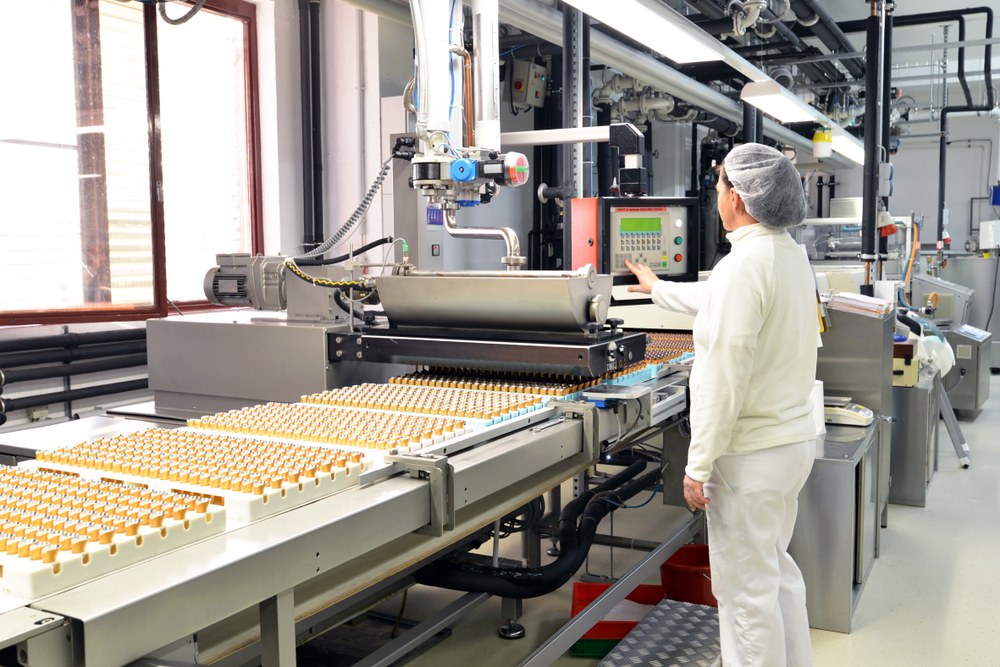
The category also uses assets that cannot always be redeployed easily. Moulding lines must control shell thickness, cooling, demoulding, joining, and structural strength, while finished figures need careful conveying and packing because breakage can erase the value created during production.
Foils, trays, cartons, display cases, and protective secondary packaging contribute a greater share of cost than the apparent simplicity of the product suggests. Seasonal artwork and multiple country variants further increase material inventories, artwork control, and the risk of obsolete packaging after a weak campaign.
Cocoa-market volatility has added pressure across European confectionery production, with manufacturers balancing higher raw-material costs against consumer resistance to price increases. Smaller formats, tighter promotions, reduced giveaway, and selective recipe adjustments can protect margins, but each intervention has limits in a category where the shape and presentation are central to the purchase.
Because hollow figures contain a relatively large visual format for their chocolate weight, pack reduction can be difficult without altering shelf impact. Customers buying a seasonal gift may also switch to boxed confectionery, biscuits, countlines, or private-label alternatives when the price moves beyond an expected range.
Production through an external specialist converts part of the fixed factory burden into a variable purchasing cost. The arrangement can work where the partner combines several customers’ seasonal campaigns, using shared moulding, cooling, foiling, and packing capacity across a larger annual volume.
Contract manufacturing nevertheless transfers rather than removes operational risk. Nestlé will need oversight of allergen controls, chocolate specifications, mould ownership, traceability, foreign-body prevention, pack integrity, and release procedures, while the selected producer must reserve enough capacity to meet a concentrated seasonal schedule.
A successful sale of Diósgyőr would offer a different route by retaining the existing workforce, equipment, and local supplier relationships. Another confectionery company could combine Nestlé contract output with private-label production, complementary seasonal formats, or year-round moulded products that improve plant utilisation.
European confectionery investment remains selective rather than uniformly weak. Ferrara, for example, has been expanding its confectionery platform around brands and categories with stronger growth potential, while assets tied to mature products face closer scrutiny.
The contrast reflects a broader reshaping of the market. Capital continues to move towards flexible lines, scalable brands, and products capable of sustaining production beyond narrow seasonal windows, whereas dedicated facilities require sufficient volume to justify their fixed industrial base.
Diósgyőr retains established confectionery equipment, experienced employees, and a recognised manufacturing history, but those strengths need a wider commercial role. Without additional products or customers, declining seasonal volume will continue to leave too much of the factory idle for too much of the year.
The sale process will determine whether those capabilities remain in Miskolc after Nestlé’s production ends. A buyer able to diversify the plant could preserve an industrial asset; without one, the final 2026 campaign will close a specialised chapter of Hungarian chocolate manufacturing.