IN Brief:
- GLP-1 and wellness demand are changing portion sizes, nutrient priorities, and product expectations.
- Processors need flexible equipment, tighter control, and brownfield upgrades that protect quality while raising productivity.
- Packaging, inspection, and compliance are increasingly system-level design problems, not late-stage checks.
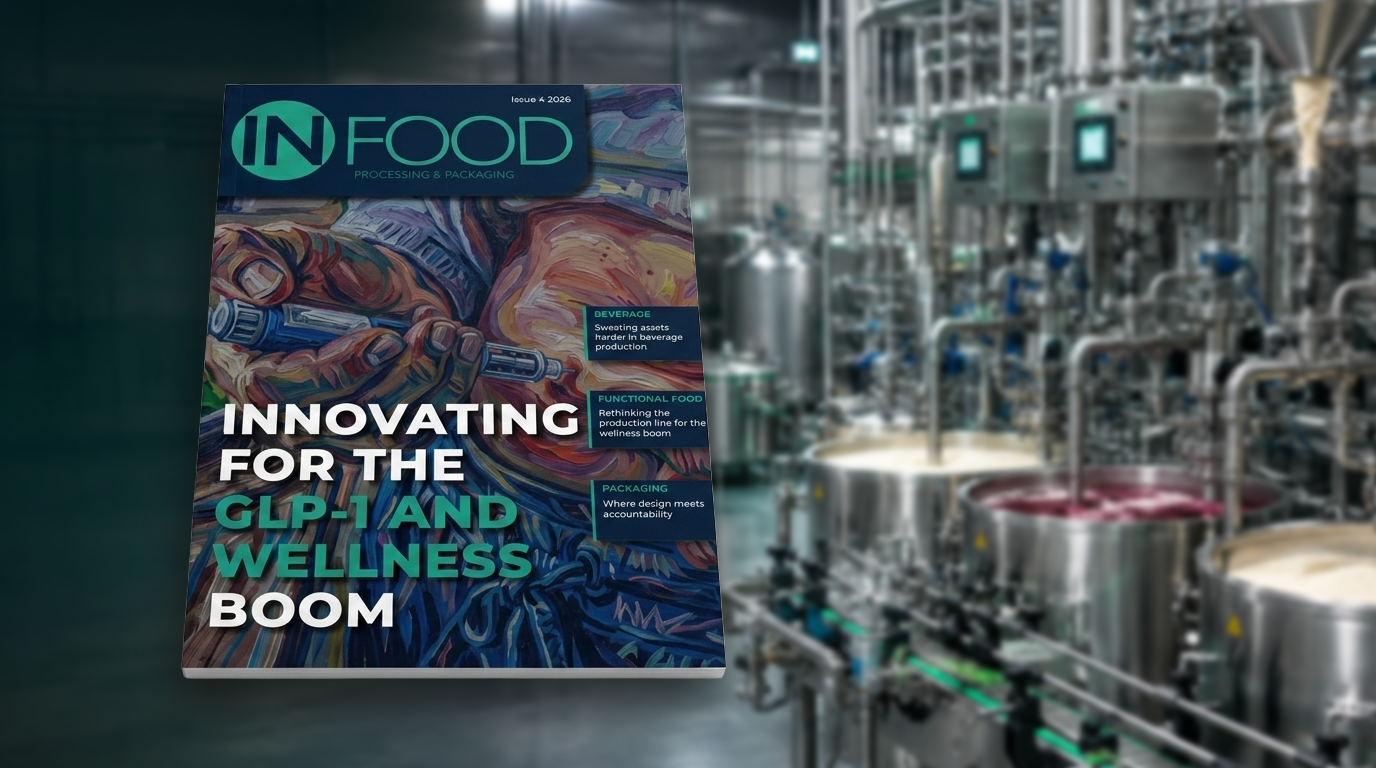
Consumer change is moving faster than the equipment built to serve it. The July/August edition of IN Food looks at the widening gap between rapidly shifting expectations and production assets designed around much longer investment cycles.
GLP-1 adoption and the wider wellness market sharpen that problem. Smaller appetites increase the pressure on each portion to deliver more protein, fibre, nutrition, and satisfaction, while functional ingredients can demand gentler processing, tighter hygiene, better traceability, and more flexible batch handling.
The same engineering discipline applies to established production. A beverage case study shows how targeted work on a PET blowing block delivered a reported 10% capacity increase while cutting compressed-air demand, reinforcing the case for solving specific bottlenecks before defaulting to wholesale replacement.
Quality and packaging add further layers. Dairy inspection must account for changing product effect, while packaging is increasingly shaped by recyclability infrastructure, regulation, lifecycle performance, and real-world waste data.
Issue 4 brings these pressures together around one practical question: how much flexibility can manufacturers build into products, processes, and assets before the market forces the decision? Consumer behaviour may change quickly; factories, utilities, and packaging systems rarely have the same luxury. That makes the production question increasingly immediate.