IN Brief:
- Mash Direct invested £419,000 in processing machinery and automation initiatives during 2025.
- Turnover reached £32.8m, while operating profit increased to £2.37m and profit after tax to £1.46m.
- The County Down manufacturer says investment has accelerated during 2026, with another capital programme planned.
Mash Direct is increasing investment in automation and production capability after stronger manufacturing performance gave the Northern Ireland food producer more capacity to reinvest in its Comber operation.
The company spent £419,000 during 2025 on processing machinery and automation initiatives intended to improve throughput and efficiency. Investment has increased further during 2026, with another significant capital programme planned for the following year.
Mash Direct reported turnover of £32.8 million for the year ended 31 December 2025 and EBITDA of £3.4 million. Operating profit increased to £2.37 million, profit after tax rose from £394,000 to £1.46 million, and gross margin improved from 36% to 37.6%.
The useful industrial point is not the year-end result on its own, but what the improved manufacturing economics allow the business to do next. Automation programmes require capital before their productivity benefits appear, so stronger margins give manufacturers greater ability to invest without placing the same pressure on cash or borrowing.
Mash Direct grows, steam cooks, and packs prepared potato and vegetable products from its family farm at Comber in County Down. Its agricultural operation has expanded from about 70 acres to roughly 1,400 acres around Strangford Lough as the business has moved from a small farm-based producer into a national retail, foodservice, and manufacturing supplier.
That field-to-factory structure gives the operation direct control over part of its raw-material supply while also exposing the factory to natural crop variation. Potatoes and vegetables arrive with changing size, moisture, dry matter, condition, and seasonal characteristics, all of which influence preparation and cooking.
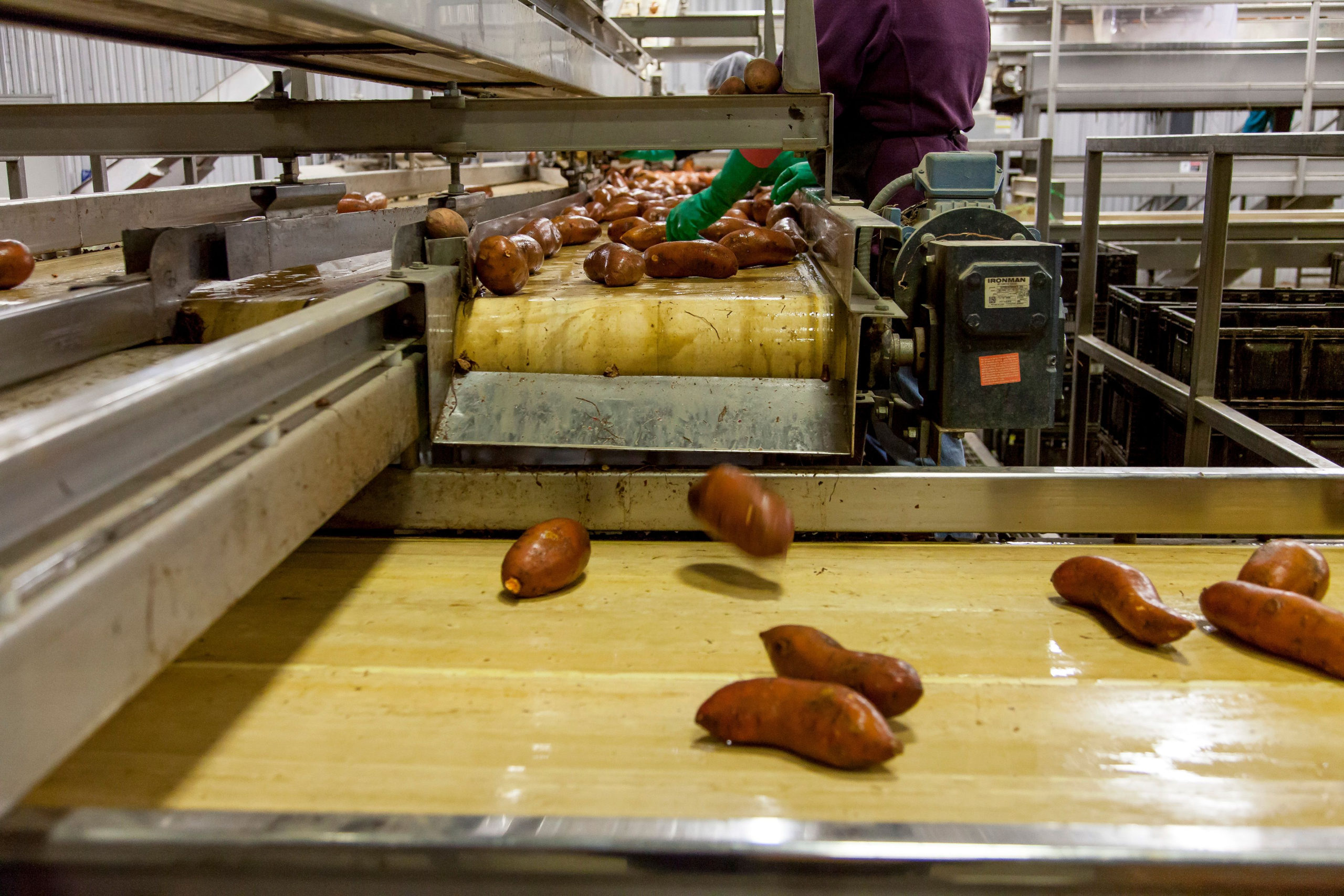
Automation therefore has to manage a less uniform input than many conventional manufacturing processes. Equipment used for washing, peeling, cutting, cooking, weighing, filling, sealing, sleeving, or packing needs enough tolerance to handle variation without creating excessive giveaway or rejects.
The business uses specially designed steam cookers and produces chilled prepared vegetable and potato products for retail and foodservice. Increasing output means balancing each process stage rather than simply accelerating the most visible piece of machinery.
A faster cooker provides little benefit if weighing, tray filling, sealing, or end-of-line packing cannot accept the additional product. Similarly, a high-speed packing machine will sit underused if preparation and cooking remain the production constraint.
Automation projects therefore tend to deliver their strongest returns when they remove bottlenecks across a complete process rather than improving isolated machine speeds. The £419,000 spent during 2025 was directed at processing machinery and automation with throughput and efficiency as the stated objectives.
The company’s workforce also increased during the year to around 220 people, with more than 20 jobs added. That combination of automation and employment growth suggests the investment is being used to support greater production rather than simply remove headcount.
Growing food manufacturers often add technical, engineering, maintenance, hygiene, quality, planning, and logistics roles even where direct manual handling is reduced. More automated equipment needs people capable of maintaining, programming, cleaning, and integrating it into production schedules.
Mash Direct’s wider growth has come from additional retail and foodservice distribution, new products, and brand development. Those commercial gains eventually become factory requirements because every new listing or product variant adds volume, specifications, packaging, ingredients, and delivery expectations.
Portfolio expansion can also reduce efficiency if it creates more changeovers and shorter runs. Prepared foods need cleaning between production campaigns, while seasoning, allergens, packaging formats, and tray specifications can require additional controls even when the underlying vegetable process is similar.
Automation has to be selected with those changeovers in mind. A machine that performs efficiently on one long production run may prove less useful if it is difficult to clean, adjust, or restart several times during a shift.
Chief executive Jack Hamilton said the business has worked to strengthen the economics of its manufacturing operation and that those improvements are creating capacity for further investment. He identified increased automation, productivity, and additional capacity as priorities for the next phase.
The company’s margin improvement provides some evidence behind that approach. Gross margin increased by 1.6 percentage points during the year, while operating profit rose more quickly than turnover, suggesting better conversion of sales into manufacturing returns.
That does not guarantee that every automation project will pay back. Capital equipment still has to be matched to reliable customer demand, while maintenance, training, utilities, spare parts, and depreciation affect the true operating cost after installation.
Mash Direct’s agricultural base adds another reason to avoid excessive fixed capacity. Crop yields vary, retail demand changes, and prepared-food categories remain exposed to promotions and seasonal purchasing, so equipment needs sufficient flexibility to handle changes in product mix.
The next capital programme has not yet been detailed publicly. Its eventual composition will show whether the company prioritises processing, packing, robotics, utilities, storage, or other parts of the plant.
What is already visible is a change in the investment cycle. Rather than profitability following a large expansion programme, stronger manufacturing performance is now providing the platform for the next round of automation.
For Mash Direct, the test will be whether new equipment increases output without weakening the product consistency on which the brand depends. Automation can make a process faster, but its value is measured in reliable saleable product, not machine speed alone.