IN Brief:
- Involvement and Metalscatola have acquired Falco Packaging and rebranded the business as Invo Metal.
- The venture combines UK tin production and distribution with Italian metal packaging manufacturing and print capability.
- Food and industrial packaging buyers are seeking stronger supply security, compliant lacquers, and recyclable single-material formats.
Involvement, through its Invopak division, has partnered with Metalscatola Spa to acquire Falco Packaging and relaunch the business as Invo Metal.
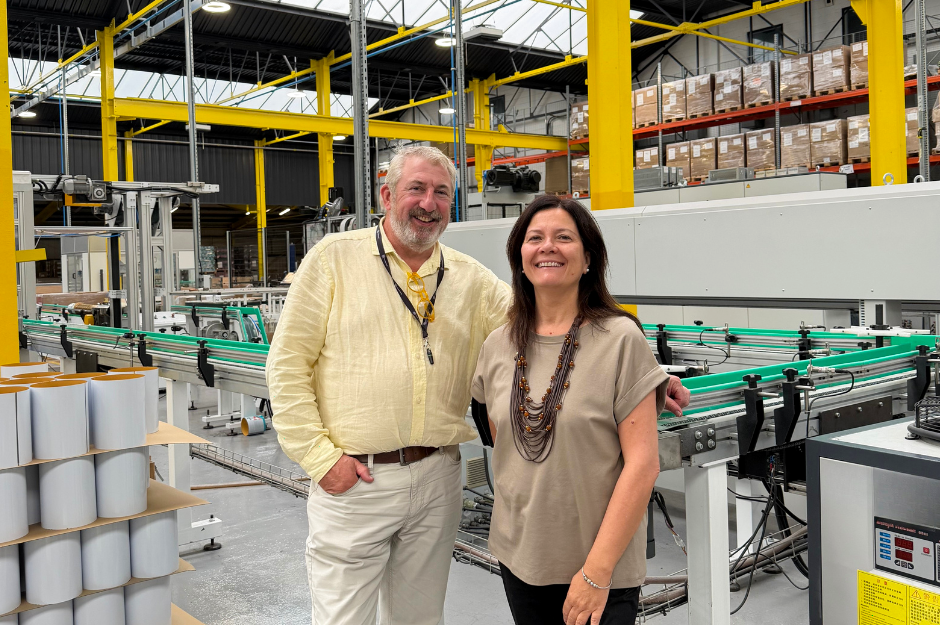
The joint venture brings together Involvement’s UK packaging distribution network and Metalscatola’s metal packaging manufacturing, printing, and technical capability. Invo Metal will continue to manufacture rectangular tins and lever lids at Involvement’s Hyde site in Greater Manchester, while adding access to wider European production, plate printing, lacquer options, and tinplate sourcing.
The acquisition gives UK industrial and food packaging buyers a more integrated route to metal containers at a point when supply security, food-contact compliance, and recyclability are all shaping packaging decisions. Invo Metal will sit alongside Involvement’s existing brands, including Invopak, Invo Fulfilment, and Invo Design.
Plate printing will move through Metalscatola’s European facility, which operates six print lines and supports expanded bespoke decoration. The combined business also gives UK customers access to a wider range of internal lacquer options, including BPA-free, phthalate-free, and food-grade linings designed to meet EU and UK regulatory requirements.
Metal packaging remains significant in food and industrial markets because it combines strength, barrier protection, shelf presentation, and strong recycling value. Tinplate containers are used across food ingredients, flavourings, confectionery, oils, powders, chemicals, coatings, and other products that require robust storage and transport. In food-contact applications, internal lacquers form the critical interface between the product and the metal substrate.
Packaging buyers have become more cautious about fragmented procurement models. Raw materials, coatings, printing capacity, transport availability, and component shortages can all affect production continuity. Greater control across tinplate coil sourcing, domestic manufacture, European printing, and local distribution gives Invo Metal a stronger supply-chain structure than a purely transactional container model.
Packaging availability can stop production as quickly as an ingredient shortage. A product cannot be filled, sealed, shipped, or sold if the approved container, lid, lining, or printed component is unavailable. That has made packaging suppliers a more important part of production continuity, particularly for manufacturers running fixed production windows or serving retail and industrial customers with strict delivery schedules.
Regulation is adding more pressure to the specification process. Extended Producer Responsibility, modulated material fees, food-contact substance scrutiny, and packaging documentation requirements are all changing how formats are selected. Metal’s recyclability gives it a strong environmental profile, but food-contact performance still depends on the correct lining, declaration, and product compatibility.
The growing documentation load around packaging regulation is already pushing manufacturers to treat packaging data as part of technical control rather than procurement administration. Material composition, recyclability, recycled-content evidence, and food-contact status all need to be available in a form that can support customer and regulatory requests. Wider access to approved lacquer systems may therefore become a stronger selling point as compliance demands increase.
The structure of Invo Metal brings together local production and European manufacturing depth. UK-based tin production gives proximity, responsiveness, and continuity for established rectangular tins and lever lids, while Metalscatola adds scale, printing capability, and a longer manufacturing base in metal packaging.
That combination could appeal to buyers seeking supply security without losing access to more advanced decoration and lining options. It may also help manufacturers reduce the number of separate interfaces involved in sourcing tins, printed plate, approved linings, and delivery.
The rebrand from Falco Packaging to Invo Metal is effective immediately, alongside operational integration and corporate restructuring. Further investment and new production lines are planned at the Hyde site.
Food and industrial packaging procurement is moving into a more technical phase, where cost, compliance, recyclability, and continuity are increasingly linked. Metal packaging already has a clear circularity advantage, but the suppliers that gain ground will be those able to combine recyclable formats with secure production, approved linings, technical documentation, and reliable delivery.